
She Lined Her Walls With Wool — Unaware It Saves Her When a Blizzard Buries the Town
The first time anyone noticed the wool nailed to the walls, they laughed.
Not quietly, either.
They laughed right there in the doorway of the tiny rental house at the edge of Miller’s Creek, Wyoming — a place so small the post office shared a room with the barber shop, and everyone knew what you bought before you even got home.
Clara Whitmore didn’t laugh.
She stood on a wooden chair, hammer in hand, tacking another square of thick, cream-colored sheep’s wool to the wall beside the window. The material looked rough, uneven, and completely out of place in a town where most folks barely bothered insulating their sheds.
“Clara,” Mrs. Doyle said from the doorway, trying not to grin, “are you… stuffing your house?”
Clara stepped down carefully.
“It keeps heat in,” she said simply.
Mrs. Doyle exchanged a look with her husband. He snorted.
“You planning to raise sheep in your living room too?”
Clara smiled politely, unfazed. She’d grown used to the tone — not cruel, exactly, but dismissive. People in Miller’s Creek had long memories, and hers began badly.
She’d arrived two months earlier, in late September, with a single truckload of belongings and a letter from the bank confirming she’d rented the smallest house in town — a narrow, two-room structure near the old grain silos.
Widowed at thirty-two. No children. No family nearby.
That alone had made her an outsider.
But then she started lining her walls with wool.
And that sealed it.
Clara had grown up on a sheep ranch in northern Idaho. Her father believed insulation mattered more than paint, and their cabin walls had been packed thick with wool behind boards. Winters there dropped below zero for weeks, yet their stove barely needed feeding.
She remembered that.
And Miller’s Creek worried her.
The town sat in a shallow valley, ringed by low hills that funneled wind like a chimney. Locals shrugged it off — “Just Wyoming weather,” they said — but Clara saw gaps in windows, thin walls, and heating stoves working too hard.
Her own house had been worse than most.
When she first stepped inside, she could feel the draft crawling along the floor like a living thing.
So she bought wool.
Bales of it.
From a farmer thirty miles away who thought she was opening a craft shop.
She nailed strips along the walls. Stuffed them around door frames. Hung them like thick curtains over windows. Even layered them behind the bed.
The house began to look strange — soft, padded, quiet.
And warm.
Very warm.
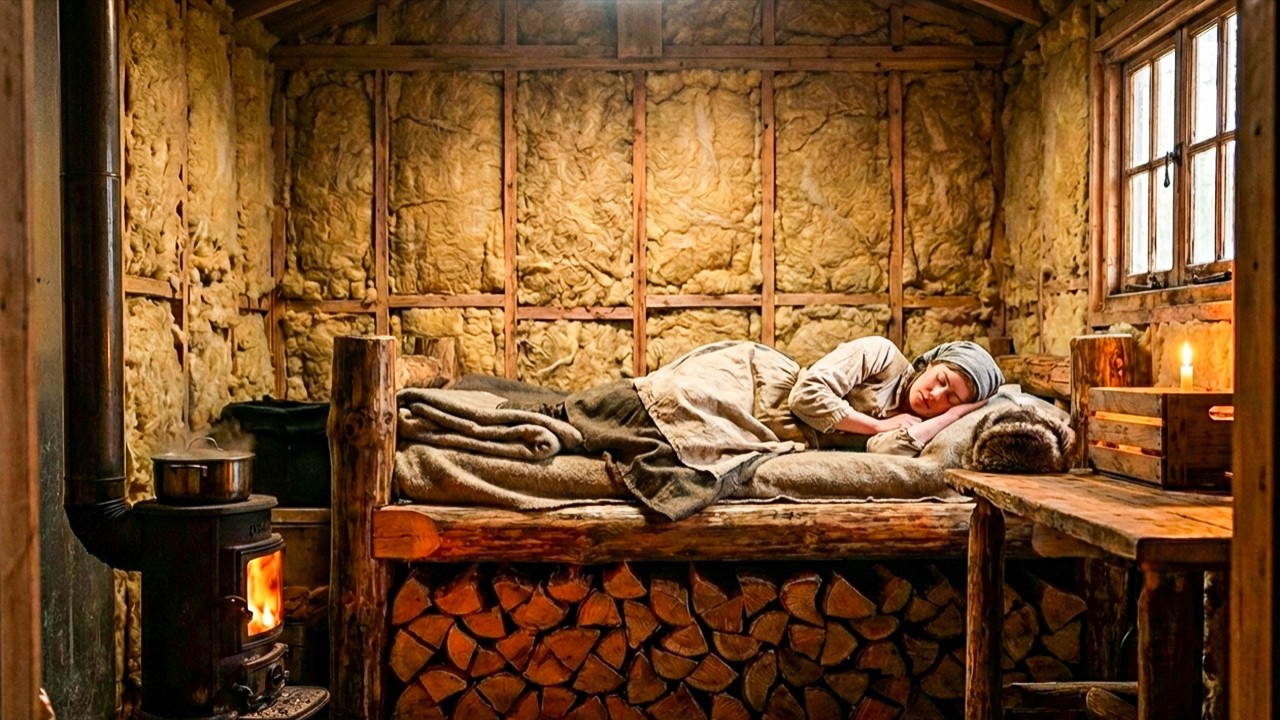
By mid-October, people had stopped commenting — though the jokes lingered.
Clara found work at the diner on Main Street. She washed dishes, then cooked when the morning cook quit unexpectedly. She didn’t talk much, but she listened.
That’s how she heard Sheriff Nolan mention the forecast.
“Early winter coming,” he said, sipping coffee. “Cold front out of Canada. Could be rough.”
“How rough?” asked Pete, the mechanic.
Nolan shrugged. “Hard to say. Weather service says strong system. Maybe a blizzard.”
Pete waved it off. “They say that every year.”
Clara didn’t.
That night, she added another layer of wool.
She sealed the attic hatch. Packed wool under the door. Covered the kitchen wall facing north.
The house felt almost silent now — like snow already wrapped around it.
The first storm hit in November — light, manageable. A dusting. The town relaxed.
Clara didn’t.
She stocked dry goods. Filled water containers. Bought extra firewood, stacking it inside rather than outside.
Mrs. Doyle stopped by again.
“You planning to survive the apocalypse?” she teased.
Clara smiled gently. “Just winter.”
Then came December 14.
The sky turned gray by noon. Wind began low, then rose steadily, howling across the valley. Snow started as flakes — then sheets.
By 3 p.m., visibility dropped to fifty feet.
Sheriff Nolan drove through town urging people indoors.
“Storm’s intensifying,” he warned. “Stay put.”
Clara was already home.
She lit her stove. Closed the wool-covered curtains. Checked her supplies.
Outside, the wind screamed.
Snow piled fast — drifts forming against buildings, fences vanishing, roads disappearing.
By nightfall, Miller’s Creek was buried.
Power lines snapped first.
Then phone service died.
The town went dark.
Inside Clara’s house, the stove glowed steady.
The wool-lined walls held the heat. The air stayed warm enough she removed her coat. The silence felt deep, insulated from the roar outside.
She slept well.
Morning brought no relief.
The storm worsened.
Snow now reached halfway up the windows. Wind forced drifts against the door. The world beyond her walls vanished completely.
She stepped outside briefly — and nearly lost her footing. The wind shoved hard, snow blinding.
She retreated quickly.
By evening, the house was half buried.
Still warm.
Still safe.
Two blocks away, the Doyles weren’t as lucky.
Their furnace failed after the power cut. Their thin walls bled heat. By night two, the temperature inside dropped dangerously low.
Mr. Doyle tried to shovel the door open — but snow had sealed it shut.
They wrapped in blankets, shivering.
“Should we try the car?” Mrs. Doyle asked.
“It’s buried,” he said grimly.
They huddled closer.
On day three, the storm finally eased.
But Miller’s Creek was gone under six feet of snow.
Clara opened her door slowly, pushing against the drift. It took fifteen minutes to carve a narrow exit.
The cold outside bit sharp — but inside her house, warmth lingered.
She looked toward town.
No smoke rose from most chimneys.
Her stomach tightened.
She grabbed her shovel.
The snow was heavy. Progress slow. But she worked, carving a narrow path toward the Doyles’ house.
It took two hours.
She pounded on their door.
No answer.
She shoveled harder, clearing enough space to force it open.
Inside, the air was freezing.
Mrs. Doyle looked up weakly.
“Clara?” she whispered.
“Come with me,” Clara said. “Now.”
They stumbled through the narrow path, leaning on her.
When they stepped into Clara’s house, Mrs. Doyle gasped.
“It’s… warm.”
Clara helped them sit. Wrapped blankets around them. Handed hot tea.
Mr. Doyle stared at the wool-covered walls.
“You… insulated everything,” he murmured.
Clara nodded.
They stayed.
Word spread slowly as neighbors dug themselves out.
Soon others came — cold, shaken, desperate.
Clara opened her door.
Her small house filled with people. Ten… then twelve.
The wool walls held heat. The stove worked steadily. Bodies warmed the space further.
For three days, Clara’s strange house became the warmest place in Miller’s Creek.
Sheriff Nolan finally reached them on day six, arriving with a snowcat from the highway.
He stepped inside — then blinked.
“Well I’ll be,” he said softly.
People sat wrapped in blankets, drinking soup. The air was warm, almost cozy.
“How?” he asked.
Mrs. Doyle pointed to the walls.
“She lined everything with wool.”
Nolan walked closer, touching the thick padding.
“Smart,” he muttered.
Clara shrugged. “Just what my father taught me.”
When the snow finally melted weeks later, Miller’s Creek looked different.
Not physically — but in memory.
No one laughed at Clara anymore.
Instead, Pete the mechanic bought wool.
The schoolhouse insulated its walls.
Even the sheriff added layers to the station.
Mrs. Doyle hugged Clara one morning outside the diner.
“You saved us,” she said.
Clara shook her head.
“I just stayed warm.”
But everyone knew the truth.
The widow who lined her walls with wool — the one people laughed at — had unknowingly built the safest house in town.
And when the blizzard buried Miller’s Creek, her quiet preparation kept more than just herself alive.
By January, Miller’s Creek had thawed enough to dig out fences, clear roofs, and reopen the narrow two-lane road that connected the town to the highway. Snow still lined the streets in gray walls taller than a pickup, but life resumed the way it always did — slow, stubborn, and practical.
Except one thing had changed.
People no longer called Clara Whitmore “the wool lady” with a laugh.
Now they said it with respect.
Children waved when she walked to the diner. The Doyles brought her fresh bread every Sunday. Sheriff Nolan tipped his hat each time he passed.
Clara wasn’t used to it.
She still woke before sunrise, lit her stove, and touched the wool lining near the window, feeling the warmth settle into the house. The walls had darkened slightly from stove smoke, but they remained thick, quiet, protective.
Her house had become a small legend.
And legends, she was learning, travel.
The first outsider arrived in late January.
A white SUV rolled slowly into town, stopping near the diner. A woman in a long wool coat stepped out, scanning buildings with curious eyes. She carried a notebook and camera.
Clara didn’t think much of it until the woman sat at the counter.
“Coffee, please,” she said.
Clara poured it.
“You Clara Whitmore?” the woman asked.
Clara hesitated. “Yes.”
The woman smiled. “I’m Rachel Dean. I write for the Wyoming Tribune. I heard you insulated your entire house with raw wool… and sheltered half the town during the blizzard.”
Clara blinked.
“I didn’t— I mean… people just needed warmth.”
Rachel flipped open her notebook. “Can I see it?”
Clara shifted uncomfortably. “It’s nothing special.”
“That’s what makes it interesting.”
After her shift, Clara reluctantly walked Rachel to the small house near the silos.
Rachel stepped inside — and stopped.
The wool walls glowed softly in the firelight. The air felt warm despite the biting wind outside. The space seemed insulated not just from cold, but from noise, from harshness.
Rachel ran her hand along the wall.
“This is brilliant,” she murmured. “Natural insulation. Fire-resistant. Breathable. And you did it yourself?”
Clara nodded.
“My father used wool in our cabin. It holds heat even when damp.”
Rachel scribbled notes rapidly.
“Do you know how many rural homes fail during extreme cold because of poor insulation?” she asked.
Clara shook her head.
“Thousands. Especially older structures. What you did… this could help a lot of people.”
Clara frowned slightly. “I just wanted to stay warm.”
Rachel smiled. “Sometimes that’s how the best ideas start.”
Two weeks later, the article ran.
The headline read:
“Widow’s Wool Walls Save Wyoming Town During Historic Blizzard”
Clara didn’t see it at first.
Sheriff Nolan brought a copy into the diner, setting it on the counter.
“Think you’re famous,” he said.
Clara wiped her hands and looked.
Her photo filled half the page — standing awkwardly beside her wool-lined wall.
Her cheeks flushed.
“I didn’t agree to—”
“You helped people,” Nolan said gently. “That matters.”
By afternoon, calls began.
The diner phone rang repeatedly.
Farmers from neighboring counties asked questions. A school in Montana requested details. A community center in Idaho wanted instructions.
Clara answered as best she could.
“I just layered it… about four inches thick… yes, behind cloth helps… no, it doesn’t smell if you air it…”
She felt overwhelmed.
But also… useful.
In February, a second storm warning arrived.
Not as severe, but strong.
This time, Miller’s Creek prepared.
Pete insulated his garage with wool scraps. The Doyles packed their walls with blankets and straw. The school lined windows.
Clara helped where she could — measuring, cutting, showing how to layer.
When the storm hit, temperatures dropped again.
But houses held warmth better.
No one froze.
No one panicked.
Afterward, Sheriff Nolan stood outside the diner and said quietly:
“You changed how this town survives winter.”
Clara didn’t know what to say.
One evening, as the sun sank behind the hills, Clara sat by her window sewing a thick wool curtain. Snow drifted lightly outside.
A knock came at the door.
She opened it.
A man in his sixties stood there, wearing a heavy coat and holding a folder.
“Miss Whitmore?” he asked.
“Yes.”
“My name’s Daniel Hargrove. I represent Frontier Rural Housing Initiative.”
Clara tilted her head.
“We build low-cost housing for remote communities,” he explained. “We read about your wool insulation. We’d like to test it in our designs.”
Clara blinked. “You mean… use it?”
“With your permission. And guidance.”
She hesitated. “I’m not an engineer.”
“Sometimes practical knowledge is better,” he said kindly.
He opened the folder, showing sketches — small homes with thick insulated walls.
“Wool is sustainable,” he continued. “Affordable in ranching regions. And your example proves it works.”
Clara ran her fingers along the drawing.
“You really think this helps people?”
“I know it will.”
She swallowed.
“Yes,” she said softly.
Spring crept in slowly.
Snow melted. Mud returned. The valley softened.
Clara removed a few wool panels to air them in the sun. The house smelled faintly of lanolin and wood smoke — comforting now.
She walked into town one morning to find Pete hammering boards into his wall.
“Learning from the expert,” he grinned.
Mrs. Doyle waved from across the street.
“Soup tonight, Clara! You’re coming.”
Clara smiled.
For the first time since her husband died, she felt rooted.
Not just surviving.
Belonging.
By early summer, two test homes using wool insulation were built in a neighboring county. Clara visited once, shyly walking through them.
The walls felt familiar.
Warm.
Quiet.
“You started this,” Daniel Hargrove said.
Clara shook her head.
“I just lined my walls.”
He smiled. “And saved a town.”
That fall, as temperatures dipped again, Clara added one more layer of wool near the north wall. Habit now.
She stepped back, studying the soft-lined room.
Outside, the wind began its yearly howl across the valley.
But inside, warmth settled early.
She sat by the stove, hands folded, listening to the quiet.
The town beyond her window glowed with chimney smoke — more than before. Better prepared.
Safer.
The widow who once lined her walls with wool — not knowing why, just remembering her father’s lessons — had changed more than her own home.
She had changed how an entire place faced winter.
And when the winds rose again, Miller’s Creek no longer feared being buried.
Because warmth, like wisdom, had spread — one wool-lined wall at a time.