
His Family Took the Money — He Took the House and Found the Real Fortune Hidden Inside
When the lawyer finished reading the will, silence settled over the room like dust.
Henry Callahan sat at the end of the polished oak table, hands clasped, listening as his siblings exchanged glances. The office smelled faintly of old paper and leather. Outside, late autumn rain tapped against the windows.
“…and to my eldest son, Robert Callahan, I leave the sum of three hundred thousand dollars,” the lawyer continued.
Robert nodded slowly, trying to hide his satisfaction.
“To my daughter, Linda Callahan, I leave the sum of three hundred thousand dollars.”
Linda exhaled softly, eyes bright.
Henry already knew what was coming. He had been told before the reading—his father’s last decision had surprised everyone.
“And to my youngest son, Henry Callahan… I leave the house.”
Robert let out a short laugh. “Just the house?”
The lawyer cleared his throat. “The property located at Cedar Ridge, including all structures and contents.”
Linda leaned back. “That old place? It’s falling apart.”
Henry said nothing.
Robert shook his head. “Dad always did favor sentiment over logic.”
Henry looked at the will again. The Cedar Ridge house wasn’t just old—it was isolated, worn down, and rumored to need more repairs than it was worth. Meanwhile, his siblings received clean cash.
“You can sell it,” Linda added casually. “If anyone wants it.”
Henry nodded once. “Maybe.”
The truth was, the house meant something to him. It was where their father had lived after their mother died. Where Henry visited every Christmas. Where the porch creaked and the fireplace smoked, but the place still felt alive.
Robert stood. “Well, I think we all did alright.”
Henry almost smiled. They thought he’d gotten the worst deal.
He wasn’t so sure.
Two days later, Henry drove up the gravel road to Cedar Ridge. The house sat at the edge of a pine-covered hill, weathered but sturdy. The paint peeled in places, and leaves piled against the steps.
He stepped inside.
The air smelled of wood and dust. Furniture remained exactly as his father left it: the old leather chair, the dining table scarred by years of meals, the bookshelf crammed with worn volumes.
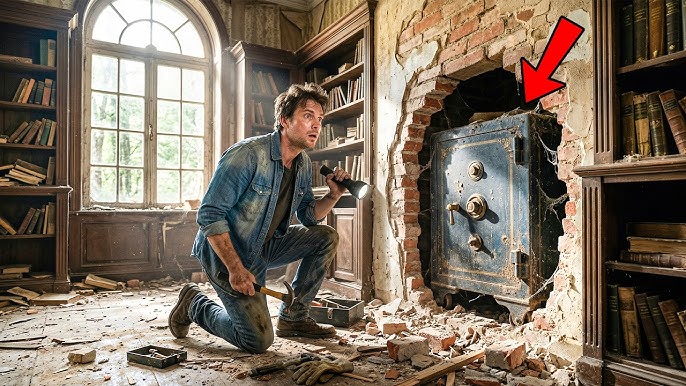
Henry walked slowly through each room. Memories surfaced quietly—his father teaching him to sand wood in the garage, late-night conversations near the fire, the soft ticking of the hallway clock.
He wasn’t thinking about money. Not yet.
That first night, he slept on the couch. The house creaked in the wind, but it didn’t feel empty. It felt… patient.
In the morning, he began cleaning.
Dusting shelves. Sweeping floors. Opening windows. Hours passed. By afternoon, sunlight filled the living room. The house seemed to breathe again.
While moving an old cabinet, Henry noticed something odd. The floor beneath it sounded hollow when he stepped.
He frowned.
The rest of the room had solid hardwood, but that section gave a faint echo.
He knelt, tapping lightly. Hollow again.
Curiosity stirred.
He pushed the cabinet aside completely. The boards looked normal—aged, but intact. Still, the sound was unmistakable.
Henry fetched a screwdriver and carefully pried at one corner. The board lifted slightly—looser than expected.
His pulse quickened.
He removed two planks carefully. Beneath them lay a narrow cavity. Inside, wrapped in oilcloth, was a long rectangular box.
Henry froze.
He lifted it slowly. The box was heavy. Dust coated its surface. He set it on the floor and opened the latch.
Inside were bundles of papers.
Not money. Not gold.
Just documents.
Henry frowned, flipping through them. Deeds. Maps. Letters. Old contracts. At first, it looked like nothing valuable.
Then he noticed dates—decades old.
And signatures.
One document caught his eye: a land deed covering several acres near Cedar Ridge. Another referenced mineral rights. Another mentioned timber leases.
Henry sat back, stunned.
These weren’t random papers. They were records of ownership—land his father had quietly acquired over years. Some parcels bordered new development areas. Others included access to a creek.
He flipped faster, heart racing.
At the bottom of the box lay a sealed envelope addressed simply: “Henry.”
His breath caught.
He opened it carefully.
Inside was a handwritten letter.
Son,
If you’re reading this, you chose the house. I hoped you would.
Your brother and sister always preferred quick money. Nothing wrong with that. But I wanted you to have something else—something that grows.
Over the years, I bought land quietly. Small parcels. Mineral rights. Timber agreements. Nothing flashy. But together, they matter.
The papers you found are only part of it. The real value is patience. Some of this land sits where development is coming. Others hold resources not yet tapped.
I didn’t tell them because they’d sell it all immediately.
You, I trust to decide carefully.
The house was never the fortune.
It was just the door.
— Dad
Henry lowered the letter slowly. His chest tightened.
He looked at the documents again. His father hadn’t left him just a house—he’d left him a hidden portfolio.
Days later, Henry met with a local surveyor. They reviewed the deeds.
“You realize this is significant?” the surveyor said.
“How significant?”
“These parcels connect. Together, they form a corridor developers would pay well for. And this one—” he tapped a map “—has mineral rights near a quarry expansion.”
Henry leaned back, stunned.
Weeks passed. Offers came quietly. A timber company. A developer. A conservation group. Each interested in different parcels.
Henry didn’t rush.
He walked the land first. Pine forests. Rolling hills. A quiet creek. He remembered hiking there as a boy.
He decided carefully—selling only portions, keeping the rest.
The first deal alone exceeded what his siblings had inherited.
When Robert heard, he called immediately.
“You’re joking,” he said.
“No.”
“You’re saying the old house came with land?”
“More than that.”
Linda joined the call. “Dad never told us.”
Henry replied calmly, “He left it in the house.”
Silence followed.
“So… you’re richer than both of us now?” Robert asked.
Henry hesitated. “That’s not the point.”
But they both knew it.
Months later, Henry restored the Cedar Ridge house fully. New roof. Refinished floors. Fresh paint. He kept the structure intact, honoring his father’s memory.
He also built a small office in the study—where maps and documents now lined the walls.
One evening, he sat on the porch watching sunset. The hills glowed gold. Wind moved gently through the pines.
He thought about the will reading. His siblings had taken the money.
He had taken the house.
And inside it, hidden beneath worn floorboards, he had found something far greater.
Not just land. Not just wealth.
But his father’s final lesson: real fortune isn’t always handed over in plain sight.
Sometimes, it waits quietly—hidden in the place only patience will uncover.
Winter settled over Cedar Ridge with a quiet confidence, as if the hills themselves approved of Henry’s return. Snow dusted the pine branches, and smoke curled steadily from the restored chimney. The house, once silent and neglected, now felt alive again.
Henry spent most mornings in the study, reviewing the documents his father had hidden beneath the floorboards. The more he read, the more he realized the scope of what he’d inherited.
It wasn’t just land.
It was strategy.
Small parcels connected like puzzle pieces. Timber rights overlapping mineral access. Old easements that allowed road entry through neighboring properties. His father hadn’t simply bought land—he had built leverage.
One morning, a knock sounded at the door.
Henry opened it to find a man in a heavy coat holding a leather folder. “Mr. Callahan? I’m David Mercer. I represent Ridgeway Development.”
Henry nodded. “Come in.”
They sat at the dining table. Mercer opened the folder and slid a map forward.
“We’re planning a residential project in this valley,” he explained. “Your parcels sit right in the middle of our access route.”
Henry studied the map. He already knew that.
“What are you offering?” he asked.
Mercer named a number.
Henry didn’t react, though his pulse jumped. It was more than the first sale he’d already completed.
“Interesting,” Henry said calmly.
“We’re prepared to move quickly.”
Henry leaned back. “I’ll think about it.”
Mercer seemed surprised. “Most people wouldn’t hesitate.”
Henry smiled faintly. “My father didn’t buy this land to rush decisions.”
After Mercer left, Henry walked outside. Snow crunched under his boots. He followed a trail behind the house, moving through the pines until the land opened into a quiet ridge overlooking the valley.
He remembered standing there as a boy, his father beside him.
“One day this’ll matter,” his father had said.
Henry hadn’t understood then.
Now he did.
He decided not to sell—at least not yet.
Instead, he called the conservation group that had previously contacted him. They met a week later.
“We’re interested in preserving part of this ridge,” the representative explained. “Public hiking access, protected forest.”
Henry considered the idea. It aligned with his father’s values—growth, but not destruction.
They negotiated carefully. The agreement allowed conservation use while Henry retained certain rights. The payment was generous, but more importantly, it protected the land.
Word spread quickly.
Soon, more offers arrived—not just from developers, but from utility companies and timber firms. Henry handled each one patiently, choosing only what made sense long-term.
By spring, his financial situation had changed dramatically. The proceeds from selective deals surpassed what his siblings had received—and then some.
Robert called again.
“I still can’t believe Dad hid all that,” he said.
“He didn’t hide it,” Henry replied. “He left it where he knew I’d find it.”
Linda’s voice came through the speaker. “You planning to sell everything?”
“No.”
“Why not? You could retire tomorrow.”
Henry looked out the window at the hills. “Because that’s not what he intended.”
They didn’t argue. But their silence said they didn’t fully understand.
One afternoon, Henry discovered something else.
While clearing the attic, he found an old wooden chest tucked behind insulation. Inside were notebooks—his father’s journals.
Henry sat on the floor and opened one.
The entries described each land purchase. Not just numbers, but reasons.
“Bought the north parcel today. Henry loved hiking there as a boy.”
“Mineral rights cheap—future quarry expansion likely.”
“House needs work, but someday Henry might return.”
Henry swallowed hard. Every page mentioned him. His father hadn’t just planned investments—he’d planned for Henry.
At the bottom of one notebook, a final entry stood out:
“Money disappears. Land remains. But the real fortune is giving him something to build.”
Henry closed the journal slowly.
He understood now. The inheritance wasn’t about wealth alone. It was about responsibility.
Summer arrived warm and bright. Henry hired local workers to maintain trails and repair fencing. He reopened an old barn as storage for equipment. The property slowly transformed into something purposeful.
One afternoon, a young couple stopped by.
“We heard you own the ridge,” the man said. “Is it open for hiking?”
Henry nodded. “Yes. Stay on the marked paths.”
They thanked him and walked off smiling.
Watching them, Henry realized something surprising—he enjoyed sharing the land. It felt right.
Later, Robert visited in person for the first time.
He stepped onto the porch, looking around. “You really fixed this place up.”
Henry nodded. “It deserved it.”
Robert walked inside, then back out. “So… this is where it all started?”
“Yeah.”
He shook his head. “I took the money and spent half already. Investments didn’t go great.”
Henry didn’t judge. “That happens.”
Robert looked out at the valley. “Dad knew what he was doing, didn’t he?”
“He did.”
They stood quietly.
“I used to think you got the worst deal,” Robert admitted. “Guess I was wrong.”
Henry smiled gently. “He gave us what we needed.”
Robert nodded. “He gave you something that grows.”
Autumn returned, painting the hills gold again. The Cedar Ridge house stood stronger than ever, its porch filled with warm light each evening.
Henry sat there one night, his father’s journals beside him. The wind moved softly through the trees.
His siblings had taken the money—quick, simple, immediate.
He had taken the house.
Inside it, beneath worn floorboards and dusty rafters, he had found land, opportunity, and a carefully built future.
But more than that, he had found his father’s final gift: trust.
The real fortune hadn’t been the documents or the deals.
It was the chance to build something lasting—something that would still matter long after the money was gone.
Henry leaned back, watching the last light fade over the ridge.
The house creaked gently around him, steady and familiar.
And for the first time, he realized the greatest treasure hidden inside wasn’t just wealth.
It was the life waiting quietly for him to step into.