
Neighbors Laughed When He Built an Octagon Cabin — Until It Stayed 15 Degrees Warmer Than Theirs
When Caleb Turner marked the ground with eight stakes instead of four, the neighbors started laughing before he even swung the first hammer.
“You building a barn or a windmill?” shouted Earl Donnelly from across the clearing.
Caleb didn’t answer. He knelt in the frost-hardened soil, measuring angles with a wooden protractor he’d carved himself. Each stake sat at a precise distance, each line tied with twine forming a rough octagon in the snow.
Old Mrs. Whitaker leaned on her fence and shook her head. “Boy’s lost his mind. Cabin’s supposed to be square. Always been square.”
Caleb finally stood, brushing dirt from his gloves. “Square corners trap cold,” he said calmly.
Earl snorted. “Cold’s cold, son. Don’t matter what shape you sleep in.”
But Caleb had spent the last three winters freezing in a drafty rectangular cabin. The wind hit flat walls hard, and snow piled against corners. Heat from his stove drifted up, leaving the floor icy. He’d studied the problem the way some men studied maps—quietly, stubbornly.
He’d found an old book in town: “Octagon Mode of Building,” printed in the 1800s. It claimed eight-sided homes held heat better, resisted wind, and used space more efficiently. Most folks dismissed it as nonsense.
Caleb didn’t.
By midday, he started digging post holes. Earl and two other ranchers watched from horseback, chuckling.
“You’ll regret it when you try to fit a roof on that mess,” one called.
Caleb kept working.
He wasn’t trying to impress anyone. He just didn’t want to shiver through another winter.
The foundation took a week. Instead of four corners, eight posts formed a ring. He cut each beam carefully, angling the ends to meet cleanly. It was slower than building square. Harder too. But when the frame rose, something surprising happened.
The structure felt… solid.
Wind slid around it instead of slamming into it. Even unfinished, Caleb noticed less whistle between boards.
Mrs. Whitaker walked over one afternoon. “Looks like a pie,” she muttered.
Caleb smiled faintly. “Warm pie, hopefully.”
She studied the walls. “You really think it’ll make a difference?”
“I do.”
“Hmm.” She nodded. “Well, I suppose it can’t be worse than Earl’s draft box.”
They both glanced at Earl’s cabin—a classic square structure with gaps big enough to see daylight.
Roofing was the hardest part. Eight triangular sections met at a central point. Caleb climbed carefully, setting rafters like spokes in a wheel. The neighbors gathered again, half expecting the thing to collapse.
It didn’t.
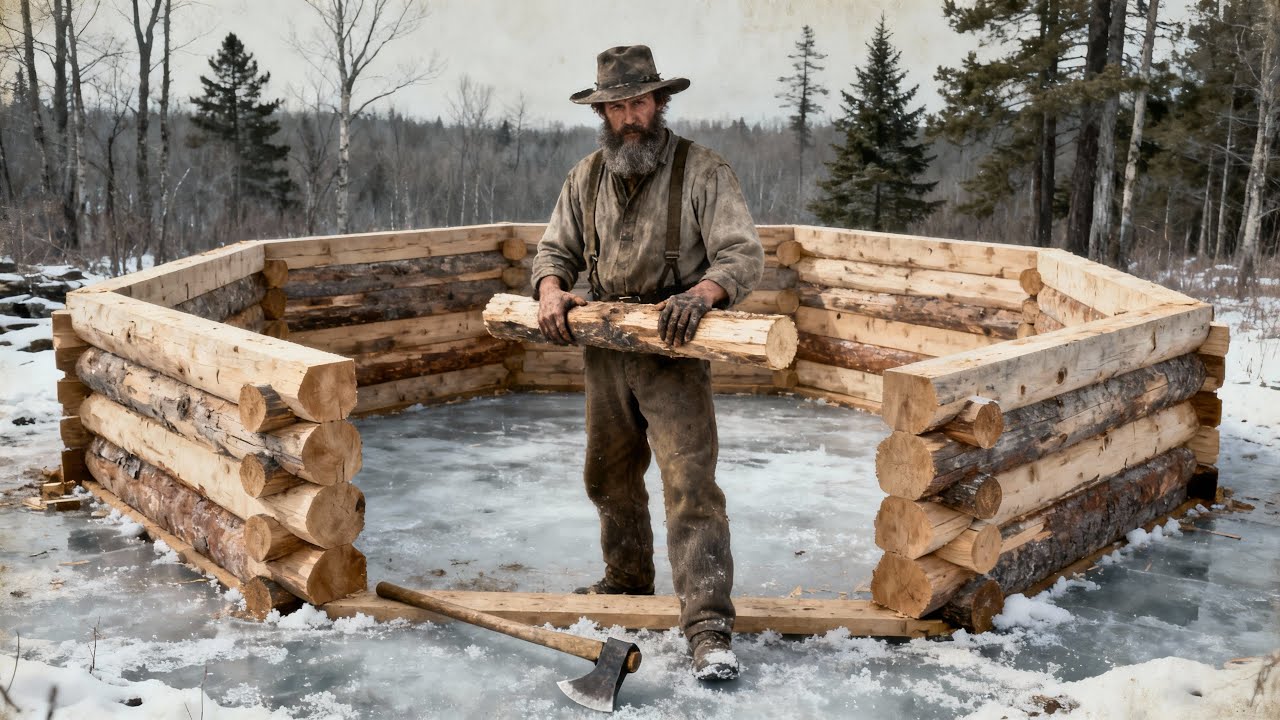
When the final board went up, the cabin looked unusual but elegant—compact, symmetrical, and sturdy. Caleb built a small chimney in the center, letting heat radiate evenly.
Inside, the space felt different. No dark corners. No long walls. Just a circular flow that seemed to hold warmth.
Earl stepped inside reluctantly. “Feels… odd.”
“Give it time,” Caleb replied.
Summer passed. Caleb insulated with moss and wool. He sealed seams with resin. He added small windows angled toward the sun.
Neighbors kept teasing him.
“Hope you like living in a barrel!”
“Wind’s gonna spin you like a top!”
Caleb ignored them.
Then winter came early.
A brutal cold front swept across the valley. Temperatures dropped below zero for days. Smoke rose from chimneys morning to night. Ranchers burned through firewood fast.
On the second night, Earl stomped into Caleb’s cabin, stamping snow from his boots.
“Mind if I warm up?” he muttered.
“Come in.”
Earl paused, surprised. “Feels warmer in here.”
Caleb nodded toward the thermometer hanging by the door. “Fifteen degrees warmer than outside.”
“That ain’t special.”
“Check yours.”
Earl frowned. “My place is barely above freezing.”
Caleb handed him coffee. Heat from the central stove spread evenly. No cold corners. No drafts.
Earl rubbed his hands. “How much wood you burning?”
“Half what I used last year.”
Earl stared around slowly.
Word spread fast.
By the third day, Mrs. Whitaker visited. Then the Miller brothers. Then half the valley. Everyone noticed the same thing: Caleb’s octagon cabin held heat longer. Wind curved around the walls. Snow didn’t pile heavily. The central stove warmed every side equally.
“Darnedest thing,” Mrs. Whitaker said, cheeks rosy. “Feels like summer in here.”
Outside, Earl’s cabin groaned under wind. He burned logs constantly.
“Maybe you’re onto something,” he admitted.
Caleb shrugged. “Just geometry.”
The cold deepened. One night, a blizzard hit. Winds howled like wolves. Snow buried doors. Earl’s chimney clogged, filling his cabin with smoke. He grabbed blankets and stumbled through drifts toward Caleb’s place.
Caleb opened the door instantly.
“Come in.”
Earl collapsed onto a chair. “Thought I was gonna freeze.”
Caleb added another log. “You can stay.”
That night, Earl slept comfortably. The octagon walls held steady against the storm. No creaking. No drafts. Just steady warmth.
In the morning, Earl walked outside and stared at both cabins.
His square one looked battered. Snow packed thick in corners. Wind carved drifts against flat sides.
Caleb’s octagon stood clean, snow sliding off evenly.
“Well,” Earl muttered, “I’ll be damned.”
By late winter, three neighbors asked Caleb to help design their cabins.
“You charging?” one asked.
“No,” Caleb replied. “Just bring lumber.”
They built the second octagon in February. Then a third in March. Each performed the same—warmer, quieter, more efficient.
Spring thawed the valley, but the reputation stuck.
By summer, travelers came just to see “the warm cabins.” Some laughed at first—until they stepped inside.
One afternoon, a schoolteacher named Clara arrived. She studied the walls thoughtfully.
“You designed this yourself?”
Caleb nodded.
“It’s brilliant,” she said.
He shifted awkwardly. “Just practical.”
She smiled. “Practical can change lives.”
Clara stayed for tea. Then dinner. Then came back the next week. She asked questions about angles, airflow, heat distribution. Caleb found himself explaining more than he ever had.
“You ever think of writing this down?” she asked.
“No.”
“You should.”
He shook his head. “I’m just a builder.”
“You’re an innovator,” she corrected.
They began spending more time together. Clara admired the way sunlight moved across the angled walls. Caleb noticed how her laughter filled the space.
By autumn, she moved into the valley permanently—into her own small octagon cabin Caleb helped build.
Neighbors stopped laughing entirely.
Winter returned, colder than the last. This time, five octagon cabins dotted the valley. Each stayed warmer. Each used less wood.
Earl visited one evening, shaking his head. “Remember when we laughed at you?”
Caleb smiled faintly. “I remember.”
“You saved me a lot of chopping this year.”
Clara joined them, setting soup on the table. “And fewer frozen toes,” she added.
Snow fell outside, but inside the cabin warmth held steady. The central stove glowed, heat moving smoothly along eight walls.
Earl raised his mug. “To the strangest cabin in the valley.”
Clara laughed. “Not strange. Smart.”
Caleb looked around the room—the soft light, the quiet comfort, Clara’s smile, the steady warmth.
Neighbors had laughed when he built an octagon.
But now, as wind howled outside and his cabin stayed fifteen degrees warmer than theirs once had, Caleb realized something deeper.
Sometimes, being different wasn’t foolish.
Sometimes, it was the warmest decision a man could make.
Winter settled deeper than anyone expected. By mid-December, the valley looked like a bowl of white stone, every fence buried, every trail erased. Smoke from chimneys rose in thin blue lines, and the sound of axes echoed from morning to dusk as families fought to keep their square cabins warm.
But inside Caleb Turner’s octagon cabin, the fire burned slow and steady.
Clara sat at the table grading school papers while Caleb whittled a small wooden toy—an eight-sided spinning top. The warmth inside felt even, gentle. No cold drafts crept across the floor. No corners collected icy shadows.
She glanced at the thermometer. “Still fifteen degrees warmer.”
“Closer to sixteen today,” Caleb said without looking up.
She smiled. “You realize half the valley is measuring their cabins against yours now.”
He chuckled softly. “They can measure all they want.”
A knock sounded at the door—urgent, fast. Caleb rose and opened it. The Miller brothers stumbled in, faces red from cold.
“Our stove went out,” Tom Miller said, breath shaking. “Pipe froze solid.”
Caleb stepped aside. “Come in.”
They stood near the fire, thawing slowly.
“Feels like stepping into spring,” the younger brother muttered.
Clara poured them hot coffee. “You can stay until the wind eases.”
Tom glanced around again. “I still don’t understand how it works.”
Caleb set the spinning top on the table. “Wind hits flat walls hard. But with eight sides, it splits and slides around. Less pressure. Less heat pulled away.”
Tom nodded slowly. “And the stove in the center?”
“Heat spreads evenly. No far corners.”
The younger brother scratched his beard. “Square cabins got four cold pockets. I see that now.”
They stayed until evening. Before leaving, Tom paused at the door. “I think I’ll build one come spring.”
“You won’t regret it,” Caleb said.
Word continued to spread beyond the valley. By January, a trader passing through stopped to see the famous octagon cabin.
He walked in, removed his gloves, and laughed in disbelief. “My wagon’s colder than a freezer. This place feels like a parlor in Boston.”
Clara leaned against the wall. “He built it himself.”
The trader studied Caleb. “You selling plans?”
Caleb hesitated. “Never thought about it.”
“You should. Folks would pay.”
After the trader left, Clara turned to him. “You heard him.”
“I don’t know,” Caleb replied. “I built it for me.”
“You could help more people,” she said gently.
He looked around the warm space, thoughtful.
That night, the wind rose harder than any storm before. Snow blasted sideways, rattling windows. The octagon cabin stood firm, wind sliding around its angled sides.
Across the valley, Earl’s old square cabin groaned again. Near midnight, a lantern flickered through the storm—Earl trudging through deep snow.
Caleb opened the door before he knocked.
“Roof’s leaking,” Earl said, stamping his boots. “Snow piling in the corners again.”
“Sit,” Caleb replied.
Earl sank into the chair. “Every time I come here, it’s warmer than last time.”
Clara laughed softly. “That’s because he keeps improving it.”
It was true. Caleb had added extra insulation between angled walls. He’d sealed seams tighter. Each change made the cabin more efficient.
Earl leaned forward. “I’m tearing mine down come spring.”
“You sure?” Caleb asked.
“Dead sure. I’m done freezing.”
By February, nearly everyone in the valley planned octagon builds. Caleb spent his days sketching simple diagrams. Clara helped label measurements and angles.
“You’re becoming an architect,” she teased.
He shook his head. “Just drawing lines.”
But the lines mattered. The first time a neighbor followed his plans exactly, the result matched his own cabin’s warmth.
One afternoon, Clara stepped outside and watched children playing between snowbanks. Their laughter echoed across the valley. Smoke rose from several octagon cabins now.
“You changed this place,” she said quietly when Caleb joined her.
He looked at the horizon. “We changed it.”
She slid her hand into his. He didn’t pull away.
Spring came late but welcome. Snow melted slowly, revealing a valley transformed. Four new octagon cabins stood where square ones had been. Each looked different—some larger, some with porches—but all shared the same eight-sided shape.
Earl’s new cabin rose fastest. He worked from sunrise to sunset.
“You better inspect this,” he called when the frame stood.
Caleb walked around it carefully. “Angles look good.”
Earl grinned. “Never thought I’d be proud of geometry.”
Clara laughed. “It’s the warmest math you’ll ever use.”
By early summer, travelers came regularly. Some took notes. Others measured walls. A newspaper man even arrived, sketchbook in hand.
“You mind if I write about this?” he asked.
Caleb shrugged. “If you want.”
The article appeared a month later: “Mountain Builder Creates Warmer Octagon Cabins.”
More visitors followed.
One afternoon, a young couple approached nervously. “We heard your cabins stay warmer,” the woman said. “We’re expecting a baby. Winters scare us.”
Caleb showed them inside. The gentle airflow, the central stove, the efficient layout. The woman placed a hand on her stomach, visibly relieved.
“This feels safe,” she whispered.
Clara watched Caleb. She saw the moment he realized his design wasn’t just clever—it protected families.
That evening, she said softly, “You didn’t just build a cabin. You built peace of mind.”
He looked at the fire. “Didn’t think of it that way.”
Autumn returned again. Leaves turned gold. The valley now held eight octagon cabins. At dusk, smoke curled evenly from centered chimneys, like a quiet pattern across the hills.
Neighbors gathered at Caleb’s place for supper. Earl raised a mug.
“To the man we laughed at.”
Everyone chuckled.
“And to warm winters,” Clara added.
Caleb looked around the room—friends, laughter, warmth radiating gently from the stove. He remembered the first day, eight stakes in frozen ground, neighbors shaking their heads.
Now, those same neighbors sat comfortably, their homes warmer, their woodpiles lasting longer.
Outside, the first snow of the new season began to fall.
Wind moved across the valley—but instead of slamming into flat walls, it slid around angled cabins, soft and harmless.
Inside, Caleb’s octagon remained fifteen degrees warmer, just like before.
But this time, he wasn’t the only one.
The laughter that once followed him had turned into something else—respect, gratitude, and quiet admiration.
And as Clara leaned her head against his shoulder, Caleb realized the truth:
He hadn’t just built a different cabin.
He’d changed how an entire valley faced the cold—together, warmer than ever before.