
Thrown Out at 18, She Hid in a Copper Mine—While Her Uncle Stole Her Inheritance
The night Lydia Harper turned eighteen, she was handed a suitcase and a lie.
“I’m sorry,” her uncle said, though his voice carried no trace of it. “Your father left everything in my care. You’re not ready for it yet.”
Lydia stood on the front porch of the only home she had ever known, the cold Wyoming wind cutting through her thin jacket. The porch light flickered behind her, casting long shadows across the cracked wooden steps.
“That’s not what he told me,” she said, her voice steady despite the tremor in her chest.
Her uncle, Richard Harper, sighed like a man burdened by someone else’s foolishness.
“Your father said a lot of things,” he replied. “But legally, everything is under my management until I decide otherwise.”
“Decide?” Lydia repeated. “Or take?”
His expression hardened.
“You should be grateful,” he snapped. “I’ve fed you, clothed you, kept a roof over your head since your parents died. Don’t push your luck.”
Lydia tightened her grip on the suitcase handle.
“I’m not asking for charity,” she said. “I’m asking for what’s mine.”
Richard stepped forward, lowering his voice.
“And I’m telling you,” he said coldly, “you’ll get it when—and if—I believe you deserve it.”
Behind him, the door opened slightly.
Aunt Carol watched from the hallway, her face pale, her eyes avoiding Lydia’s.
That was all Lydia needed to understand.
She was alone.
The door shut.
The lock clicked.
And just like that, Lydia Harper—eighteen years old, recently orphaned, and quietly stubborn—was out of options.
She didn’t cry.
Not then.
Not as she walked down the long gravel driveway.
Not as the house disappeared behind her.
Not even when the road stretched endlessly into the dark.
She walked until her legs ached, then kept walking.
Because stopping meant thinking.
And thinking meant breaking.
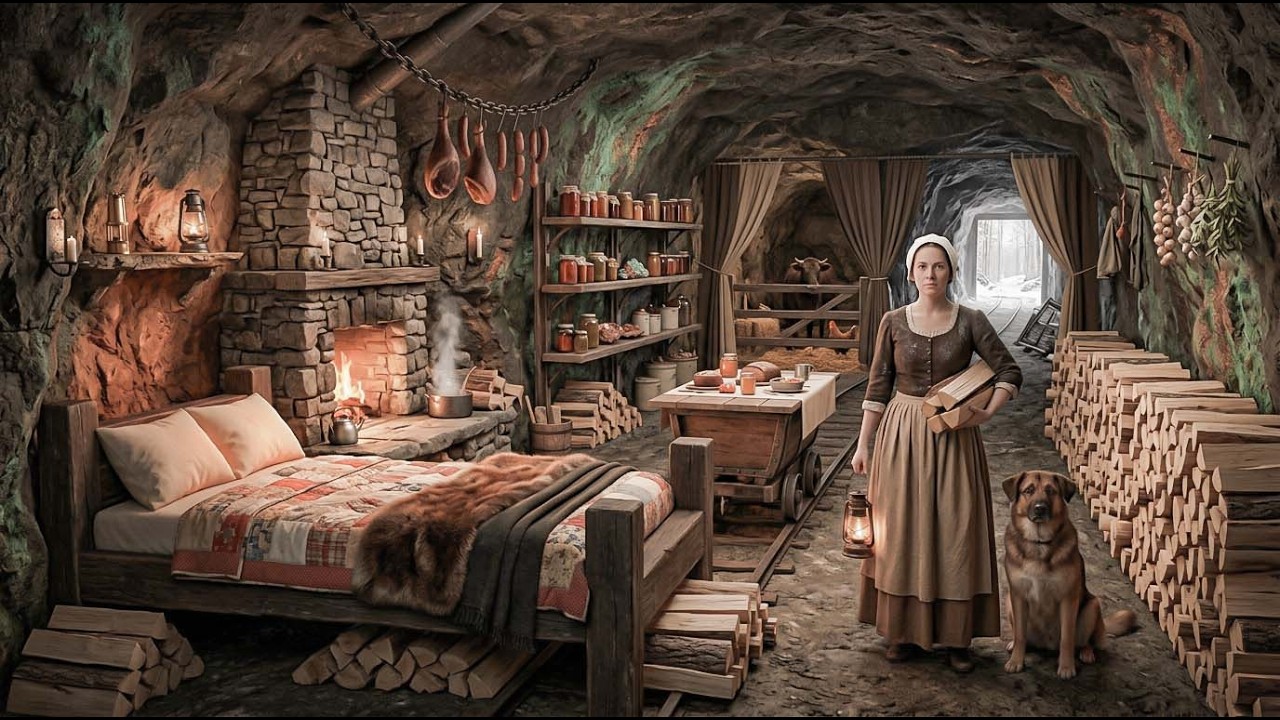
By dawn, Lydia reached the edge of Blackridge.
It wasn’t much of a town—just a scattering of buildings pressed between rocky hills and dry land. Once, decades ago, it had thrived on copper mining. Now, it lingered like a memory people hadn’t quite let go of.
Most of the mines were abandoned.
Too dangerous, they said.
Too unstable.
Too forgotten.
Lydia sat on a low rock just outside town, her suitcase beside her.
She opened it.
Inside: a few clothes, an old photograph of her parents, and a small envelope.
Her father’s handwriting stared back at her.
For Lydia—when she’s ready.
Her heart pounded as she opened it.
Inside was a folded piece of paper.
Not money.
Not a will.
A map.
It was rough, hand-drawn, but clear enough.
A marked path through the hills.
And at the edge—
A symbol.
A circle, with a small “X” inside.
Below it, her father had written:
Trust the ground beneath what others abandon.
Lydia stared at the words.
“What does that even mean?” she whispered.
By midday, she made her decision.
If she had nothing—
Then she had nothing to lose.
The path wasn’t easy.
The hills were steep, the ground uneven, scattered with loose stones and rusted remnants of old equipment. The sun beat down relentlessly, and the air carried a dry, metallic scent.
Lydia followed the map carefully.
Step by step.
Until she found it.
The entrance to the mine.
Half-hidden by overgrown brush and time.
A dark opening carved into the side of the hill, its wooden supports worn but still standing.
A warning sign lay crooked nearby:
DANGER — UNSAFE STRUCTURE
Lydia stared at it.
Then at the map.
Then back at the mine.
“Figures,” she muttered.
Inside, the air was cooler.
Damp.
Heavy.
Each step echoed softly against the stone walls. Dust shifted beneath her shoes. The light from the entrance faded quickly, replaced by shadows that seemed to stretch and breathe.
She hesitated.
Then reached into her suitcase.
A flashlight.
Small. Old. But working.
The beam cut through the darkness.
And Lydia stepped deeper inside.
At first, it was just survival.
She cleared a small space near the entrance—safe enough for air, hidden enough to avoid attention.
She rationed what little food she had.
Collected water from a slow drip along the rock walls.
Slept lightly.
Listened constantly.
Days passed.
Then weeks.
She learned quickly.
Where the ground was stable.
Where it wasn’t.
How to move quietly.
How to exist in a place no one thought to look.
But the map—
The map still lingered in her mind.
Trust the ground beneath what others abandon.
It wasn’t just about hiding.
It meant something more.
One evening, after nearly a month in the mine, Lydia decided to explore deeper.
The tunnels twisted unpredictably—some collapsed, others branching into narrow passageways that felt like they led nowhere.
But she followed instinct.
And the map.
It led her to a chamber unlike the others.
Wider.
Higher.
The air felt different—less stale, almost… alive.
She swept her flashlight across the walls—
And froze.
Copper.
Not the dull, forgotten traces she had seen near the entrance.
But rich veins—bright, deep, unmistakable.
Untouched.
Unmined.
Hidden.
Lydia’s breath caught.
“No way…” she whispered.
She stepped closer, running her fingers along the surface.
It was real.
More than real.
Valuable.
Her father had known.
Back in town, Richard Harper was thriving.
At least, that’s how it looked.
He had taken over Lydia’s father’s property, sold off assets, and quietly transferred funds under the guise of “management.”
People asked questions.
He had answers.
Convincing ones.
But not all of them believed him.
Old Mr. Dawson did.
Not the answers—but the doubt.
He had known Lydia’s father for years.
Knew he was careful.
Honest.
The kind of man who didn’t leave things… unfinished.
“She didn’t just disappear,” Dawson muttered one morning at the diner.
“Then where is she?” someone asked.
He didn’t answer.
But his eyes drifted toward the hills.
Meanwhile, Lydia was changing.
The girl who had been thrown out with a suitcase was gone.
In her place stood someone sharper.
Stronger.
Determined.
She began documenting everything.
Sketching the mine.
Marking the copper veins.
Estimating depth, reach, potential.
She didn’t know everything.
But she knew enough.
Enough to understand what she had found wasn’t just survival.
It was leverage.
Months passed.
Winter crept in.
The town slowed.
And Lydia prepared.
The day she walked back into Blackridge, no one recognized her at first.
Her hair was shorter.
Her posture steadier.
Her eyes… different.
She walked straight into the county office.
“I need to file a claim,” she said.
The clerk barely looked up.
“For what?”
Lydia placed the map on the desk.
“For mineral rights.”
Things moved quickly after that.
Faster than Richard expected.
By the time he realized what was happening, it was too late.
Legal notices arrived.
Investigations opened.
Records examined.
And questions—
So many questions.
“Where is the inheritance?” the lawyer asked.
Richard’s answers faltered.
Because for the first time—
Someone had proof.
Lydia sat across from him in the courtroom weeks later.
Not as a girl.
Not as someone to dismiss.
But as the rightful heir.
“You said I wasn’t ready,” she told him quietly.
Richard said nothing.
“You were wrong.”
The ruling was clear.
The estate—hers.
The mine—hers.
The stolen assets—returned.
Blackridge changed after that.
Investors came.
Work began.
The old town breathed again.
But Lydia—
She didn’t leave.
Instead, she stood at the entrance of the mine one evening, the setting sun casting gold across the hills.
She looked at the place that had once been her hiding spot.
Her survival.
Her turning point.
Her father had left her more than an inheritance.
He had left her a choice.
And she had chosen to rise.
Because sometimes—
The things the world throws away…
Are exactly where the truth is buried.
And exactly where strength is found.
Thrown Out at 18, She Hid in a Copper Mine—Part 2
The mine no longer felt like a hiding place.
It felt like a beginning.
Lydia stood at its entrance at dawn, boots planted firmly on the cold ground, watching the first trucks arrive. Engines rumbled softly as workers stepped out, stretching, talking, glancing curiously at the young woman who had, somehow, become the center of everything.
Just three months ago, she had been invisible.
Now, she was being watched.
Measured.
Expected.
“Ms. Harper?”
Lydia turned.
A man in a pressed jacket approached, clipboard in hand. Mid-fifties, clean-shaven, the kind of person who spoke carefully and listened even more so.
“Daniel Reeves,” he said, extending a hand. “Project supervisor. We spoke on the phone.”
Lydia shook it.
“Right. You’re the one making sure this doesn’t collapse on us.”
A faint smile crossed his face. “That’s the idea.”
He glanced toward the mine entrance.
“You’ve been inside recently?”
“Every part of it,” Lydia replied.
He raised an eyebrow.
“That so?”
She didn’t elaborate.
She didn’t need to.
Work began cautiously.
Structural reinforcements.
Safety checks.
Mapping.
Everything done by the book.
Lydia insisted on it.
“No shortcuts,” she told Daniel. “I lived in there. I know what it can do.”
He studied her for a moment.
Then nodded.
“Understood.”
But not everyone was pleased.
Change rarely comes quietly.
At the diner, conversations shifted.
“She shows up out of nowhere and suddenly owns half the future of this town?” one man muttered.
“She didn’t show up,” another replied. “She survived.”
Still, doubt lingered.
Not everyone believed in her.
Not yet.
Lydia noticed.
Of course she did.
But she didn’t react.
Not outwardly.
Instead, she worked.
Long hours.
Early mornings.
Late nights reviewing reports she barely understood—but was determined to learn.
And slowly—
Things began to shift.
The first real breakthrough came two weeks in.
A deeper section of the mine, previously blocked by a partial collapse, was carefully cleared.
When the dust settled, the workers stood in stunned silence.
The copper vein extended far beyond initial estimates.
Richer.
Deeper.
More valuable than anyone had expected.
Daniel found Lydia standing near the entrance.
“You were right,” he said simply.
She looked at him.
“I know.”
Word spread fast.
Investors called.
Offers came.
Some generous.
Some aggressive.
Some… manipulative.
“You should sell,” one man told her over the phone. “Take the money and walk away. This is bigger than you.”
Lydia’s voice was calm.
“So am I.”
She hung up.
But pressure wasn’t the only thing building.
One evening, as Lydia reviewed paperwork in the small office she had set up near the site, a knock sounded at the door.
She didn’t look up.
“Come in.”
The door creaked open.
Silence followed.
Too much silence.
Lydia’s hand stilled.
Slowly, she looked up.
Richard stood in the doorway.
For a moment, neither of them spoke.
The air felt heavier.
Tighter.
Like the mine before a collapse.
“You’ve done well,” he said finally.
Lydia leaned back in her chair.
“I learned from watching you,” she replied.
No warmth.
No softness.
Just truth.
Richard stepped inside, closing the door behind him.
“I came to talk,” he said.
“That’s new,” Lydia said. “You usually just take.”
His jaw tightened.
“I made mistakes.”
Lydia let out a quiet, humorless breath.
“That’s one way to describe it.”
He stepped closer.
“I was trying to protect the estate,” he said. “You were young. You didn’t understand—”
“Don’t,” Lydia cut in.
Her voice wasn’t loud.
But it was sharp enough to stop him.
“You don’t get to rewrite this,” she said. “Not now.”
Silence.
Then, more quietly:
“You left me with nothing.”
Richard looked at her.
“You survived.”
Lydia’s eyes didn’t waver.
“That doesn’t make it right.”
For a brief moment, something flickered in his expression.
Regret.
Maybe.
But it passed quickly.
“There are people circling,” he said instead. “Investors. Lawyers. They’ll take advantage of you if you let them.”
Lydia tilted her head slightly.
“Like you did?”
The words landed.
Hard.
Richard exhaled slowly.
“I’m offering help.”
Lydia stood.
For the first time, they were face to face—not as guardian and child…
But as equals.
“No,” she said.
“You’re offering control.”
He didn’t deny it.
“I built something,” Lydia continued. “From nothing. From what you tried to take.”
She stepped closer.
“And I’m not giving it back.”
The room held still.
Then Richard nodded once.
A small, tight motion.
“Then be careful,” he said.
And just like that—
He left.
Lydia stood there long after the door closed.
Her hands were steady.
But her chest felt tight.
Not from fear.
From something else.
Closure didn’t feel like victory.
It felt like… release.
The months that followed were relentless.
The mine expanded.
Operations grew.
And Blackridge began to change.
New jobs.
New families.
Shops reopening.
Laughter returning to streets that had long forgotten it.
Lydia watched it all from a distance at first.
Not because she didn’t care—
But because she didn’t quite know where she fit in it.
Until one afternoon.
She found Tyler—one of the younger workers—struggling with a broken piece of equipment.
“Hold on,” she said, stepping in.
He blinked.
“You know how to fix this?”
Lydia crouched, examining the mechanism.
“Not exactly,” she admitted. “But I know how things break.”
Twenty minutes later, the machine was running again.
Tyler grinned.
“Guess that counts.”
Lydia smiled faintly.
“Guess it does.”
Word spread.
Not about the mine.
Not about the money.
But about her.
“She works alongside them.”
“She listens.”
“She doesn’t act like she’s above anyone.”
Respect grew.
Not given.
Earned.
One evening, as the sun dipped low over the hills, Lydia walked back toward the mine alone.
The air was quiet.
Familiar.
She stepped inside.
Not far.
Just enough.
The walls still held the same steady silence.
The same quiet strength.
She ran her fingers along the rock.
The copper gleamed faintly in the dim light.
“This is where it started,” she whispered.
Not the loss.
Not the betrayal.
The survival.
She closed her eyes briefly.
Remembering the girl who had walked in here with nothing but fear and determination.
And the woman who walked out—
With something no one could take.
Outside, the town of Blackridge continued to grow.
To rebuild.
To hope.
And Lydia—
She didn’t hide anymore.
Because the place that once sheltered her…
Had become the foundation she stood on.
And this time—
No one would take it away.
The End.