
Parents-In-Law Left Her a Cabin With No Roof — What She Built on Top Nobody Expected
When the lawyer said “a cabin,” Emily Carter imagined something small but whole—a quiet place tucked among trees, maybe a little worn, but livable.
What she inherited instead… barely qualified as shelter.
“There must be a mistake,” Emily said, staring at the photograph on the desk.
The image showed four walls.
That was it.
No roof. No windows. Half the door missing. The structure leaned slightly, as if even it had given up.
The lawyer adjusted his glasses. “I’m afraid not. Your parents-in-law were very specific. The property and its structures are to be transferred to you alone.”
Emily let out a soft, disbelieving laugh.
“Structures?” she echoed. “That’s generous.”
Two years earlier, Emily had been living a very different life.
A good one.
She and her husband, Daniel, had built it together in Portland—small apartment, busy schedules, shared dinners that always ended too late and too full of laughter.
Then the accident happened.
Sudden.
Unforgiving.
Final.
After Daniel’s death, everything had felt… paused.
Not broken.
Not gone.
Just… paused.
Like a life waiting for something to restart it—but nothing ever did.
She hadn’t been close with his parents.
Not distant, exactly—but not close.
They lived in Colorado, in a remote area Emily had only visited once. Quiet people. Private. Kind in a reserved way.
When they passed—within months of each other—it felt like the last thread tying her to Daniel’s past had quietly unraveled.
And yet…
They had left her something.
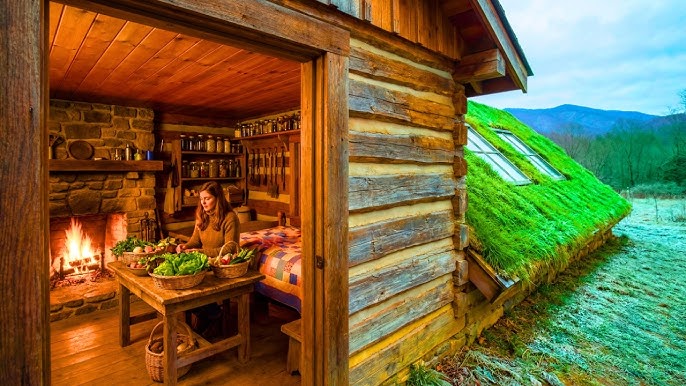
“A cabin with no roof,” Emily murmured now, shaking her head.
The lawyer slid a set of keys across the desk.
“They believed you would understand,” he said.
Emily frowned.
“Understand what?”
He hesitated.
“They didn’t say.”
Three weeks later, Emily stood in front of it.
The cabin.
If you could call it that.
It sat deep in the woods, surrounded by tall pines and silence that felt almost deliberate. The road leading in had long since given up on being a road—just a narrow path winding through uneven ground.
Emily stepped out of her car slowly.
The air was crisp, clean, carrying the faint scent of earth and pine needles.
She looked at the structure again.
Still no roof.
Still leaning.
Still… stubbornly standing.
“Okay,” she said aloud, hands on her hips. “You’ve got my attention.”
Inside, the floor creaked beneath her steps.
Sunlight poured in from above, uninterrupted by anything resembling a ceiling. Leaves had drifted inside over time, gathering in soft piles along the corners.
The place felt abandoned.
But not forgotten.
Emily walked slowly, taking it in.
The walls, though weathered, were solid.
The foundation held.
And despite everything—
It didn’t feel ruined.
It felt… waiting.
On the far wall, something caught her eye.
A small wooden box, nailed carefully between two beams.
She stepped closer, reaching up to take it down.
Inside was a folded piece of paper.
Daniel’s handwriting.
Her breath caught.
“No way…” she whispered.
Em,
If you’re reading this, it means they gave you the cabin.
I know how it looks. Broken. Incomplete. Like something was taken away.
But it’s not.
It was never finished.
My dad started building it years ago. Said he wanted to create something open—something that let the sky in.
He never got to finish it.
I always thought… maybe one day we would.
Together.
If I’m not there, then you decide what it becomes.
Not what it was meant to be.
What you need it to be.
—Daniel
Emily sat down on the dusty floor.
The paper trembled slightly in her hands.
For a long time, she didn’t move.
“I don’t know how to do this without you,” she said quietly.
The cabin, as always, offered no answer.
Only space.
She stayed longer than she planned.
One day turned into three.
Three turned into a week.
At first, she just cleaned.
Cleared leaves.
Swept dust.
Opened what remained of the door to let fresh air move through.
Then she started thinking.
Not about fixing it.
About finishing it.
A roof would be the obvious answer.
Expected.
Practical.
Safe.
Emily looked up at the open sky above her.
The sunlight filtered through branches, shifting with the breeze.
At night, she had seen stars—clear, endless, impossibly bright.
“No,” she said slowly.
“A roof… isn’t the point.”
The idea came quietly.
Almost like a memory.
What if the sky stayed?
The next morning, she drove into town.
A small hardware store. A diner. A handful of people who looked like they knew everything about everyone.
Emily stepped inside the store, a rough sketch in hand.
“I need materials,” she said.
The man behind the counter glanced at the paper.
Then at her.
“You building something?”
Emily hesitated.
Then nodded.
“Something like that.”
The work began the next day.
And it wasn’t easy.
Emily wasn’t a builder.
She made mistakes.
Measured wrong.
Dropped things.
Got frustrated.
But she didn’t stop.
Weeks passed.
Then months.
People started noticing.
The woman in the woods.
Working alone.
Every day.
Eventually, someone came to see.
Then another.
“You need help with that beam?” one man asked.
Emily wiped sweat from her brow.
“I might,” she admitted.
Help came slowly.
Not out of obligation.
Out of curiosity.
Then respect.
“What are you building?” a woman asked one afternoon.
Emily looked up at the structure.
Then back at her.
“I’m not entirely sure yet.”
But she was.
Six months after she arrived, the cabin stood transformed.
The walls were restored.
Reinforced.
Strong.
But above them—
No roof.
Instead, a structure rose upward.
Unexpected.
Impossible to ignore.
A glass canopy.
Not fully enclosed.
Not sealing the space.
But suspended above it—angled, layered, designed to catch light without blocking the sky.
During the day, sunlight poured through, softened and scattered.
At night, the stars remained visible—framed, not hidden.
Inside, Emily had built something even more surprising.
Not a home.
A space.
Open seating.
Simple wooden benches.
Soft lighting.
Bookshelves along one wall.
A place to sit.
To think.
To breathe.
When people finally saw it—
They didn’t know what to call it.
“It’s not a house,” someone said.
“It’s not exactly a cabin either.”
Emily smiled.
“It doesn’t have to be.”
Word spread.
People came.
At first, out of curiosity.
Then for reasons they couldn’t quite explain.
A man sat quietly for hours, staring up at the shifting light.
A woman brought a notebook and filled pages without looking up once.
A couple came at night and lay side by side, watching the stars through the glass.
“It feels… peaceful here,” someone said.
Emily nodded.
“That’s the idea.”
One evening, as the sun dipped low and the sky turned gold, Emily stood at the center of it all.
The space.
The light.
The quiet hum of people simply being.
She looked up.
The sky hadn’t been closed off.
It had been invited in.
Daniel had been right.
It wasn’t about what the cabin was supposed to be.
It was about what it could become.
Later, someone asked her:
“Why didn’t you just put a roof on it?”
Emily thought for a moment.
Then said:
“Because sometimes… the thing that feels broken…”
She glanced upward.
“…is actually the part that makes it whole.”
The cabin remained.
Not as a shelter from the world.
But as a place within it.
And on top of what others saw as unfinished—
Emily had built something no one expected.
Not just a structure.
But a beginning.
Parents-In-Law Left Her a Cabin With No Roof — Part 2
Winter came quietly.
The first snowfall didn’t announce itself with a storm—just a soft layer of white settling over the trees, the path, and the open clearing where Emily’s glass-canopied cabin stood.
From a distance, it looked almost untouched.
But inside—
It had changed everything.
Emily stood beneath the canopy, watching snow collect along the angled glass panels above. The design held, just as she had hoped. The snow slid gently to the edges, falling in soft curtains that never quite reached the center.
The sky was still visible.
Muted now.
Pale.
But open.
“You planned for this?”
Emily turned.
Daniel Reeves—no, not that Daniel. This one was just “Dan,” a local contractor who had become something of a quiet partner in her work—stood near the entrance, brushing snow from his coat.
“Not exactly,” she admitted. “I just didn’t want to lose the sky.”
He looked up, nodding slowly.
“Well,” he said, “you didn’t.”
Winter tested everything.
The structure.
The materials.
Emily herself.
Cold seeped in through the open sides. Wind found its way into corners she hadn’t noticed before. The benches, once warm in sunlight, now held a chill that lingered long after dusk.
Fewer people came.
The curious drifted away.
Only a handful remained—the ones who understood the place wasn’t just about comfort.
“You could close it in,” Dan suggested one morning, setting down a toolbox. “Add walls, insulation. Make it usable year-round.”
Emily shook her head.
“If I close it,” she said, “it becomes something else.”
“Maybe something easier,” he replied.
“Maybe something less honest,” she said.
He didn’t argue.
Instead, Emily adapted.
She added small, thoughtful changes.
Wool blankets folded neatly along the benches.
Low, contained fire pits—safe, controlled—offering warmth without overwhelming the space.
Lanterns that cast a soft, steady glow against the wood and glass.
The cabin didn’t fight winter.
It welcomed it.
And slowly—
People came back.
Not in crowds.
But in quiet, steady moments.
A teacher from town began bringing her students once a week.
“They sit longer here,” she told Emily. “They think differently.”
An older man started arriving before sunrise, every morning.
He never said much.
Just nodded.
Sat.
Watched the light change.
A young woman came one evening, eyes red, shoulders tight.
She stayed for hours.
When she left, she paused at the doorway.
“Thank you,” she said.
Emily nodded.
She didn’t ask why.
She didn’t need to.
The cabin was becoming something more than Emily had imagined.
Not just a place she built.
A place people used.
Needed.
But not everyone saw it that way.
Spring brought visitors.
And with them—
Attention.
One afternoon, a black SUV pulled up along the narrow path.
Emily noticed it immediately.
Out of place.
Too polished.
Too intentional.
A man stepped out, followed by a woman with a tablet.
They didn’t look around in wonder.
They assessed.
“Ms. Carter?” the man called.
Emily walked over.
“Yes.”
He smiled, practiced and precise.
“Michael Grant. I represent a development group interested in this area.”
Emily’s expression didn’t change.
“Alright.”
He gestured toward the cabin.
“This structure,” he said, “has gained quite a bit of attention. Unique concept. Strong emotional appeal.”
Emily crossed her arms.
“It’s not for sale.”
Michael chuckled lightly.
“Everything has a value.”
“Not this,” she replied.
He stepped closer, lowering his voice.
“We’re not talking about tearing it down,” he said. “We’re talking about expanding it. Turning this into something bigger. Retreat spaces. Wellness experiences. You’d keep the concept—just… scale it.”
Emily looked past him, at the cabin.
At the open sky framed in glass.
At the quiet.
“It’s already what it’s supposed to be,” she said.
The woman with the tablet spoke up.
“You could reach more people,” she said. “Help more.”
Emily met her eyes.
“Or lose what makes it matter.”
Silence stretched.
Then Michael nodded once.
“We’ll leave our offer,” he said. “In case you reconsider.”
They left as smoothly as they had arrived.
Emily stood there for a long time afterward.
The envelope in her hand felt heavier than it should.
That night, she sat alone in the cabin.
The fire burned low.
The sky above was clear again—spring pushing winter aside.
She opened the envelope.
Numbers stared back at her.
Big ones.
Life-changing ones.
She closed it.
Set it aside.
Looked up.
“Would you have said yes?” she asked softly.
No answer came.
But the space didn’t feel empty.
The next morning, she found something new.
A small wooden sign had been placed near the entrance.
Not polished.
Not official.
Just simple.
“Stay as long as you need.”
Emily ran her fingers over the words.
Someone else had understood.
Days passed.
Then weeks.
More people came.
But something had changed.
They respected it.
Protected it.
Trash didn’t appear.
Noise didn’t grow.
The space held.
One evening, as the sun dipped low, Dan sat beside her.
“You’re not selling,” he said.
It wasn’t a question.
Emily shook her head.
“No.”
He nodded.
“Good.”
She glanced at him.
“You didn’t even ask how much.”
He smiled slightly.
“Didn’t need to.”
They sat in comfortable silence.
“You built something rare here,” he added after a moment.
Emily looked around.
At the people.
At the light.
At the open sky.
“I didn’t build it alone,” she said.
And she meant it.
Because somewhere along the way—
It had stopped being just hers.
That night, as the last visitors left and the stars returned, Emily stood in the center of the cabin once more.
She remembered the first day.
The broken walls.
The missing roof.
The uncertainty.
And now—
It wasn’t missing anything.
It had become exactly what it needed to be.
Not closed.
Not finished.
But open.
Alive.
And shared.
Because sometimes—
The most unexpected things aren’t what we build on top…
But what we choose not to cover.
And in leaving space for the sky—
Emily had created something no one could ever take away.
The End.