
She Hid a Bedroom for Her Mother in Grain Silo—Then Deadliest Blizzard Became Their Only Shelter Now
The wind began as a whisper across the plains, the kind that bent dry grass but never stirred concern. By dusk, it had become something else—sharp, restless, and full of warning. The sky over the homestead turned the color of cold iron, and snow drifted sideways in thin, uncertain streaks.
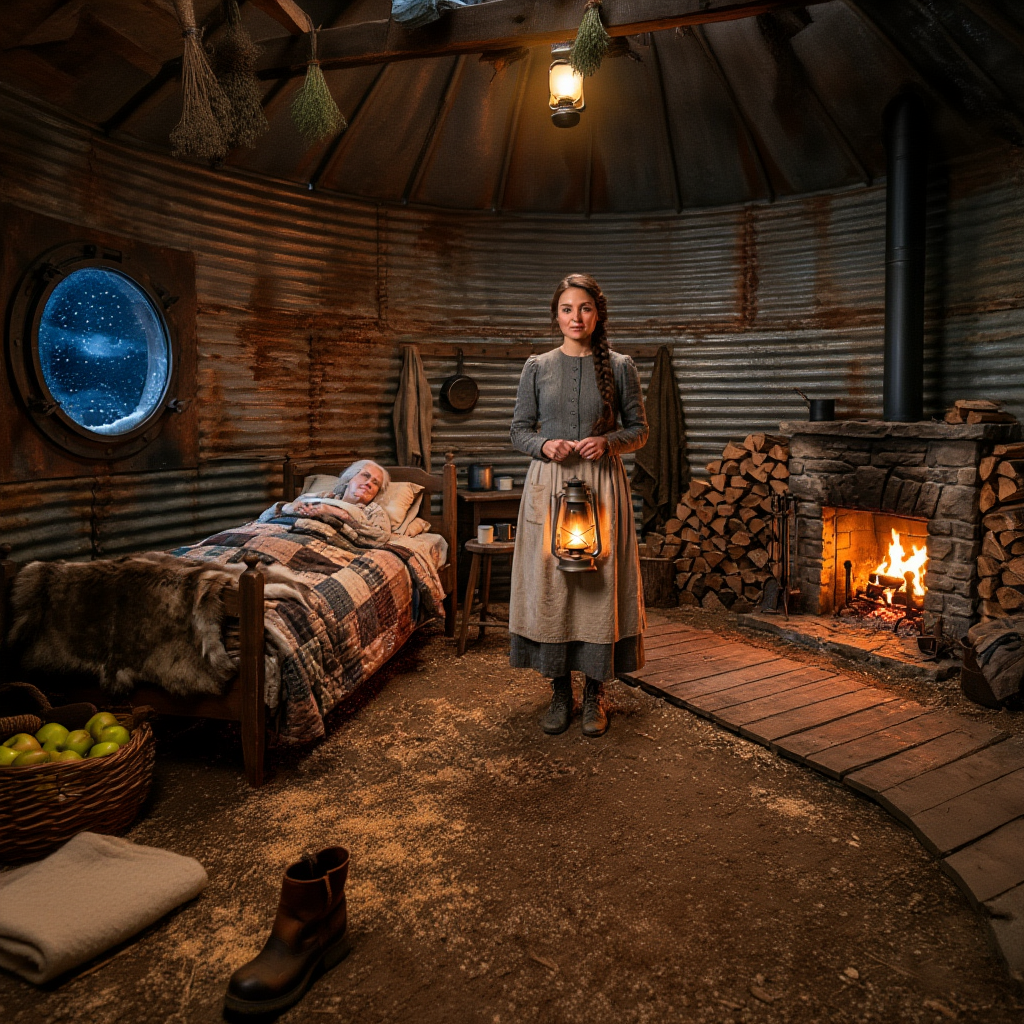
Clara Whitfield stood inside the circular metal silo, holding a lantern high. The warm light flickered across corrugated steel walls that curved above her like the inside of a giant drum. The place had once held grain—bushels of wheat her father harvested every autumn—but now it held something far more important.
A hidden bedroom.
To her left, her mother rested in a narrow wooden bed tucked carefully against the wall. Patchwork quilts layered over her frail body, with a heavy fur throw pulled up to her chin. White hair spilled across the pillow, thin as frost. The old woman’s breathing came slow but steady.
Clara lowered the lantern slightly, studying her. Relief softened her shoulders.
“You warm enough, Mama?” she asked.
The elderly woman opened her eyes, cloudy but alert. “Warmer than that drafty house, I’ll tell you that.”
Clara smiled faintly. “This was supposed to be temporary.”
“Nothing temporary about that wind.”
The storm rattled the silo’s metal skin. The sound echoed like distant thunder, vibrating through the rafters. Above them, bundles of dried herbs swayed gently, tied with twine to exposed beams. Sage, thyme, and wild mint—collected over the summer—released faint earthy scents warmed by the nearby fire.
On the right side of the silo, the stone fireplace glowed bright. Flames snapped and crackled, throwing golden light across stacked firewood piled neatly beside it. Clara had spent weeks hauling those logs inside, one armful at a time, while neighbors whispered she was wasting effort.
Now she wasn’t so sure.
She stepped toward the fire, setting the lantern on a wooden crate. A hanging kerosene lamp above cast a second glow, doubling the warmth. Shadows stretched and curled along the curved metal walls, making the space feel both larger and safer.
Outside, the storm intensified.
Snow struck the round window in the far wall, sticking briefly before being ripped away by wind. Through the glass, the night had turned white and furious. Visibility dropped to nothing.
Clara swallowed.
“This one’s worse than last year,” she murmured.
Her mother shifted under the quilt. “You always say that.”
“I mean it this time.”
The old woman studied her daughter. “You’re worried.”
Clara didn’t answer immediately. Instead, she crossed the floor—half dirt, half wooden planks—and picked up a wicker basket full of apples. She polished one against her apron and handed it over.
“You need to eat,” she said.
Her mother took it with a thin smile. “You always did fuss.”
“You always did ignore me.”
They shared a quiet laugh.
But the wind outside roared louder, rattling the silo again.
Clara walked to the round window. Snow spiraled wildly, illuminated only by the faint lantern glow leaking through the glass. The farmhouse—barely fifty yards away—had already disappeared behind white.
Her stomach tightened.
She remembered the day she began converting the silo.
It had been early autumn. The harvest was smaller than usual, and the silo sat mostly empty. Her mother’s cough had worsened, and the farmhouse leaked cold through every cracked board.
The idea came suddenly.
Metal held heat. The silo was sturdy. Circular walls deflected wind. And most importantly, no one expected anyone to live inside one.
Neighbors had laughed.
“You building yourself a grain bedroom?” old Mr. Donnelly had joked.
“Just cleaning it out,” she’d replied.
But she wasn’t just cleaning.
She built a wooden platform for a bed, insulated the lower walls with hay and burlap, carved a small round window, and hauled stones for a fireplace. Each night she worked by lantern light, hands blistered, back aching.
Her mother hadn’t known at first.
When Clara finally revealed it, the old woman had stared in disbelief.
“You made this… for me?”
“For winter,” Clara answered. “Just in case.”
Now, that “just in case” had arrived.
The wind screamed.
Snow pounded harder, and the metal walls shuddered. The hanging lamp swung gently, light dancing across rafters.
Her mother’s voice came softly. “You think the house will hold?”
Clara hesitated. “I don’t know.”
The farmhouse was old—wood warped, roof patched too many times. If the blizzard worsened, the silo might become their only shelter.
The thought settled heavy in her chest.
She knelt beside the fire and added another log. Sparks shot upward, briefly illuminating the curved ceiling. Warmth spread across the floor, lighting the folded wool blanket near her boots and the old leather boot lying beside it—forgotten since autumn.
Ghosts of ordinary days.
She missed those already.
The storm intensified.
By midnight, the wind howled like a freight train. Snow piled against the silo walls, insulating them further. The round window showed nothing but white.
Her mother began coughing.
Clara rushed to her side. “Easy… breathe slow.”
The old woman gripped her hand. “You did good, Clara.”
“We’re fine,” she insisted.
“You built this before we needed it.”
Clara swallowed. “I hoped we wouldn’t.”
A loud crack echoed outside.
Both women froze.
“What was that?” her mother whispered.
Clara grabbed the lantern and moved to the window. She wiped frost from the glass and peered out.
Nothing.
Just swirling snow.
But the direction of the wind had changed—now hammering from the north.
Another crack sounded faintly, swallowed by the storm.
Her heart pounded.
“The house,” she murmured.
She set the lantern down and reached for her coat.
“Where you going?” her mother asked.
“I need to check.”
“No.” The old woman’s voice sharpened. “You step out there, you won’t find your way back.”
Clara hesitated.
The wind slammed the silo again.
Her mother squeezed her hand. “You built this so we wouldn’t have to leave. Don’t go proving yourself wrong.”
Clara slowly removed her hand from the coat.
“You’re right,” she whispered.
They waited.
Hours passed. The fire burned steadily. Apples were eaten. Tea brewed in a dented kettle over the flames.
The silo became its own small world.
Wind roared outside, but inside warmth held.
Clara dozed briefly in a chair, lantern dim beside her. She woke at dawn to silence.
Not calm silence—heavy silence.
The storm had passed.
She hurried to the window.
Snow lay piled high—nearly halfway up the glass. The plains were unrecognizable. Drifts sculpted the land into frozen waves.
And the farmhouse…
Her breath caught.
Half the roof had collapsed. One wall leaned inward, broken under the weight of snow and wind.
If they had stayed there, they would not have survived.
Clara leaned her forehead against the glass.
Her mother spoke softly behind her. “Is it bad?”
“Yes,” Clara answered quietly. “The house is gone.”
The old woman closed her eyes.
“Then this… is home now.”
Clara turned, emotion rising unexpectedly. The silo looked different in daylight—warmer, safer, more permanent. Firelight still glowed across metal walls. Herbs hung quietly. The bed looked soft and lived-in.
She realized something.
This wasn’t temporary anymore.
She stepped back toward her mother, adjusting the quilt gently.
“We’ll stay here,” she said. “Until spring. Maybe longer.”
Her mother smiled faintly. “Your father would’ve laughed.”
“He also would’ve helped carry firewood.”
“True.”
They both laughed softly.
Clara added more logs to the fire. Warm light spread again, filling the circular room. Outside, the deadliest blizzard of the season had buried everything—but inside, the hidden bedroom in a grain silo had become the only place still alive with warmth.
The lantern flickered gently.
And for the first time since the storm began, Clara felt certain they would survive the winter.