
The first time Clara Whitmore saw the fort, she laughed.
Not because it was funny—but because it was impossible.
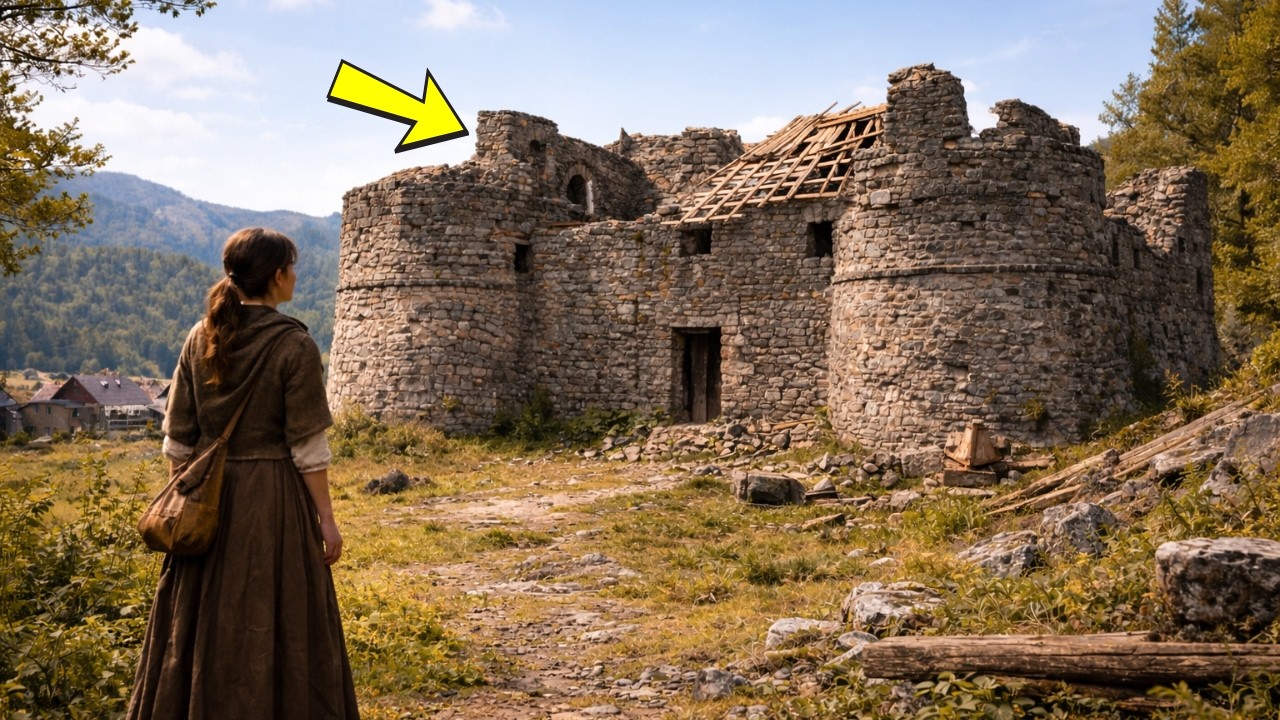
The structure sat on a rocky hill just outside the small frontier town of Red Hollow. Once, decades earlier, it had been a military outpost. Now it looked like something the wind had tried to erase and only half-finished.
Half the wooden walls leaned outward. The watchtower had collapsed into a pile of gray splinters. The gate hung from one hinge. Weeds pushed through cracks in the stone foundation. The roof of the main building had holes big enough to see the sky.
It was, in every sense, ruined.
And yet Clara stood there, hands on her hips, studying it like a puzzle.
The auctioneer wiped sweat from his neck. “Miss, I’ll be honest. No one’s bid on it all morning. You don’t want this place.”
“How much?” Clara asked.
He sighed. “Back taxes and paperwork… twelve dollars.”
“Twelve?” she repeated.
“That’s it.”
She reached into her worn leather satchel, counted coins carefully, and placed them into his palm.
“I’ll take it.”
The men gathered nearby burst out laughing.
“You just bought a pile of wind!” one shouted.
“Storm’ll knock that down before she sleeps one night!”
“Lady’s throwing money away!”
Clara ignored them. She signed the paper, folded it neatly, and tucked it away. Then she climbed the hill toward her new property, boots crunching over loose gravel.
Behind her, the laughter followed.
—
Clara had never owned anything before.
Not land. Not a house. Not even a steady place to sleep.
Her husband had died two winters earlier, leaving her with nothing but a sewing kit and a stubborn refusal to quit. Since then she’d worked in kitchens, patched clothes, cleaned barns—anything that paid.
But she’d learned something important: solid walls mattered.
Storms didn’t ask permission.
They came fast, loud, and merciless.
And when Clara saw the fort, she didn’t see ruin.
She saw thick stone foundations. Elevated ground. Old drainage trenches. A defensive layout designed to withstand attack—and weather.
It just needed someone willing to rebuild it.
—
The first week was brutal.
Clara hauled debris alone. She dragged fallen boards into piles. She hammered loose nails straight and reused them. Her hands blistered. Her shoulders ached. But slowly, the fort began to look less like collapse and more like structure.
People in town kept watching.
One afternoon, two ranchers rode past.
“You planning to live in that?” one asked.
“Yes,” Clara answered.
“Roof’s half gone.”
“I’ll fix it.”
“Walls are crooked.”
“I’ll brace them.”
They exchanged looks.
“You’re wasting your time,” the second man said. “Better off renting a room.”
Clara wiped sweat from her forehead. “Rooms don’t survive storms.”
They laughed and rode on.
—
By the second week, Clara had cleared the main hall. The stone floor remained solid. The walls—though leaning—were thick enough to support reinforcement.
She found old iron hinges buried in dirt. A cracked barrel that still held water. Even remnants of a drainage channel carved along the outer perimeter.
Whoever built the fort had known what they were doing.
Clara started repairing the roof first. She scavenged boards from the collapsed watchtower. She layered them tightly, then sealed gaps with clay and straw. It wasn’t pretty, but it stopped sunlight from pouring through.
At night, she slept wrapped in blankets near the back wall. The wind whistled through cracks, but she didn’t mind.
She had walls.
—
The laughter in town grew louder.
“She’s living in that skeleton.”
“First big storm’ll teach her.”
“She’ll come begging for a room soon enough.”
Clara kept working.
She reinforced door frames with crossbeams. She stacked stones along the base to block drafts. She cleared the drainage trench around the fort, deepening it with a shovel.
One evening, an older woman named Mrs. Carter climbed the hill carrying a basket.
“You’re either brave or foolish,” she said.
“Maybe both,” Clara replied.
Mrs. Carter handed her the basket. “Soup. You look like you forgot to eat.”
Clara smiled gratefully. “Thank you.”
The woman looked around. “Why this place?”
Clara gestured toward the horizon. “Because storms roll across that valley. Everything below floods first. This hill stays dry.”
Mrs. Carter studied the trenches. “You think this old thing will hold?”
Clara nodded. “It was built to.”
The older woman gave a small smile. “Then I hope you’re right.”
—
By late summer, the fort looked… different.
Still rough. Still patched. But solid.
Clara had rebuilt the gate using thick planks. She’d repaired two small rooms and turned one into a kitchen. She dug a shallow well using old markings near the wall and struck clean water.
People began to stop laughing.
But they still doubted.
Then the clouds came.
—
The storm rolled in darker than any Clara had seen in years.
Wind tore across the plains. Thunder cracked like cannon fire. Rain fell in sheets so thick the valley vanished behind gray.
In town, shutters slammed. Animals panicked. The creek swelled fast, turning brown and violent.
Clara stood inside the fort, watching through a narrow window. The walls creaked but held. Water rushed down the hill, guided by the trench she’d cleared. It flowed around the fort instead of pooling against it.
The wind howled louder.
A loose board slammed outside—but the reinforced door didn’t budge.
Lightning flashed. Rain hammered the roof.
Clara sat by the fire, calm.
For the first time in years, she wasn’t afraid.
—
By midnight, the storm intensified.
In town, roofs began lifting. One barn collapsed under the wind. The creek overflowed, flooding lower streets. People scrambled for higher ground.
Someone shouted, “The fort! Go to the fort!”
Families grabbed blankets, children, and whatever they could carry. They climbed the hill through rain and mud, desperate.
Clara heard pounding at the gate.
She opened it.
Six soaked families stood outside, trembling.
“Please,” a man said. “We need shelter.”
Clara stepped aside immediately. “Come in.”
They rushed inside, dripping and shivering. Children cried. Women huddled near the fire. Men stared at the thick walls in disbelief.
“This place… it’s holding,” someone whispered.
The wind roared again, but inside, the fort remained steady.
More people arrived. Then more.
By morning, nearly half the town filled the main hall.
The rain slowed. The wind faded. Silence replaced chaos.
Clara opened the gate.
Below them, the valley looked battered. Fences down. Streets flooded. Several cabins partially collapsed.
But the fort stood untouched.
—
Later that day, the townsfolk gathered outside.
The same men who had laughed weeks earlier now looked embarrassed.
“You knew,” one said quietly.
“I hoped,” Clara answered.
Another shook his head. “We called you foolish.”
She shrugged. “You weren’t wrong. It was a risk.”
Mrs. Carter smiled warmly. “But you saved half the town.”
Clara looked around at the people—families drying blankets, children playing on the stone floor, neighbors helping each other.
“I didn’t save anyone,” she said. “The fort did. I just fixed it.”
The first rancher removed his hat. “Twelve dollars,” he muttered. “Best investment this town ever saw.”
Laughter followed—but this time it was warm.
Not mocking.
Respectful.
—
In the weeks that followed, things changed.
Men helped Clara repair more rooms. Women brought food. Someone rebuilt the watchtower. Another added shutters.
The ruined fort became a community refuge.
One evening, as the sun dipped behind the hills, Clara stood on the repaired tower. The wind brushed her hair gently now, no longer threatening.
Below, children played safely within the walls.
Mrs. Carter climbed up beside her. “They don’t laugh anymore.”
Clara smiled softly. “Storms change people.”
The older woman nodded. “And sometimes… they reveal who was right all along.”
Clara looked across the valley, peaceful after chaos.
Weeks earlier, she had been the widow who spent her last twelve dollars on a ruin.
Now, she was the woman who saw strength where others saw collapse.
And when the storms came, the place everyone mocked became the place everyone needed.