
They Mocked Her for Buying a Burnt Foundation — Until the Chimney Changed Everything
When Eliza Hart bought the land, people in Ashford didn’t even bother hiding their laughter.
“Burnt to the bone,” one man said, spitting tobacco into the dust.
“Ain’t nothing left but ghosts and soot,” another added.
Eliza heard every word.
She just didn’t answer.
Because they were right—mostly.
The place had once been a cabin. A good one, from what the older folks said. Built sturdy. Lived in long. Loved, even.
Until the fire.
No one talked much about that part.
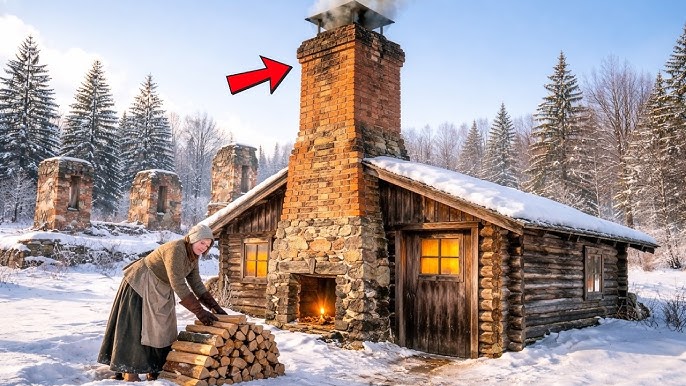
Just that one winter night, years ago, flames had taken everything—walls, roof, memories. All that remained now was a blackened foundation of stone… and one thing still standing.
The chimney.
Tall. Brick. Weathered—but unbroken.
It rose from the ruins like a stubborn memory that refused to disappear.
And that was exactly why Eliza bought it.
—
“You paid for that?” Mr. Crowley asked when she signed the papers.
Eliza nodded.
He leaned back in his chair, squinting at her like he couldn’t decide if she was foolish or fearless.
“You know you could’ve gotten a proper place for the same price.”
“I don’t want a proper place,” Eliza said.
He raised an eyebrow. “What do you want, then?”
She hesitated just a moment.
“Something that didn’t quit,” she said quietly.
Mr. Crowley followed her gaze out the window—toward the distant outline of the old chimney standing alone against the pale sky.
He didn’t laugh.
But he didn’t understand either.
—
The first night, Eliza slept in a canvas tent beside the ruins.
The wind cut sharp through the valley, carrying the smell of ash that still lingered in the ground. The earth felt… different there. Like it remembered.
She lay awake for a long time, staring at the silhouette of the chimney against the stars.
“You stayed,” she murmured.
It didn’t answer.
But somehow, she didn’t feel alone.
—
The next morning, she started clearing.
Charred wood.
Broken stone.
Fragments of what had once been someone’s life.
She worked slowly, carefully, as if the ground itself deserved respect.
By noon, a few townsfolk had wandered by, curiosity pulling them closer.
“You planning to rebuild?” one woman asked.
Eliza wiped sweat from her brow. “Yes.”
“With what?” the woman pressed. “There’s nothing here.”
Eliza glanced at the chimney.
“There’s enough.”
The woman followed her gaze—and shook her head.
“That thing?” she scoffed. “It’s just a stack of bricks.”
Eliza didn’t argue.
Because she knew something they didn’t.
You don’t survive a fire like that by accident.
—
Days turned into weeks.
Eliza worked alone.
No crew.
No hired hands.
Just her—and the remains of what had been.
She salvaged what she could, hauled in what she needed, and slowly began to shape something new.
But the chimney—
She left untouched.
Not out of fear.
Out of respect.
She studied it instead.
The way the bricks were laid.
The way the mortar had held.
The way it leaned—just slightly—but never fell.
It wasn’t perfect.
But it was enduring.
And that mattered more.
—
“You’re building around it?” Thomas Reed asked one afternoon, stopping by with a sack of nails.
Eliza nodded.
He set the sack down, eyeing the chimney. “Most folks would tear it down. Start fresh.”
Eliza picked up a stone, turning it in her hands.
“Most folks didn’t see it survive,” she said.
Thomas considered that.
“You think it’ll hold?” he asked.
Eliza looked up at the tall brick column.
“I think it already has.”
—
By autumn, the frame of the new cabin stood.
Smaller than the original, but stronger in its own way.
The walls rose around the chimney, not replacing it—but anchoring to it.
It became the center.
The spine.
Everything connected to it.
People noticed.
“They say she’s building into the old fire,” someone whispered in town.
“She’s asking for trouble.”
“Or she’s just stubborn.”
Maybe.
But Eliza kept building.
—
The first real test came early.
A cold snap rolled in faster than expected, bringing with it biting winds and a sky heavy with the promise of snow.
Eliza worked late into the evening, finishing the roof, sealing the walls as best she could before the storm hit.
By nightfall, the cabin stood closed.
Not finished.
But ready.
She stepped inside, breath visible in the cold air.
The chimney loomed above the hearth, silent and steady.
“Well,” she said softly, “let’s see what you can do.”
—
She built the fire carefully.
Layer by layer.
Kindling.
Wood.
Flame.
The fire caught slowly, then stronger, then steady—heat rising into the chimney, disappearing upward in a clean draft.
Eliza watched closely.
No smoke curling back.
No choking air.
Just a smooth pull—like the chimney was breathing.
She smiled faintly.
“That’s right,” she whispered.
—
The storm hit hard.
Wind howled.
Snow slammed against the walls.
The temperature dropped so fast it felt like the world had been plunged into ice.
Inside the cabin, the fire burned.
And the chimney—
Worked.
Better than anything she’d seen before.
It drew the smoke clean, kept the fire steady, held the heat in a way that felt… different.
Not just warm.
Protected.
Eliza sat close, hands outstretched, feeling the heat settle deep into her bones.
“This is why you stayed,” she said quietly.
And for the first time since she arrived—
She understood.
—
By morning, the valley was buried.
Snow stretched in every direction, silent and heavy.
Eliza stepped outside, breath fogging in the cold air.
Her cabin stood firm.
Smoke rose straight from the chimney into the pale sky.
Alive.
—
It didn’t take long for word to spread.
“She made it through the storm.”
“In that half-built place?”
“With that old chimney?”
Thomas came by again, shaking his head as he stepped inside.
“It’s warmer in here than my place,” he admitted.
Eliza shrugged. “Good design.”
He glanced at the chimney.
“That thing’s doing more than pulling smoke.”
Eliza smiled slightly. “It always was.”
—
People started coming.
At first, just to look.
Then to ask.
“How did you fix it?”
“What did you use?”
“Why didn’t it collapse?”
Eliza answered what she could.
But some things—
Couldn’t be explained in simple terms.
“It was built right the first time,” she said.
“And you trusted it?” someone asked.
Eliza shook her head.
“I listened to it.”
They didn’t always understand.
But they saw the results.
And that was enough.
—
Winter deepened.
Cabins in Ashford struggled.
Chimneys cracked.
Smoke backed up.
Heat escaped through weak seams and poor design.
But Eliza’s cabin—
Held.
The chimney stood strong, pulling steady, distributing heat through the stone foundation in a way that made the whole structure warmer, more stable.
It wasn’t magic.
It was… something older.
Something forgotten.
—
One night, a man knocked at her door.
Desperate.
“My chimney’s failing,” he said. “Smoke’s filling the house. My kids—”
Eliza didn’t wait.
She grabbed her coat.
“Show me.”
—
They worked through the night.
Eliza examined the structure, found the flaws—the weak mortar, the poor angle, the blocked draft.
She fixed what she could.
Rebuilt what she had to.
“Why are you helping me?” the man asked at one point.
Eliza didn’t look up.
“Because someone should’ve helped the person who built mine,” she said.
—
By morning, his fire burned clean.
Smoke rose properly.
Warmth returned.
The man stood in his doorway, staring at the chimney like it was something new.
“Thank you,” he said.
Eliza nodded.
“Take care of it,” she replied.
—
By spring, Ashford had changed.
Not completely.
But enough.
People stopped laughing when they passed Eliza’s land.
Stopped calling it the burnt foundation.
They called it something else now.
“The place with the chimney.”
And it wasn’t said with mockery.
But with respect.
—
One evening, as the sun dipped low, casting gold across the valley, Eliza sat outside her cabin, watching smoke rise steady into the sky.
Thomas joined her, hands tucked into his coat.
“You ever think about what would’ve happened if you’d torn it down?” he asked.
Eliza shook her head.
“No,” she said.
“Why not?”
She looked at the chimney—tall, weathered, unbroken.
“Because then I’d just have another new cabin,” she said.
Thomas frowned slightly. “And that’s bad?”
Eliza smiled softly.
“It wouldn’t have a story,” she said.
—
The chimney stood behind her, catching the last light of the day.
A remnant of fire.
A survivor of loss.
A foundation that refused to be forgotten.
And because she had chosen to build around it—
To trust it—
To understand it—
It had become something more.
Not just a structure.
But a reason.
A lesson.
A beginning.
—
They mocked her for buying a burnt foundation.
But they didn’t understand what she saw.
She hadn’t bought what was lost.
She had chosen what remained.
And in the end…
That changed everything.
Part 2: “What the Fire Left Behind”
By the time the second winter came, no one in Ashford called it a ruin anymore.
They called it Eliza’s place.
And they spoke about it differently now—not with laughter, not with doubt, but with something quieter.
Curiosity.
Respect.
And, for some…
A little envy.
—
It started with the cold.
Not the ordinary kind—the kind people prepared for with extra wood and thicker coats.
This was different.
A hard winter.
The kind old folks warned about but younger ones didn’t quite believe until it arrived.
The air turned sharp enough to sting the lungs.
Water froze in buckets overnight.
And chimneys—
Chimneys became the difference between living and losing everything.
—
Eliza noticed the change before most.
It was in the way the wind shifted—less forgiving, more direct. It no longer circled the valley; it cut through it.
She stood outside her cabin one morning, watching the smoke rise from her chimney.
Straight.
Clean.
Strong.
No wavering.
No hesitation.
“Still holding,” she murmured.
Behind her, the cabin felt like a pocket of warmth carved into the cold.
Not just from the fire—
But from how the chimney worked.
It didn’t just pull smoke.
It drew heat upward and cycled it back, warming the stone, the air, the space itself.
It was… efficient.
More than that—it was intentional.
And that thought stayed with her.
—
Three days later, Thomas came running.
Not walking.
Running.
“Eliza!” he shouted before he even reached the door.
She stepped outside immediately.
“What is it?”
“My brother’s place,” he said, breath ragged. “Chimney cracked. Smoke’s backing in. They can’t keep the fire going without choking.”
Eliza didn’t hesitate.
“Get your coat,” she said. “We’re going.”
—
The Reed cabin sat lower in the valley, more exposed to the wind.
By the time they arrived, smoke leaked from every seam in the roof like something trying to escape.
Inside, the air was thick.
A woman coughed near the hearth, children huddled under blankets.
The fire burned weak—afraid.
Eliza moved fast.
“Open the door,” she said. “Let it clear.”
Thomas’s brother hesitated. “We’ll lose what heat we’ve got.”
“You’ve already lost it,” Eliza replied. “Now move.”
He obeyed.
Cold air rushed in, pushing the smoke out in heavy waves.
Eliza knelt at the base of the chimney, running her hand along the stone.
Cracks.
Not just surface.
Deep.
Wrong angle.
Wrong build.
“This wasn’t made to handle this kind of cold,” she said.
Thomas frowned. “Can you fix it?”
Eliza stood slowly.
“Yes,” she said.
“But not the way it was.”
—
They worked through the night again.
But this time—
It wasn’t just repair.
It was redesign.
Eliza studied the chimney structure, then began adjusting the internal flow—reshaping the draft, reinforcing the base with stone that could hold heat, sealing the cracks with a stronger mixture.
Not just clay.
Not just ash.
But something more refined.
Something she had learned since.
“You’re changing it,” Thomas said, watching her work.
Eliza nodded.
“The old way isn’t enough anymore,” she said.
“Then what is?”
She didn’t answer right away.
She pressed another layer into place, smoothing it carefully.
Then, quietly—
“Understanding why it worked in the first place.”
—
By morning, the fire burned differently.
Stronger.
Cleaner.
The smoke rose up the chimney in a steady pull—no hesitation, no backflow.
And the heat…
It stayed.
Thomas’s brother stood there, staring.
“It’s warmer,” he said, almost in disbelief.
Eliza nodded.
“It will be.”
He looked at her. “What did you do?”
Eliza wiped her hands.
“I stopped thinking of it as a pipe,” she said.
“And started treating it like a system.”
—
That word spread faster than anything before.
Not just that Eliza could fix chimneys—
But that she understood them in a way no one else did.
System.
Flow.
Balance.
Things people hadn’t thought about before.
And soon, they came.
Not just for help.
But to learn.
—
Eliza didn’t turn them away.
But she didn’t make it easy either.
“You don’t just copy what I do,” she told them. “You learn why I do it.”
Some left.
Too impatient.
Too used to shortcuts.
But others stayed.
Watched.
Asked.
Tried.
Failed.
Tried again.
And slowly—
Something changed.
—
Ashford began to rebuild.
Not from scratch.
But from understanding.
Chimneys were no longer afterthoughts.
They became central.
Planned.
Studied.
Respected.
Cabins grew warmer.
Fires burned longer.
Winters felt… less like a threat.
And more like something that could be endured.
—
But not everyone liked that change.
—
The men who had once tried to claim Mara’s plaster—
They heard about Eliza.
About her chimney.
About how people were coming to her instead of them.
And they didn’t like it.
Not one bit.
“She’s doing the same thing,” one of them said. “Giving it away.”
“Which means no one pays for it,” another added.
The first man’s jaw tightened.
“Then we change that.”
—
They came at dusk.
Not openly.
Not honestly.
Three of them this time, moving quiet, boots crunching lightly in the snow.
Eliza saw them before they reached the door.
She didn’t move.
Just waited.
“You’ve got something valuable here,” the lead man said as they approached.
Eliza tilted her head slightly.
“I’ve got a chimney,” she replied.
He smirked. “Don’t play games. We know what you’re doing.”
“Then you don’t need me to explain it.”
His smile faded.
“We’re offering you a deal.”
Eliza said nothing.
“You work with us,” he continued. “We take your method to every town in the region. Charge for it. Make it official.”
“And the people who can’t pay?” Eliza asked.
He shrugged. “That’s not our concern.”
Eliza’s gaze hardened.
“It’s mine.”
Silence.
The man stepped closer.
“You’re being naive.”
Eliza shook her head.
“No,” she said. “I’m being careful.”
“With what?”
“With something that keeps people alive.”
The tension sharpened.
“You don’t get to decide that alone,” he said.
Eliza met his gaze.
“I already did.”
—
The moment stretched.
Then snapped.
The man reached out—grabbing a loose stone near the base of the chimney, testing it like he might pull it free.
Eliza moved before he could.
Her hand caught his wrist—firm, unyielding.
“Don’t,” she said.
Not loud.
But absolute.
The man froze.
Something in her voice—something in her eyes—
Told him this wasn’t a bluff.
He pulled his hand back slowly.
“You think this place stands because of you?” he asked.
Eliza released him.
“No,” she said.
“I think it stands because I listened to what survived.”
He stared at her.
Then scoffed.
“Come on,” he muttered to the others.
They left.
But not without one last look at the chimney.
And this time—
It wasn’t dismissive.
It was wary.
—
That night, the fire burned steady.
Eliza sat beside it, watching the flames move, the heat rise, the smoke disappear into the dark above.
Thomas joined her quietly.
“They won’t stop,” he said.
Eliza nodded.
“I know.”
“Then why keep helping people?” he asked.
“Because they will stop,” she said.
Thomas frowned. “How?”
Eliza glanced at the chimney.
“Because the more people understand it… the less power it has to be taken.”
Thomas leaned back, thinking about that.
Then slowly—
He nodded.
—
Winter held on longer that year.
But it didn’t feel as cruel.
Not anymore.
Because something had shifted.
Not just in the cabins.
But in the people.
They weren’t waiting for things to break.
They were building things to last.
—
One evening, as the snow finally began to melt, Eliza stood outside her cabin again, watching the smoke rise into a softer sky.
Thomas stepped beside her.
“You ever think about what you really bought that day?” he asked.
Eliza smiled faintly.
“A burnt foundation?” she said.
Thomas shook his head.
“No,” he said.
“You bought the one thing that didn’t burn.”
Eliza looked at the chimney.
Tall.
Steady.
Unbroken.
“Yeah,” she said quietly.
“I did.”
—
Because in the end…
It wasn’t the fire that mattered.
It was what the fire couldn’t take.
And what someone chose to build from it.