
They Laughed When She Built a Barn Over Her Cabin — Then Winter Came
They laughed the day she staked the corners.
The ground was still soft from early fall rain, and the mountains wore that quiet golden look that came just before the first frost. Emily Carter stood in the middle of the clearing with a tape measure hooked to her belt, her hair pulled into a loose knot, boots already caked in mud. The old logging road that led to her land ended in a rutted slope, and beyond that, nothing but trees and sky.
She drove the final stake into the ground with three solid swings of the hammer.
From the edge of the clearing, a pickup truck door slammed.
“Well, I’ll be damned,” said Gary Henson, leaning against his rusted Ford. “She’s serious.”
Two other men climbed out, boots crunching over gravel and leaves. One of them, Pete Lawson, folded his arms and looked around.
“You building a barn?” he asked.
Emily wiped her forehead with her sleeve. “Yeah.”
Gary squinted. “Where’s your house going?”
She pointed at the center of the stakes. “Inside.”
They looked at each other.
Inside?
Pete let out a short laugh. “You mean like… you’re putting a cabin in a barn?”
“Other way around,” Emily said. “I’m building a barn over my cabin.”
That was when they started laughing.
Not cruelly at first—just that dismissive, you’re-new-here kind of laughter. The kind that rolled off their shoulders like they’d heard every bad idea before.
Gary shook his head. “Lady, you don’t build a barn first. You build a house, then a barn.”
“I know.”
“And you sure don’t build a barn… over a house.”
Emily shrugged. “I’m not.”
Pete grinned. “That’s exactly what you just said.”
She looked out at the mountains. “I’m building a cabin. Then I’m putting a barn over it.”
Gary wiped his mouth. “Why?”
Emily smiled slightly. “Because winter gets mean up here.”
Gary snorted. “Winter gets mean everywhere.”
“No,” she said softly. “Not like here.”
They shook their heads and climbed back into the truck. As Gary started the engine, he leaned out the window.
“You’ll learn,” he called. “First snow’ll fix that idea.”
The truck rattled down the logging road, leaving Emily alone with the stakes, the wind, and her plan.
The cabin went in first.
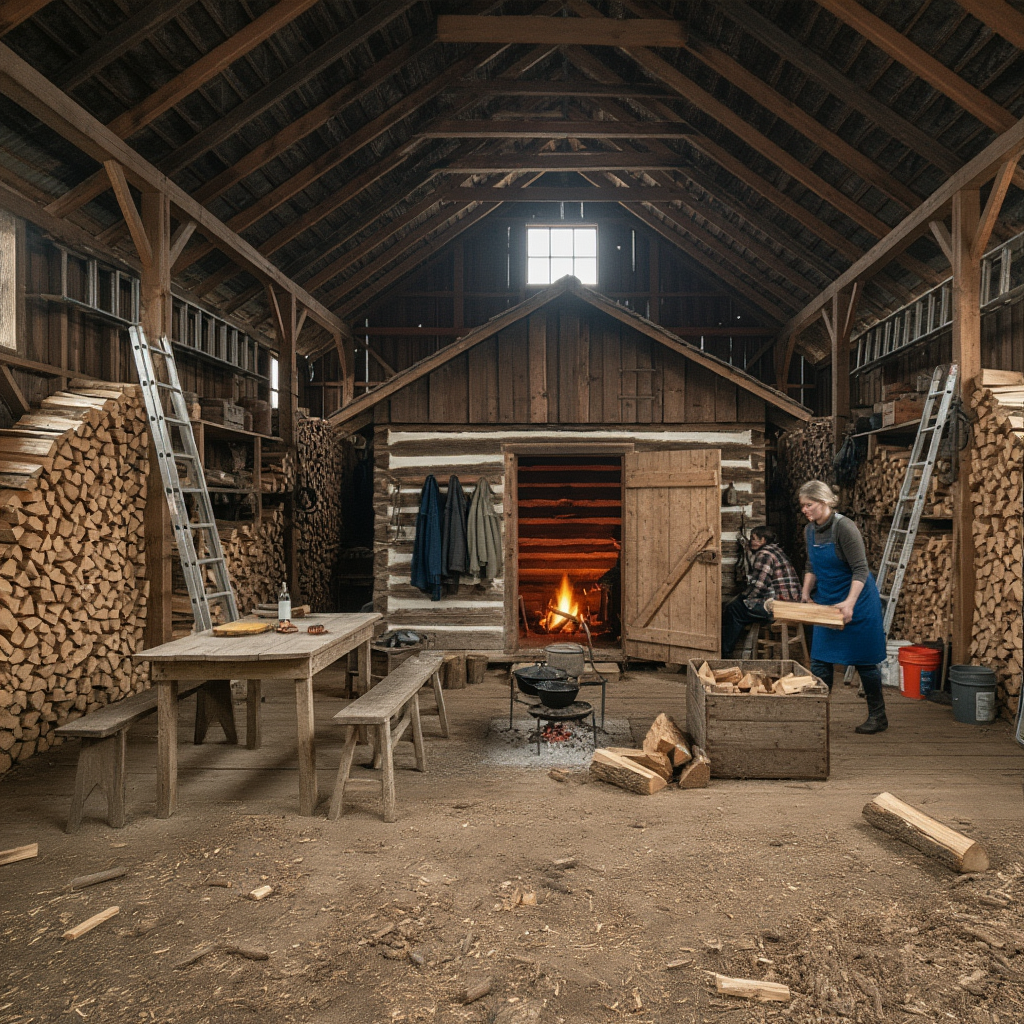
It wasn’t big—just twelve by sixteen feet, built low to the ground, with thick walls she framed herself. She used reclaimed beams from an old dairy barn she’d bought cheap two counties over. The wood smelled faintly of hay and time.
She insulated the walls twice. First with mineral wool, then with rigid foam board. She sealed every seam with tape until the cabin looked like a wrapped package.
At night, she slept in a tent nearby, lantern glowing, sketching by hand. She measured airflow, snow load angles, and heat retention. She’d studied cold-weather structures for years—Alaska, northern Canada, mountain shepherd huts.
The idea wasn’t crazy.
It just wasn’t common.
Two weeks later, Gary drove by again.
He slowed when he saw the small cabin sitting in the clearing. It looked almost like a toy, dwarfed by the tall pines.
“That’s it?” he asked.
“That’s phase one.”
He scratched his beard. “Where’s the barn?”
Emily pointed to a stack of long posts lying nearby. “Going up next week.”
Gary chuckled. “You’re really doing it.”
“Yep.”
He drove off shaking his head.
The barn took longer.
Emily set tall posts—twelve feet high—around the cabin, leaving a wide buffer on all sides. She framed a roof that sloped steeply, designed to shed snow fast. The structure surrounded the cabin like a shell, leaving a gap of air between the outer walls and the inner house.
By late October, the skeleton stood.
People started stopping by just to stare.
Pete leaned against a post. “So… you’re living in a box… inside a bigger box.”
“Basically.”
“And that helps… how?”
“Windbreak,” she said. “Snow buffer. Thermal pocket.”
Pete raised an eyebrow. “Thermal pocket.”
“The air between warms up. Cuts heat loss.”
He whistled. “Sounds fancy.”
Emily smiled. “It’s just physics.”
By early November, she enclosed the barn with rough-sawn boards. Not airtight—just enough to block wind. She left high vents under the roofline.
Gary came back again.
“You didn’t even insulate the barn,” he said.
“Don’t need to.”
He frowned. “Then what’s the point?”
“You’ll see.”
The first snow fell the week before Thanksgiving.
It came soft, drifting sideways, whispering across the trees. The temperature dropped fast, and by morning the clearing was white.
Emily lit her small wood stove inside the cabin. Within minutes, the temperature climbed.
Outside, the wind howled.
Inside the barn, it was quiet.
The air gap did its job. The outer barn walls took the wind. The snow piled against them. The cabin sat protected in the still air pocket, losing almost no heat.
Emily wrote the numbers in her notebook.
Outside: 12°F
Inside barn: 28°F
Inside cabin: 67°F
She smiled.
By December, winter arrived for real.
The storm hit overnight.
Gary woke to the sound of wind hammering his windows. Snow drove sideways so hard he couldn’t see his truck. The power went out before dawn.
By noon, the road was gone.
Drifts climbed halfway up his porch.
He pulled on his coat and stepped outside. The cold bit instantly—deep, dry, brutal. The kind that sucked heat straight from your bones.
He tried to start his generator. It sputtered and died.
“Damn it.”
The temperature dropped to -8°F by evening.
Gary wrapped himself in blankets and waited.
Meanwhile, Emily sat inside her cabin wearing a T-shirt.
The stove burned low. The air pocket inside the barn had warmed all day. The snow piled high against the outer walls, acting like insulation. The wind never touched her cabin.
She opened the door to the barn.
It felt like a refrigerator—not warm, but not deadly. The difference was enormous. No wind. No biting chill.
She checked the roof. Snow slid off cleanly.
Exactly as planned.
Two days later, Gary dug out his truck.
The storm had buried everything. Fences collapsed. One shed roof caved in under the snow load.
He drove slowly down the logging road.
When he reached Emily’s clearing, he stopped.
The barn stood solid, snow piled high around it like a white fortress. No drifts against the cabin—because there was no exposed cabin.
He got out.
Emily opened the barn doors.
She stepped out wearing a light jacket.
Gary stared.
“You… okay?”
“Yeah.”
“You got power?”
“Nope.”
“Heat?”
She nodded toward the barn. “Still warm in there.”
Gary walked inside.
The air was calm. Not freezing. Just cold enough to see his breath faintly.
“What the hell,” he whispered.
Emily opened the cabin door.
Warm air spilled out.
Gary blinked.
“You’re kidding me.”
She handed him a mug of coffee.
He took it slowly. “How warm is it?”
“About sixty-eight.”
He looked back at the snow piled outside.
“Whole valley’s freezing,” he muttered.
Emily smiled. “That’s why I built it.”
Gary shook his head. “We laughed at you.”
“I know.”
He took a sip. “We were wrong.”
By January, word spread.
Pete came by with two neighbors. They walked around the barn, tapping posts, checking vents.
“Snow’s acting like insulation,” Pete said.
Emily nodded. “Exactly.”
“And wind can’t hit the cabin.”
“Right.”
Gary added, “She’s burning half the wood we are.”
Pete looked impressed. “You planning to run animals in here?”
“Next year,” Emily said. “Goats maybe. Chickens.”
“They’ll stay warmer too.”
“Yep.”
Pete chuckled. “You didn’t build a barn over a cabin.”
Emily raised an eyebrow.
“You built a climate.”
Another storm hit in February—worse than the first.
This one knocked out roads for a week.
Gary’s pipes froze.
Pete’s woodpile got buried.
Emily invited them over.
They sat inside the barn, drinking coffee, amazed at the still air. The temperature inside hovered in the twenties—while outside dropped to -15°F.
Gary shook his head. “Feels like cheating.”
Emily laughed. “It’s just shelter.”
Pete looked around. “You ever think about selling the idea?”
Emily shrugged. “Maybe.”
Gary grinned. “You should call it something.”
“Like what?”
He thought for a moment.
“Barn-shell.”
Pete shook his head. “Sounds dumb.”
Emily smiled. “It doesn’t need a name.”
Gary looked at the warm light glowing from the cabin inside the barn.
“No,” he said quietly. “It just needs winter.”
By spring, the snow melted slowly.
The barn stood unchanged.
The cabin inside looked brand new.
Neighbors started copying her design.
One built a shed around his tiny house. Another enclosed a trailer inside a pole barn. They all admitted the same thing:
They’d laughed.
Emily didn’t mind.
She just planted grass around the clearing and added a chicken run inside the barn.
By next winter, the barn wasn’t just a shelter.
It was a living system—animals, storage, workshop, and a warm pocket in a frozen valley.
Gary stood at the edge of the clearing one cold morning, watching smoke curl gently from the cabin chimney.
“You know,” he said, “first day you told us, I thought you were crazy.”
Emily leaned on the fence. “You weren’t alone.”
He nodded toward the barn. “Now I think you were ahead of us.”
The wind howled across the valley.
Inside the barn, nothing moved.
The air stayed calm.
Warm.
Protected.
Gary smiled.
“They laughed when you built a barn over your cabin,” he said.
Emily looked at the mountains, already turning white again.
“Then winter came.”
By the second winter, no one laughed.
They watched.
Emily noticed it the first time she drove back from town in late October. Two trucks were parked at the edge of her clearing. Gary and Pete stood near the barn, hands in their pockets, staring up at the roofline like they were studying a machine.
“You measuring it?” she called as she stepped out.
Pete shrugged. “Just looking.”
Gary nodded toward the north wall. “You added boards there.”
“Wind was stronger from that side last year,” Emily said. “So I tightened it.”
Pete kicked at the ground. “You… mind if we copy it?”
Emily smiled. “Go ahead.”
Gary laughed. “We already are.”
But the second winter wasn’t like the first.
The first winter had been cold. Brutal, even. This one was unpredictable.
November stayed warm. Snow came late. Then rain followed, soaking the ground. By early December, temperatures dropped suddenly, freezing everything solid.
The valley turned into glass.
Fences snapped under ice. Tree limbs cracked. The road disappeared under frozen ruts.
Then came the wind.
It roared down the mountain like something alive, cutting across open fields, ripping tin off roofs. Gary lost half the siding on his shed. Pete’s chicken coop tilted six inches overnight.
Emily walked inside her barn and closed the doors.
The air stilled immediately.
She checked the cabin thermometer.
71°F.
She lowered the stove.
Two days later, Gary knocked.
He looked tired, beard crusted with frost.
“My water line froze,” he said. “Mind if I warm up a bit?”
“Come in.”
He stepped inside the barn and stopped.
“Feels… calm.”
“That’s the idea.”
They walked into the cabin. Gary rubbed his hands near the stove.
“You’re barely burning wood.”
Emily nodded. “The barn’s holding heat again.”
Gary looked around. “You ever think about adding another room?”
“I am.”
He raised an eyebrow. “Inside the barn?”
“Yeah. Workshop on the west side.”
Gary chuckled. “You’re building a village in here.”
“Maybe.”
She finished the workshop before Christmas.
It was simple—plywood walls, insulated ceiling, a workbench along one side. But the temperature stayed above freezing without any heater, just from the trapped air inside the barn.
Emily repaired tools in a sweater while wind screamed outside.
The difference still amazed her.
She started logging data again.
Outside: -3°F
Inside barn: 25°F
Workshop: 34°F
Cabin: 69°F
The system worked even better with more internal mass.
Right after New Year’s, the storm hit.
Weather radio called it a “historic Arctic surge.”
Temperatures plunged overnight. The wind picked up. Snow came sideways, thick and relentless.
By morning, visibility dropped to almost zero.
Emily woke to silence.
No creaking.
No rattling.
Just quiet.
She opened the cabin door and stepped into the barn.
The air was cold but stable. Snow piled halfway up the outer walls. The roof shed it cleanly. The animals—six chickens and two goats now—shifted lazily in their pen, perfectly calm.
She checked her thermometer.
Inside barn: 19°F.
Outside… she didn’t know yet.
She opened the big doors a crack.
The cold hit like a slap.
She shut them quickly.
Later, she checked the radio.
Outside temperature: -28°F.
She exhaled slowly.
That was colder than last year. Much colder.
But inside the barn, it never dropped below 18°F.
Inside the cabin, she stayed comfortable in socks.
The valley struggled.
Gary burned through half his woodpile in three days. Pete moved his chickens into his garage. Two families down the road left for town after their furnace failed.
Emily invited people to charge phones using her small solar battery system. They gathered in the barn, drinking coffee, amazed at the stillness.
Pete stamped his boots. “Feels like stepping into another world.”
Gary nodded. “Wind’s gone. That’s the biggest thing.”
Emily added, “And snow.”
Pete looked around. “You realize… this could save livestock.”
“Yeah.”
“Or people.”
Emily didn’t answer.
She already knew.
On the fourth night, the power outage spread across the entire valley.
No lights anywhere.
The temperature dropped again.
-32°F.
Gary’s generator failed.
He drove over in the dark, headlights barely cutting through drifting snow. He knocked hard.
Emily opened quickly.
“You okay?”
“Barely,” he admitted. “Can I stay here tonight?”
“Of course.”
She cleared space in the workshop. Gary rolled out a sleeping bag.
By morning, two more neighbors arrived.
Emily didn’t hesitate. She opened the barn fully.
They set up cots along the wall. The barn became a shelter. The animals shifted calmly, sharing warmth. People brewed coffee on a propane stove.
No one complained.
No one laughed.
Gary looked around at the quiet group.
“You built this for yourself,” he said softly.
Emily shook her head. “I built it for winter.”
The storm lasted six days.
Roads vanished. Snow drifts reached roof height in some places. The valley looked abandoned.
Inside the barn, life continued.
People took turns feeding animals. Someone patched a torn glove. Another fixed a lantern. The workshop became a repair corner.
The temperature inside hovered between 15 and 22°F—cold, but survivable. The cabin stayed warm, and Emily let the elderly couple sleep inside.
On the final night, the wind stopped.
The silence felt enormous.
In the morning, they opened the barn doors.
Sunlight flooded in.
Snow stretched in smooth waves across the valley.
Gary stepped outside and looked back at the structure.
“You know what’s funny?” he said.
“What?”
“This thing looks simple.”
Emily smiled. “It is.”
Pete shook his head. “No… it’s smart.”
Gary nodded. “We laughed when you built a barn over your cabin.”
Pete added, “Now we’re alive because you did.”
Emily looked out at the white mountains.
Winter wasn’t done yet.
But she wasn’t worried.
Inside the barn, the air still held warmth from six days of shared heat—people, animals, stove, and stillness.
She closed the doors gently.
The calm returned.
And for the rest of that winter, whenever the wind roared across the valley, the barn didn’t move.
It just held the world still.