
She Dried 500 Pounds of Fruit They Said Would Rot… Until Winter Came With No Supply Train
The first time they laughed at her, Eliza Hart pretended not to hear it.
The second time, she smiled.
By the third, she stopped caring altogether.
The town of Red Willow wasn’t used to people like her.
It was a hard place—dry summers, brutal winters, and men who believed experience mattered more than ideas. Especially when those ideas came from a woman who had arrived with nothing but a wagon, a few crates, and a stubborn look in her eyes.
“She won’t last a season,” someone had said at the general store.
“Not without a man,” another added.
Eliza had heard every word.
She just kept unloading her fruit.
Five hundred pounds.
Peaches, apples, pears, and apricots.
Bright. Fresh. Fragile.
And completely out of place in a town like Red Willow.
“You planning to sell all that before it rots?” Old Mr. Carver asked, leaning against the store porch with a smirk.
Eliza wiped her hands on her apron.
“No,” she said calmly.
“I’m planning to dry it.”
That earned her a round of laughter.
“Dry it?” one of the ranchers repeated. “Out here?”
“In this dust?” another added.
“You’ll be lucky if it doesn’t turn to mush first.”
Eliza didn’t argue.
Didn’t explain.
Didn’t defend herself.
She just got to work.
The next morning, she started building.
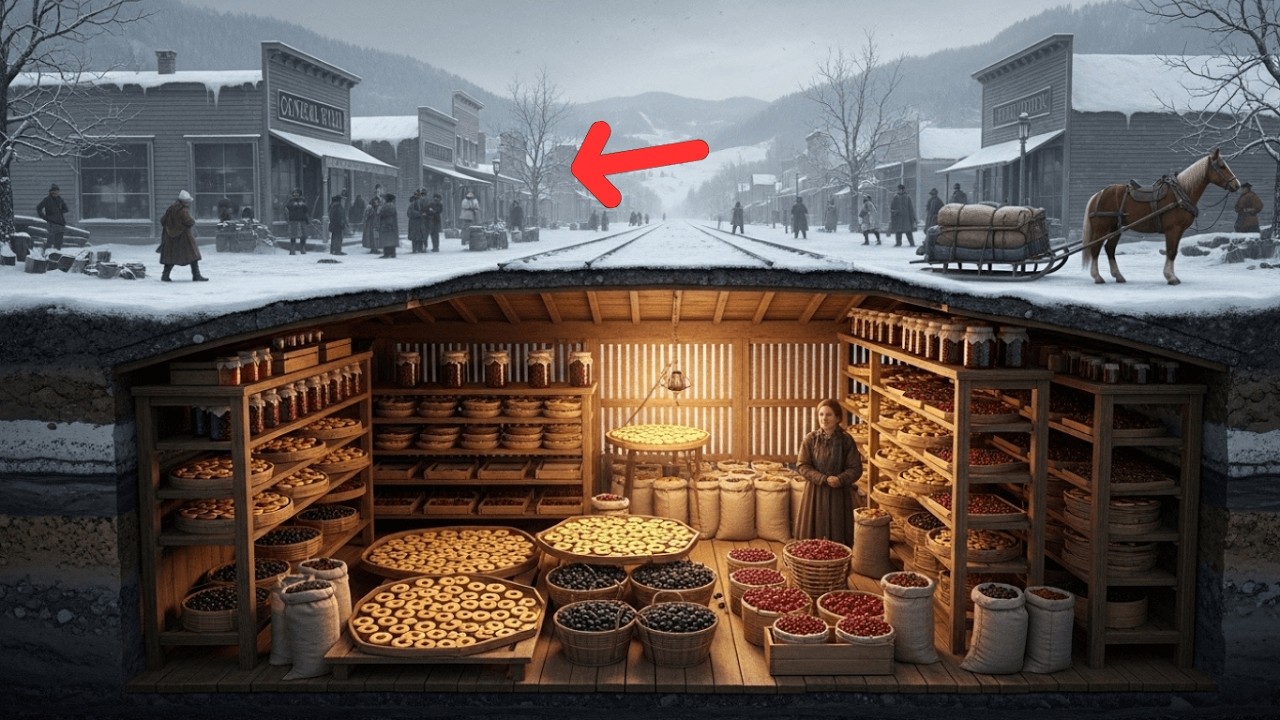
At the edge of her small plot of land, she set up wooden racks—row after row, carefully spaced. She stretched thin cloth over them to keep insects away, angled them just right to catch the sun.
It took hours.
Then days.
The town watched.
“She’s wasting good fruit,” someone muttered.
“Won’t last a week,” another said.
Eliza sliced each piece by hand.
Careful.
Consistent.
Patient.
She worked through the heat.
Through the dust.
Through the whispers.
By the end of the first week, the fruit had begun to change.
The peaches shrank, their sweetness intensifying.
The apples turned leathery but rich.
The apricots darkened into something almost golden.
Eliza checked them constantly.
Turning them.
Adjusting the racks.
Covering them when the wind picked up.
She knew the risks.
Too much sun—and they’d burn.
Too little—and they’d rot.
There was no room for error.
“Still think it’s a good idea?” a young ranch hand asked one afternoon, watching her work.
Eliza didn’t look up.
“Yes.”
He hesitated.
Then shrugged.
“Guess we’ll see.”
They did.
Two weeks in, a storm rolled through.
Not rain.
Not the kind that would help.
Dust.
Thick. Blinding. Suffocating.
The town battened down what it could.
Windows shut.
Doors locked.
Animals pulled in tight.
Eliza stayed outside.
She covered the racks with cloth, tied them down, shielded them with her own body when the wind grew too strong.
“You’re going to ruin all of it!” someone shouted from across the road.
But she didn’t stop.
Not until the storm passed.
When it did—
Everything was coated in fine, choking dust.
The town came out slowly.
Assessing damage.
Counting losses.
Someone walked past Eliza’s land.
Stopped.
Looked closer.
“Well I’ll be…” he muttered.
The fruit—
Was intact.
Not perfect.
But preserved.
Eliza spent the next two days cleaning each piece.
Sorting.
Checking.
Saving what she could.
She lost some.
But not much.
Still—
The town wasn’t convinced.
“Even if it works,” Mr. Carver said, “who’s going to buy dried fruit?”
Eliza met his gaze.
“Not everyone can afford fresh,” she said.
He scoffed.
“We’ll have supply trains before winter. Same as always.”
Eliza didn’t answer.
She just kept working.
By the time the first frost hit, the racks were empty.
Not because the fruit was gone.
But because it had all been stored.
Packed into jars.
Cloth sacks.
Wooden crates.
Five hundred pounds of fruit—
Reduced.
Preserved.
Ready.
And still—
The town laughed.
“You planning to eat all that yourself?” someone joked.
Eliza smiled.
“If I have to.”
Winter came early that year.
Colder than usual.
Sharper.
More unforgiving.
But that wasn’t the real problem.
The real problem—
Was the train.
It didn’t come.
At first, no one worried.
“Delayed,” they said.
“Happens every few years.”
But a week passed.
Then two.
Still no train.
Supplies began to run low.
Flour rationed.
Sugar scarce.
Salt nearly gone.
Fresh food?
Gone entirely.
The ground was frozen solid.
Hunting was unreliable.
Livestock had to be carefully managed.
And still—
No train.
The town started to feel it.
Not just in their stomachs.
But in their bones.
Fear.
“What if it doesn’t come?” someone whispered one night.
No one answered.
Because they were all thinking the same thing.
It was in the third week of waiting—
When Mr. Carver showed up at Eliza’s door.
He didn’t knock right away.
Just stood there.
Hat in hand.
Finally—
He raised his fist.
Knocked.
Eliza opened the door.
They stood there for a moment.
Then he cleared his throat.
“You still got that fruit?” he asked.
Eliza nodded.
“Yes.”
Another pause.
“How much?”
She met his eyes.
“Enough.”
He exhaled slowly.
“My granddaughter… she hasn’t eaten proper in days.”
Something softened in Eliza’s expression.
“Come inside,” she said.
That was the beginning.
Word spread quickly.
By the next morning—
There was a line.
Men.
Women.
Children.
All standing outside the same place they had once laughed at.
Eliza didn’t turn anyone away.
She measured carefully.
Shared what she could.
Dried peaches.
Apples.
Apricots.
Sweet.
Nutritious.
Lasting.
More than just food—
Hope.
“This… this is good,” someone said, surprised.
Eliza smiled faintly.
“It was always going to be.”
The weeks passed.
Still no train.
But Red Willow didn’t starve.
Not completely.
Because of her.
The laughter was gone now.
Replaced by something else.
Respect.
One evening, as the sun dipped low over the frozen land, Mr. Carver returned.
This time, he knocked without hesitation.
Eliza opened the door.
He held out a small sack of flour.
“For you,” he said.
She frowned.
“You need this.”
He shook his head.
“We all needed what you had first.”
A long pause.
Then she took it.
“Thank you,” she said softly.
He nodded.
“You saw something we didn’t,” he said.
Eliza looked past him.
At the town.
At the people.
“I just prepared,” she replied.
He smiled faintly.
“Sometimes… that’s the same thing.”
The train finally came in late winter.
Delayed.
Damaged.
Barely running.
But by then—
It didn’t matter as much.
Because Red Willow had already survived its hardest weeks.
And everyone knew why.
The racks were empty now.
The jars nearly gone.
But the memory stayed.
Of the woman they had doubted.
Ignored.
Laughed at.
Who had quietly saved them all.
And when spring came—
Something changed.
Not the land.
Not the weather.
The people.
Because this time—
When Eliza started planting again—
No one laughed.
They asked how they could help.
Because sometimes… the difference between survival and disaster is the one person who prepares when no one else believes.
She Dried 500 Pounds of Fruit They Said Would Rot… Until Winter Came With No Supply Train (Part 2)
Spring didn’t bring relief.
It brought attention.
By the time the snow melted off the edges of Red Willow, word had already spread beyond the town.
First to nearby settlements.
Then farther.
Stories traveled fast when survival was involved.
“A woman who fed an entire town through winter.”
“The one who turned fruit into gold.”
Eliza Hart didn’t care for any of it.
She was back in the fields before sunrise.
Hands in the soil.
Planning the next harvest.
But this time—
She wasn’t alone.
“Where do you want these?” a voice called out.
Eliza looked up.
Three men stood by the fence, holding bundles of wood.
The same men who had laughed at her months ago.
She paused.
Then pointed toward the far side of the field.
“Set them there. We’ll build more racks.”
They nodded.
No jokes.
No smirks.
Just work.
That was how it started.
More people came.
Some out of gratitude.
Others out of curiosity.
A few because they simply didn’t know what else to do.
Eliza didn’t turn them away.
But she didn’t praise them either.
“If you’re here, you work,” she said.
And they did.
Within weeks, her small operation had grown.
More racks.
More fruit.
More hands.
Red Willow was changing.
But not everyone liked it.
“You’re giving her too much power,” a voice said one evening inside the general store.
Eliza wasn’t there.
But her name was.
“She saved us,” another man argued.
“That was luck,” the first replied sharply.
“Next winter won’t be the same.”
“You willing to bet on that?” someone muttered.
Silence followed.
Because deep down—
They all remembered how close they had come.
Still—
Doubt has a way of surviving even when proof stands right in front of it.
And doubt… can be dangerous.
It showed up a month later.
Eliza noticed it first in the numbers.
Fruit going missing.
Not much.
Just enough to raise questions.
At first, she said nothing.
Mistakes happened.
People were still learning.
But then—
It happened again.
And this time—
She saw it.
A young man.
Late twenties.
Nervous.
Avoiding eye contact.
He slipped a small sack under his coat when he thought no one was watching.
Eliza stepped forward.
“Stop.”
He froze.
Slowly turned.
“I was just—” he started.
“Don’t,” she said calmly.
The others nearby went quiet.
Watching.
Waiting.
Eliza stepped closer.
“You need food?” she asked.
He hesitated.
Then nodded.
“My family—” he began.
“You could’ve asked,” she said.
He looked down.
Ashamed.
“I didn’t think you’d say yes.”
Eliza studied him.
Long.
Hard.
Then she took the sack from his hands.
Opened it.
Checked the contents.
And handed it back.
“Next time,” she said, “you don’t steal.”
He blinked.
“You’re… letting me keep it?”
She nodded once.
“But you work double tomorrow.”
A faint ripple moved through the group.
The young man swallowed.
“Alright.”
That should have been the end of it.
But it wasn’t.
Because someone else had been watching too.
And he didn’t like what he saw.
His name was Walter Briggs.
A trader.
A man who had built his life on controlling supply.
And right now—
Eliza Hart was a problem.
“She’s giving it away,” he said bitterly, pacing inside the store.
“That’s not business. That’s charity.”
Mr. Carver leaned against the counter.
“She’s keeping people alive,” he replied.
Walter scoffed.
“And what happens when she decides to charge?”
Carver didn’t answer.
Because that question—
That one had weight.
Walter leaned in.
“She controls the food, she controls the town,” he said.
“And you’re all just letting it happen.”
The seed was planted.
And seeds…
Grow.
The next morning, Walter showed up at Eliza’s land.
Alone.
Well-dressed.
Too clean for a place like this.
Eliza saw him coming.
Didn’t stop working.
“You’ve done well for yourself,” he said, looking around.
Eliza kept slicing fruit.
“What do you want?”
He smiled thinly.
“I want to help you expand.”
That made her pause.
“Expand?” she repeated.
Walter nodded.
“Bigger operation. More product. Trade routes. Profit.”
Eliza wiped her hands.
Turned to face him fully.
“And what do you get?”
His smile widened.
“A partnership.”
She held his gaze.
“No.”
Simple.
Immediate.
Walter blinked.
“You didn’t even hear the terms.”
“I don’t need to,” she said.
His expression hardened.
“You’re thinking too small,” he said.
“You could be running half the territory in a year.”
Eliza shook her head.
“I’m running this town.”
That answer hit him harder than he expected.
“This town isn’t yours,” he snapped.
Eliza’s voice stayed calm.
“No,” she said.
“But I take care of it.”
Silence.
Walter stepped closer.
“You think they’ll stay loyal?” he asked quietly.
Eliza didn’t answer.
Because she already knew the truth.
Not all of them would.
Walter smiled again.
“We’ll see.”
And then he left.
The trouble didn’t start right away.
It never does.
It started with whispers.
“She’s holding back stock.”
“She’s choosing who eats.”
“She’s deciding prices.”
None of it was true.
But truth isn’t always what people believe.
Especially when fear gets involved.
Eliza felt it shift.
The looks.
The conversations that stopped when she walked by.
And then—
One morning—
She found the racks destroyed.
Wood snapped.
Cloth torn.
Fruit scattered across the dirt.
For a moment—
She just stood there.
Silent.
The others arrived slowly.
Shock.
Anger.
Confusion.
“Who did this?” someone demanded.
No one answered.
But Eliza already had a guess.
She knelt.
Picked up a ruined piece of fruit.
Turned it in her hand.
Then stood.
“Fix it,” she said.
The group hesitated.
“That’s it?” one man asked. “We’re not going to do anything?”
Eliza met his eyes.
“We are,” she said.
And for the first time—
There was steel in her voice.
“We’re going to rebuild.”
The words spread through the group.
And something shifted again.
Not doubt.
Not fear.
Resolve.
They worked all day.
All night.
Rebuilding.
Stronger.
Better.
Because this time—
It wasn’t just her project.
It was theirs.
Walter watched from a distance.
And for the first time—
He realized something.
He hadn’t just underestimated Eliza.
He had underestimated all of them.
By the time the next winter came—
Red Willow was ready.
Not just with fruit.
With trust.
With unity.
With something stronger than fear.
And when the snow fell again—
No one waited for the train.
Because this time—
They didn’t need saving.
They had already learned how.
And at the center of it all—
Was the woman they once laughed at.
Who never needed their belief.
Only their time.
Because real strength isn’t just in surviving once… it’s in teaching others how to survive forever.