
She Built a Hidden Space Beneath the Woodshed — Then the Coldest Storm in Years Hit
The first time anyone noticed the trapdoor, it was already covered in snow.
But that came later.
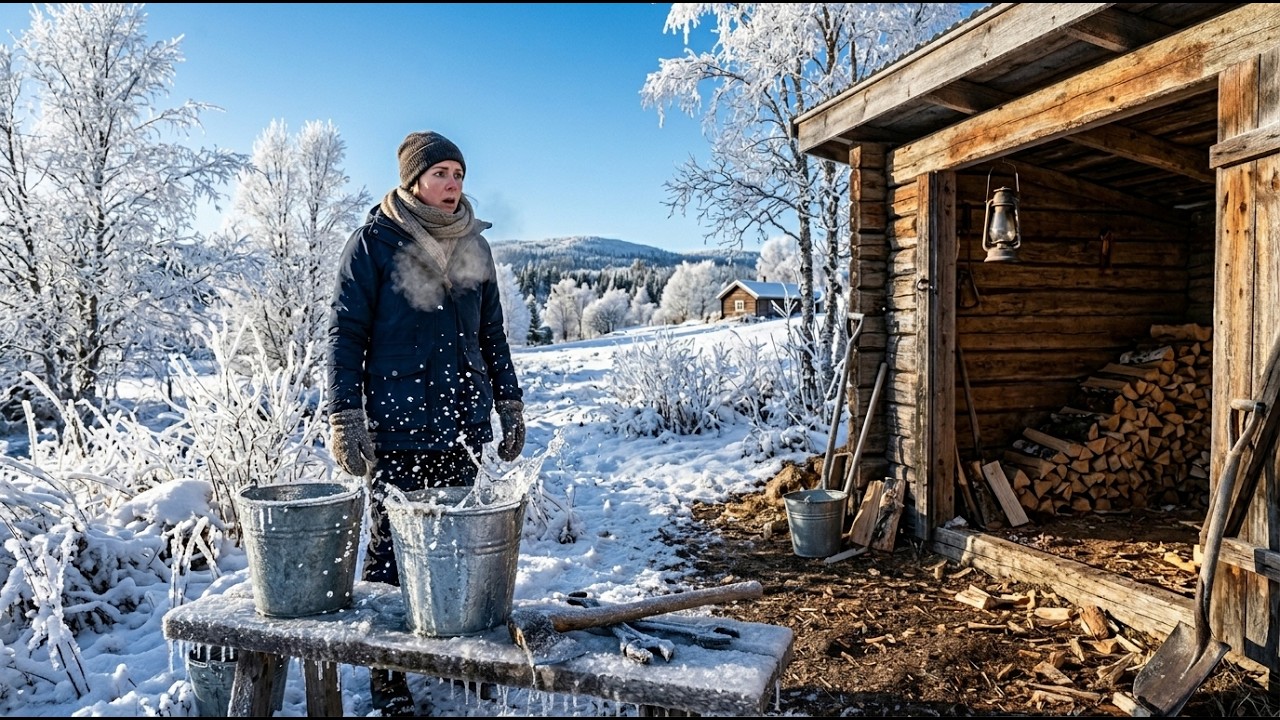
When Laura Bennett started digging beneath her woodshed in late September, the sky was still warm and blue, and the leaves hadn’t even begun to turn. Most people in Cedar Hollow were thinking about football games and pumpkin festivals, not winter survival.
Laura was thinking about insulation.
She drove her shovel into the hard-packed earth beside the stacked firewood, lifted a heavy clump, and tossed it into a growing pile. Sweat dampened her collar. The woodshed above her creaked as a breeze passed through the pine trees.
Her neighbor, Curtis Hale, slowed his ATV when he saw her.
“You planting potatoes under there?” he called.
Laura wiped her forehead. “Something like that.”
Curtis parked and stepped closer, peering into the rectangular hole already three feet deep.
“That ain’t potatoes,” he said. “You building a grave?”
She smirked. “Backup space.”
“For what?”
“For winter.”
Curtis laughed, long and loud. “You got a house. You got a stove. What more you need?”
Laura looked toward the mountains beyond the tree line.
“Options.”
He shook his head. “You worry too much.”
But Laura didn’t stop digging.
She’d moved to Cedar Hollow two years earlier after her mother passed away. The small property had come with a modest cabin, a leaning woodshed, and five acres of quiet forest. It was peaceful—most of the time.
But her first winter there had been rough.
The power went out for two days. Pipes froze. Wind forced its way through the cabin walls. She’d slept in layers of clothing, feeding the wood stove every two hours.
She got through it.
But she didn’t forget.
And she didn’t trust mild forecasts anymore.
So she started planning.
The woodshed made sense. It already stored firewood. It sat slightly downhill, protected by trees. And most importantly, no one would think to look underneath it.
She measured carefully, digging a space large enough for a small room. Every foot down, the soil grew colder and more compact. She lined the walls with pressure-treated lumber, braced the corners, and laid gravel at the base for drainage.
It took three weekends.
Then she built the floor above—thick planks mounted on a hinged frame. When closed, it looked like any ordinary woodshed floor.
Hidden.
She installed a ladder, insulation panels, and a small vent pipe disguised behind stacked logs. Inside, she added shelves—blankets, water containers, canned food, lanterns.
Finally, she placed a small insulated hatch inside the cabin wall, connecting to the shed via a narrow crawl tunnel.
If the weather turned dangerous, she could move between the cabin and the underground space without going outside.
When she finished, she sat inside the hidden room with a flashlight and listened.
The forest sounded distant.
Wind barely reached her.
The temperature stayed cool but steady.
She smiled.
October passed quietly.
Curtis occasionally teased her.
“You done with your secret bunker?” he asked one afternoon.
“Pretty much.”
“You planning for the apocalypse?”
“No. Just winter.”
He grinned. “You’ll see. This year’s supposed to be mild.”
Laura nodded politely.
But she kept stacking firewood higher.
November brought early frost.
December brought snow.
Still nothing unusual.
People relaxed.
Then the forecast changed.
A cold front dropped from Canada, stronger than expected. Meteorologists used phrases like “Arctic blast” and “historic low temperatures.” Schools closed early. The grocery store shelves emptied.
Curtis stopped by again.
“You hearing this?” he asked.
“Yes.”
“They’re saying minus twenty wind chill.”
Laura tightened the straps on a tarp covering extra wood.
“It could get worse,” she said.
He frowned. “You serious?”
She nodded.
“You really think that space under the shed…?”
“Yes.”
He looked uncertain for the first time.
“Mind if I come over if things get bad?”
“Of course.”
The storm arrived at night.
Wind slammed through the trees. Snow swirled sideways. The temperature dropped so fast that the cabin walls began ticking—wood contracting in the sudden cold.
Laura checked the thermometer.
Ten degrees.
Then five.
Then zero.
By midnight, the power failed.
The wood stove glowed, but she knew it wouldn’t be enough if temperatures kept falling. Pipes would freeze. Drafts would worsen.
She packed a bag—blankets, extra water—and opened the small panel in the cabin wall.
Cold air brushed her face as she crawled into the tunnel.
Moments later, she dropped into the hidden room beneath the woodshed.
The difference was immediate.
Quiet.
Still.
Cold—but not biting.
She lit a lantern and sat down.
Above her, wind howled.
Below, the earth held steady.
A pounding noise woke her.
She checked her watch. 3:12 a.m.
Someone was outside.
She climbed the ladder carefully and lifted the woodshed hatch.
Curtis stood there, face red from cold, his jacket dusted white.
“Laura!” he shouted over the wind. “My furnace died!”
“Get in!” she yelled.
He climbed down quickly, eyes widening as he entered the space.
“You weren’t kidding,” he whispered.
They settled in, sharing blankets.
The temperature outside dropped further.
Minus five.
Minus ten.
The coldest in years.
By morning, another knock came.
Curtis’s sister and her elderly father.
Laura let them in.
The small room filled quickly, but the insulation held.
They rotated sitting positions, shared food, and kept lanterns low.
Above them, the storm intensified.
Trees cracked.
Snow buried the woodshed door halfway.
The cabin groaned under weight.
Inside the hidden room, breath no longer fogged.
“Feels warmer down here,” Curtis said.
“It’s the ground,” Laura replied. “It stays stable.”
Hours passed.
Then a loud thud shook the ceiling.
Everyone froze.
“Tree?” someone whispered.
Laura listened.
The sound didn’t repeat.
But she knew the storm wasn’t finished.
Night fell again.
The temperature hit its lowest point.
Minus fifteen.
Even the stove in the cabin would have struggled.
But beneath the woodshed, they stayed safe.
Children dozed. Adults whispered.
No one panicked.
That was the real difference.
The storm ended the next afternoon.
When they climbed out, the world looked frozen solid. Snow drifts reached waist-high. Curtis’s house sat dark and icy. Pipes had burst. Windows frosted inside.
Laura’s cabin was cold—but intact.
Without the hidden space, they would have spent the night battling dangerous temperatures.
Curtis stared at the woodshed.
“You saved us,” he said quietly.
Laura shook her head. “Preparation did.”
Word spread through Cedar Hollow.
People came to see the trapdoor, the ladder, the insulated walls.
Some took photos. Others asked for measurements.
Curtis laughed when he told them, “I called it a grave.”
Laura smiled. “Sometimes planning looks strange.”
Spring came slowly.
Snow melted.
But the hidden space remained stocked.
Curtis leaned on the fence one evening.
“You think you’ll ever need it again?” he asked.
Laura looked at the woodshed, sunlight filtering through trees.
“Winter always comes back,” she said.
He nodded.
This time, no one laughed.
PART 2 — She Built a Hidden Space Beneath the Woodshed — Then the Coldest Storm in Years Hit
The spring thaw revealed something Laura hadn’t expected.
The woodshed floor, once hidden beneath packed snow, now showed faint scuff marks around the trapdoor edges. Footprints had come and gone during the storm—Curtis, his sister, the elderly father, and later two more neighbors who had taken shelter for several hours.
The secret wasn’t really a secret anymore.
Laura didn’t mind.
But she didn’t anticipate what came next.
Three weeks after the storm, a county truck rolled up her narrow gravel driveway. A man in a heavy coat stepped out, clipboard tucked under his arm. He looked more curious than official.
“Ms. Bennett?” he called.
“That’s me.”
“I’m Rick Nolan. County safety office. Heard about your… underground shelter.”
Laura nodded cautiously. “Just something small.”
Rick crouched near the woodshed, running his hand along the floorboards.
“You built this yourself?”
“Yes.”
“Mind showing me?”
She opened the trapdoor.
Rick climbed down slowly, studying the insulation, the gravel base, the shelves still stocked with blankets and water.
“Temperature stays steady?” he asked.
“Within a few degrees.”
He stood quietly for a moment.
“We lost two families to exposure that storm,” he said softly. “Power failures. No backup heat.”
Laura didn’t know what to say.
Rick climbed back up.
“You mind if we use this as an example?” he asked. “Teach folks to build something similar?”
Laura hesitated. “It’s not perfect.”
“Perfect isn’t the goal,” he replied. “Prepared is.”
She nodded.
By early summer, Laura found herself explaining the hidden space more often than she expected.
Neighbors stopped by with questions.
“How deep did you dig?”
“What kind of insulation?”
“How’d you ventilate it?”
Curtis started joking that she should charge admission.
But Laura kept things simple. She drew diagrams on scrap paper. She walked people through the structure. She emphasized practical steps.
“Don’t overthink it,” she told them. “Small, insulated, and hidden from wind.”
Some built their own versions.
Not as polished.
But good enough.
The forest around Cedar Hollow slowly filled with quiet, prepared spaces.
Then came August.
The heat felt heavier than usual. The ground cracked in places. Streams shrank to thin ribbons of water.
Laura noticed the dryness first while stacking fresh firewood.
Curtis noticed the smoke.
“You smell that?” he asked one afternoon.
Laura lifted her head.
Faint, but real.
Smoke drifted from somewhere west of the ridge.
“Probably controlled burn,” Curtis said.
Laura wasn’t so sure.
Two days later, the sky turned hazy.
The sheriff drove through town advising caution. A wildfire had sparked miles away, spreading through dry underbrush.
Most residents weren’t concerned.
“It’ll never reach the valley,” someone said at the gas station.
Laura didn’t argue.
She simply restocked the hidden space.
Water.
Masks.
Extra blankets.
Curtis noticed.
“You really think we’ll need it again?” he asked.
“Maybe not,” she said.
“But you’re preparing anyway.”
“Yes.”
He nodded slowly. He wasn’t laughing anymore.
The wind shifted overnight.
Ash drifted like gray dust across Laura’s yard.
By afternoon, smoke thickened.
The sheriff’s truck returned—this time urgent.
“Voluntary evacuation,” the loudspeaker announced.
Some families packed and left. Others stayed, unsure.
Curtis walked over, eyes uneasy.
“My truck’s acting up,” he said. “Might not make it far.”
“You can stay here,” Laura replied.
They opened the woodshed again.
Not for cold this time—but for air.
Inside, the underground space remained calm, the vent filtering smoke through layered cloth Laura had added after winter.
By evening, Curtis’s sister arrived again, this time with two children.
They settled quietly.
Outside, smoke dimmed the sun.
Laura checked the air inside.
Still clear.
The earth insulated not just temperature—but panic.
That night, the fire never reached them.
Crews stopped it along a rocky ridge miles away.
But the smoke lingered for two days.
The hidden space kept them comfortable while others coughed through thick air in their homes.
When the sky finally cleared, Curtis climbed out first.
He looked at the woodshed, then at Laura.
“This thing works for everything,” he said.
Laura smiled faintly. “It’s just protected space.”
“Feels like more than that.”
Fall returned quietly.
Leaves turned gold.
The woodshed looked ordinary again—stacked with firewood, nothing unusual.
But everyone in Cedar Hollow knew what lay beneath.
One evening, Curtis leaned on the fence as Laura split logs.
“You realize you changed this place,” he said.
She shook her head. “People built their own.”
“Because you showed them.”
She paused, resting the axe.
“I just didn’t want to be caught unprepared again.”
Curtis nodded.
“Well… next storm, we won’t be.”
Winter clouds began forming earlier than usual.
Laura checked the hatch.
Seals tight.
Supplies stocked.
Ladder secure.
She closed the trapdoor and stacked firewood over it, hiding the entrance once more.
The woodshed looked like nothing special.
Just old boards.
Just stacked logs.
But beneath it waited warmth, calm, and safety—ready for whatever came next.
And this time, no one in Cedar Hollow doubted it would matter again.