
“I’ll Build You A Home And You’ll Give Me A Family”—The Giant Cowboy Promised The Widowed Nurse
The first time Clara Whitmore saw him, she thought the doorway had grown smaller.
The man filling it was enormous.
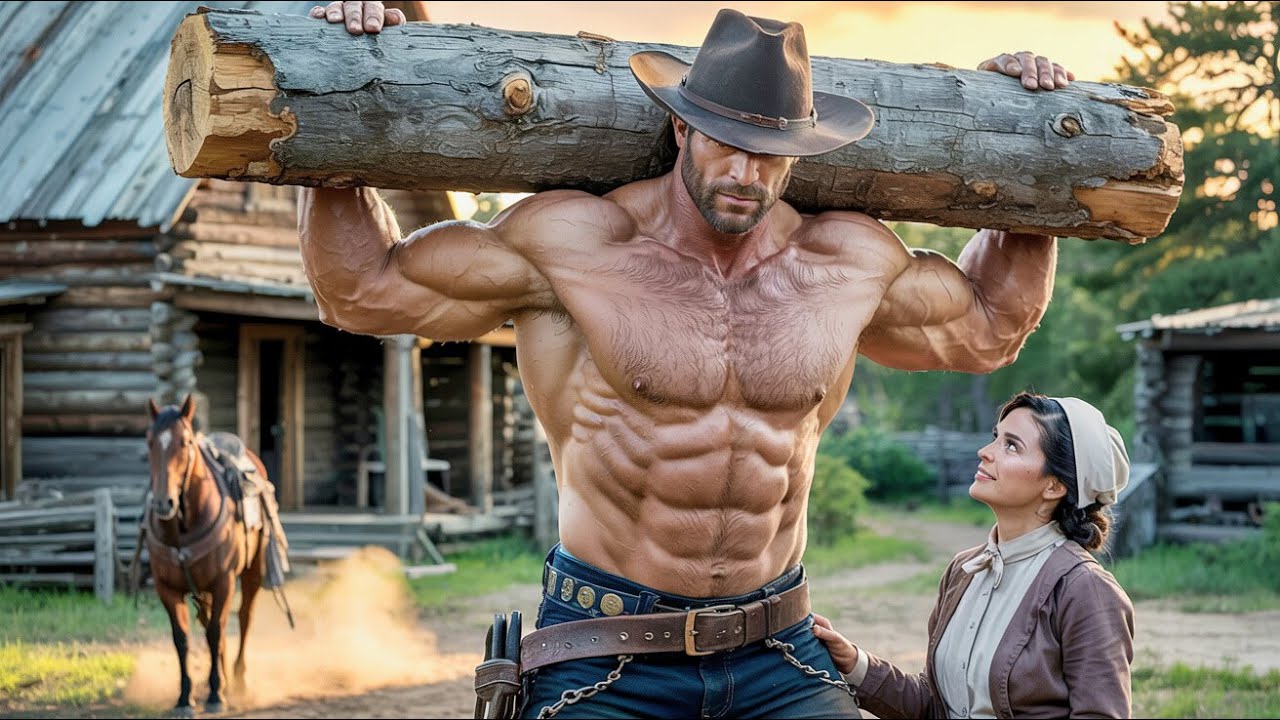
He stood at least six-foot-six, shoulders wide enough to block the afternoon sun, hat brushing the top beam of the clinic entrance. His hands looked like they could crush fence posts. Dust covered his boots, and his coat smelled faintly of horses and pine smoke.
Yet when he spoke, his voice was careful—almost gentle.
“You the nurse?” he asked.
Clara wiped her hands on her apron. “Yes. What’s the problem?”
He stepped aside, revealing a boy of about eight leaning against the hitch rail, pale and sweating.
“Fell off a colt,” the man said. “I think his arm’s broke.”
Clara hurried outside. The boy winced as she examined him.
“It’s fractured,” she said. “We’ll set it.”
The giant cowboy nodded. “Name’s Eli Granger.”
Clara led the boy inside. Eli followed, ducking his head under the doorway again.
While she worked, she noticed something strange: Eli never stopped watching her hands. Not suspiciously—more like he was memorizing every move.
“You’ve done this before?” he asked quietly.
“Too many times,” she replied.
He nodded once.
After she finished setting the arm and wrapping it, the boy relaxed. Eli placed coins on the table—more than the fee.
“That’s too much,” Clara said.
“Keep it,” he replied. “For the boy’s follow-up.”
He hesitated, then added, “You’re good with people.”
Clara smiled faintly. “It’s my job.”
Eli seemed about to say more—but didn’t. He tipped his hat and left.
Clara watched him walk away, boots heavy in the dust.
She thought nothing more of it.
Until he returned.
Three days later, Eli came alone. He stood awkwardly in the doorway, holding something wrapped in cloth.
“I brought eggs,” he said. “From my hens.”
“That’s kind, but you already paid.”
He shifted, uncomfortable. “Figured you could use them.”
She accepted, puzzled.
He lingered.
“You live alone?” he asked.
Clara hesitated. “My husband passed last year.”
Eli’s expression softened. “I’m sorry.”
She nodded.
“I had… plans,” she added quietly. “Children. A house. All of it changed.”
Eli looked down at his hands.
“I know about plans changing,” he said.
Silence stretched between them.
Then he cleared his throat. “I’ll come back with the boy next week.”
He left again.
But he kept returning.
Sometimes with the boy. Sometimes with milk, potatoes, or fresh venison. He never stayed long. Never crossed a line. Just quiet visits, careful words.
Clara began to notice things.
He spoke gently to children.
He removed his hat indoors.
He always checked the clinic’s woodpile and added logs without being asked.
One evening, she found him stacking wood behind the building.
“You don’t have to do that,” she said.
He shrugged. “You shouldn’t be chopping alone.”
She leaned against the wall, studying him.
“Why are you helping me, Mr. Granger?”
He took a moment before answering.
“You remind me of someone who shouldn’t be alone.”
The words lingered.
Winter approached. Clara’s clinic slowed. Snow threatened the mountain pass. Supplies grew harder to get.
One afternoon, Eli arrived with a wagon full of lumber.
Clara blinked. “What’s that for?”
He shifted his weight.
“I been thinking,” he said. “Your place is small. Drafty. Not built for mountain winters.”
“It’s enough.”
He shook his head.
“I got land near the creek. Solid ground. Sun in the morning. I can build a house there.”
She frowned, confused.
“For who?”
He met her eyes, nervous despite his size.
“For you.”
Clara froze.
“That’s… not appropriate,” she said carefully.
He raised both hands quickly. “Not asking you to move in. Not unless you want. Just… building it. You deserve better than this.”
She studied him. His ears had turned slightly red.
“And why would you do that?”
He swallowed.
Then he said the words that would change everything.
“I’ll build you a home… and you’ll give me a family.”
The room fell silent.
Clara’s breath caught.
“You can’t just… propose like that,” she whispered.
Eli looked embarrassed. “Wasn’t meant fancy. Just honest.”
She turned away, heart racing.
“My husband died eight months ago,” she said softly.
“I know.”
“I’m not ready.”
“I know.”
She faced him again. “Then why say it?”
He took a long breath.
“Because I’ve spent years alone. Ranch is quiet. Too quiet. And you… you’re kind. Strong. You heal people. I figured… maybe we could build something together.”
Clara felt tears prick her eyes—unexpected, confusing.
“I don’t know you well enough,” she said.
“Then let me build the house first,” he replied. “No promises. If you don’t want it, it’s yours anyway. Clinic. Boarding house. Anything.”
She stared at him.
“You’d do all that… with no guarantee?”
He nodded. “Some things worth risking.”
Clara didn’t answer.
But she didn’t refuse either.
So Eli began building.
He worked from dawn until dark. Logs cut, beams raised, foundation laid near the creek. The structure grew quickly—bigger than Clara expected, but simple. Two bedrooms. A wide kitchen. A porch facing sunrise.
Townsfolk whispered.
“The giant cowboy’s building for the widow nurse.”
“Reckless.”
“She’ll never agree.”
Clara visited once, standing at the edge.
Eli wiped sweat from his brow. “Too big?”
“It’s… beautiful,” she admitted.
He smiled.
Weeks passed. Snow fell lightly. The house took shape. Eli installed a stove, thick insulation, sturdy doors.
One afternoon, Clara arrived with bandages.
“You cut your hand,” she said.
He glanced at the bleeding knuckle. “Didn’t notice.”
She wrapped it carefully.
“You’re working too hard,” she murmured.
“Worth it.”
She met his eyes.
“For what?” she asked softly.
“For a chance.”
Her heart stirred.
By December, the house stood finished.
Eli invited her to see it.
She stepped inside slowly. Warm wood smell. Sunlight through windows. A table already built. Shelves waiting for books.
It felt… like hope.
“You built this alone?” she asked.
“Mostly.”
She walked to the second bedroom.
“Why two?”
He hesitated.
“For children,” he admitted.
Her throat tightened.
They stood in silence.
Finally, she spoke.
“You can’t buy a family with lumber.”
“I know,” he said gently. “I just built a place for one… if it ever happens.”
She turned, tears forming.
“I’m afraid,” she whispered.
“So am I,” he admitted.
She laughed softly through tears.
“You’re enormous. What scares you?”
“Losing something I never had.”
The honesty broke something inside her.
Weeks later, a blizzard struck. Roads closed. Clara’s clinic roof began leaking under snow weight.
Eli arrived with a sled.
“Come stay at the house,” he said. “Safer.”
She hesitated—then agreed.
They shared the space carefully. Separate rooms. Quiet dinners. Conversation growing easier each day.
Clara watched him fix loose boards, cook simple meals, speak softly to her patients who came through snow.
One evening, a young orphaned girl was brought in with fever. Clara treated her. Eli sat beside the child, reading softly until she slept.
Clara watched from the doorway.
Something inside her settled.
The next morning, she found him outside, shoveling snow.
“You meant what you said?” she asked.
He looked up. “About what?”
“A family.”
“Yes.”
She took a breath.
“I can’t promise love yet.”
“I understand.”
“I can promise trying.”
He froze.
“That’s enough,” he said quietly.
She stepped closer.
“And I’ll move in… if you still want me to.”
His smile was slow, careful, almost disbelieving.
“I always did.”
Spring came. Clara moved her clinic into the front room. The orphaned girl stayed to help. Then another child—temporarily. Then another.
The house filled.
One evening, Clara stood beside Eli on the porch. Children’s laughter echoed inside.
“You didn’t just build me a home,” she said softly.
He glanced at her.
“You gave me one.”
She slipped her hand into his enormous palm.
“And you gave me a family,” he replied.
The giant cowboy had made a promise.
And the widowed nurse had turned it into a life.
Spring softened the mountains, and the house Eli built began to feel less like a shelter and more like something alive.
Children’s voices filled the mornings.
Clara woke before sunrise to start water boiling, her nurse’s instincts still guiding her. By the time she finished, Eli was already outside splitting kindling, though he needed far less now—the thick log walls held warmth well. Inside, the orphaned girl they had taken in—Lily—was sweeping carefully, tongue pressed between her teeth in concentration.
She had arrived feverish and frightened during the blizzard. Now she moved confidently, her dark hair tied back with a ribbon Clara had sewn.
“You’re up early again,” Clara said gently.
Lily shrugged. “I like mornings here.”
Clara smiled.
Eli stepped inside, ducking as always. “Snow melting fast. Creek’s running strong.”
“Good,” Clara replied. “Travelers will start coming through again.”
They exchanged a look—quiet understanding. More travelers meant more patients. And sometimes… more children who needed somewhere safe.
It happened sooner than expected.
Two days later, a wagon arrived carrying a woman with a deep cough and a boy no older than six. Clara worked quickly, diagnosing pneumonia. The mother needed rest and warmth. The boy refused to leave her side.
“You can stay here,” Clara said.
Eli nodded immediately. “Plenty of room.”
They made space. Lily shared her bed with the boy. Clara tended the mother through long nights. Eli handled meals, wood, and everything else without complaint.
By the time the woman recovered, she had tears in her eyes.
“You saved me,” she told Clara.
Clara shook her head. “You just needed care.”
The woman hesitated. “My sister lives south. She’ll take my boy while I work… but he’s scared. Would you… let him stay a little longer?”
Clara glanced at Eli.
He didn’t speak—but his eyes were warm.
“Of course,” she said.
The house grew fuller.
Three children became four. Then five.
They weren’t all orphans. Some stayed weeks, others months. A few moved on. But each left something behind—laughter, drawings, stories pinned to the walls.
One evening, Clara found Eli outside building something beside the house.
“A shed?” she asked.
He shook his head. “Schoolroom.”
She blinked.
“You thought of that?”
“Kids need learning,” he said simply.
She laughed softly. “You’re planning far ahead.”
He shrugged. “You said ‘trying.’ I’m trying too.”
The schoolroom took shape quickly—just a simple structure with windows and a long table. Clara began teaching letters between tending patients. Lily helped the younger ones. Eli carved wooden slates.
The valley started noticing.
Travelers spoke about the “giant cowboy’s house full of children.” Some came just to see. Others brought supplies. A preacher donated books. A rancher delivered flour.
One afternoon, Jacob Harlan, a neighboring rancher, arrived with his teenage daughter.
“She wants to help,” he said.
The girl stayed, teaching reading. The house buzzed with energy.
Clara stood one evening watching the children chase fireflies. Eli leaned beside her.
“You sure you didn’t want quiet?” he asked.
She smiled. “I tried quiet once. It hurt too much.”
He nodded.
She looked at him. “Do you regret it? Promising me a family?”
He shook his head slowly. “I didn’t know what shape it’d take. But… this feels right.”
She reached for his hand.
Summer deepened. The house now had six children regularly staying. Beds lined the walls. Meals grew louder. Eli built a longer table. Clara stitched extra blankets.
One night, a storm rolled in hard. Thunder cracked across the mountains. The youngest child—Tommy—began crying, frightened.
Before Clara could reach him, Eli lifted the boy gently.
“It’s just sky talking,” he murmured.
Tommy clung to his shirt. “You won’t leave?”
“No,” Eli said softly. “I’m right here.”
Clara watched from the doorway, her chest tightening.
Later, after the storm passed and children slept, she spoke quietly.
“You’re good at this.”
Eli rubbed the back of his neck. “Didn’t know I would be.”
“You built more than walls,” she said.
He looked at her.
“You built safety.”
He swallowed, emotion flickering.
Autumn returned with golden light. The children helped harvest vegetables. Lily, now stronger and taller, organized the younger ones like a tiny captain.
One afternoon, she approached Clara.
“Are we staying forever?” Lily asked.
Clara hesitated.
She looked across the yard where Eli helped two boys stack wood.
“I hope so,” she answered softly.
That evening, Clara sat beside Eli on the porch.
“I think we’ve already become what you promised,” she said.
He tilted his head. “A family?”
She nodded.
“But there’s something else,” she added.
He waited.
“I love you,” she said quietly.
Eli went very still.
The words seemed to take a moment to reach him.
“You sure?” he asked gently.
She laughed softly. “Yes.”
He exhaled—a breath he seemed to have held for months.
“I loved you the day you set that boy’s arm,” he admitted.
She leaned against him. His enormous shoulder felt like home.
Inside, the children laughed over a story Lily read aloud.
The house Eli built had grown beyond lumber and nails. It held warmth, voices, footsteps, hope.
He had promised:
“I’ll build you a home… and you’ll give me a family.”
Standing there, Clara realized the truth—
They had both kept their promise.
And the giant cowboy, once alone beneath the wide American sky, now listened to a dozen soft breaths each night—proof that love, like a house, is strongest when built together.