
How One Mountaineer’s ‘Stupid’ Idea Kept His Cabin 20 Degrees Warmer Than His Neighbors
When Jacob Mercer stacked the second wall inside his cabin, his nearest neighbor laughed so hard he nearly dropped his coffee.
“You building a house inside a house now?” Roy Bennett called from the doorway.
Jacob didn’t look up. He slid another rough pine plank into place and hammered it carefully. “Something like that.”
Roy stepped inside, boots crunching frost that had formed along the floorboards. The winter hadn’t even fully arrived yet, but the mountain air already bit through the gaps in the logs.
“You know most folks try to stop drafts,” Roy continued. “Not waste space.”
Jacob wiped sawdust from his hands. “I’m not wasting it.”
“You just cut your cabin smaller.”
“Yes.”
Roy shook his head. “That’s… new.”
Jacob’s cabin sat high above Bitter Ridge, built from hand-cut logs with a stone chimney and a low roof. It wasn’t large, but it had a problem: the ceiling rose high enough that warm air gathered overhead while the floor stayed freezing.
Jacob had noticed it his first winter.
He’d wake with frost on his blanket while the rafters above him stayed warm enough to drip condensation.
Now, he was fixing it.
Instead of heating the whole cabin, he built a smaller inner room — a tight wooden shell around his bed, table, and stove. The outer cabin remained, but the new walls created a compact space that trapped heat.
Roy crouched near the structure. “Looks like a box.”
“Exactly.”
“You’re gonna live in there?”
“Yes.”
Roy chuckled. “You know what folks are gonna say.”
Jacob shrugged. “They already say it.”
“What?”
“That it’s stupid.”
Roy grinned. “They’re not wrong.”
Jacob smiled faintly. “We’ll see.”
—
By the time the first heavy snow fell, Jacob’s “box” was finished.
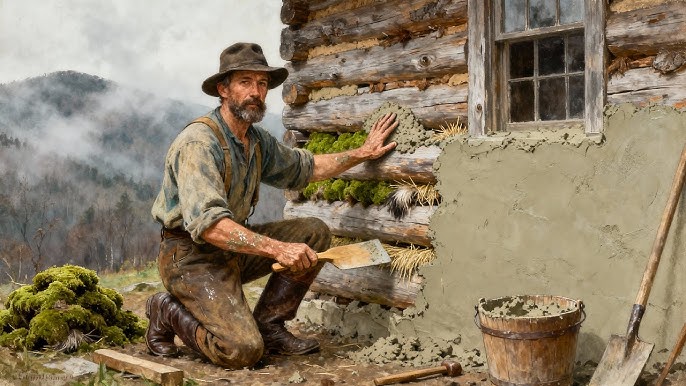
The inner walls stood about six feet high, sealed with mud and moss. A low doorway opened into the smaller space. Inside sat the iron stove, his bed, and a narrow table.
The rest of the cabin stayed cold and empty.
Neighbors came to look.
Tom Wilkes shook his head. “You just cut your heat in half.”
“No,” Jacob said calmly. “I cut the space in half.”
“Same thing.”
“Not really.”
Henry Dobbins laughed. “You’ll feel like you’re sleeping in a crate.”
“Better than freezing in a barn.”
They left amused, convinced Jacob had lost sense.
That night, the temperature dropped sharply.
Wind rattled the outer cabin walls. Snow piled against the door. Inside the inner room, Jacob lit his stove and waited.
The heat built quickly.
Within minutes, the small space warmed. The ceiling trapped rising air. The sealed walls blocked drafts. The outer cabin acted like a buffer, slowing heat loss.
Jacob sat comfortably in his shirtsleeves while frost formed on the outside walls.
He slept warm for the first time since moving to Bitter Ridge.
—
The next morning, Roy knocked.
“You alive?”
Jacob opened the inner door. Warm air drifted out.
Roy blinked. “Well I’ll be.”
Jacob stepped aside. “Come in.”
Roy entered the inner room and stopped. “It’s… warm.”
“Stove burned low overnight,” Jacob said. “Still held heat.”
Roy glanced back at the outer cabin. Ice coated the window. “Feels like two different buildings.”
“Kind of is.”
Roy rubbed his hands. “How much warmer you think?”
Jacob handed him a thermometer. “One outside. One in here.”
Roy checked both. His eyebrows shot up. “Nearly twenty degrees difference.”
Jacob nodded.
Roy let out a low whistle. “You weren’t kidding.”
“No.”
Roy grinned slowly. “You know… folks called this idea stupid.”
Jacob poured coffee. “They still might.”
Roy shook his head. “Not after this.”
—
Word spread quickly.
By afternoon, Tom and Henry returned.
Tom stepped inside the inner room and froze mid-step. “It’s warm in here.”
Henry checked the thermometer. “Twenty degrees… maybe more.”
They exchanged glances.
“You just shrank the space,” Tom muttered.
Jacob nodded. “Less air to heat.”
Henry scratched his beard. “Outer cabin blocks wind.”
“Yes.”
Tom looked around thoughtfully. “That’s… actually smart.”
Jacob shrugged. “Simple.”
They left quietly — not laughing this time.
—
Winter deepened.
Temperatures dropped below zero. Wind howled for days. Most cabins struggled to stay warm even with full fires.
Jacob burned less wood than usual.
His inner room heated quickly and held warmth long after the fire dimmed. The outer walls shielded drafts, and the smaller volume of air required far less fuel.
One evening, Roy returned, shaking snow from his coat.
“My cabin’s freezing,” he admitted. “Mind if I sit?”
Jacob nodded.
Roy stepped inside the inner room and sighed. “Feels like spring in here.”
“You should build one.”
Roy hesitated. “Thought about it.”
“Just boards and mud.”
Roy smiled. “I might.”
—
A week later, Roy began construction.
Neighbors teased him.
“You copying Jacob’s stupid box?”
Roy replied calmly, “If stupid means warm, yes.”
By mid-January, two more cabins had inner walls. Then another.
Each reported the same result: warmer interiors, less wood burned, fewer cold nights.
Henry admitted it first. “Best idea I’ve seen in years.”
Tom added, “Wish I’d done it sooner.”
Jacob said nothing. He just kept stacking wood.
—
One night, a brutal cold front hit the ridge. Temperatures plunged dangerously low. Even well-built cabins struggled.
Roy’s fire went out overnight.
He woke expecting frostbite.
Instead, his inner room stayed just warm enough. The heat trapped by the double walls slowed the cold. He relit the stove and recovered.
The next day, he rode to Jacob’s place.
“That box saved me,” Roy said simply.
Jacob nodded.
Roy looked at the structure. “Funny… everyone called it stupid.”
Jacob smiled faintly. “Still simple.”
Roy laughed. “Simple sometimes beats clever.”
—
By late winter, half the ridge had adopted the idea. Some improved it — adding insulation, lower ceilings, thicker seals. But the principle stayed the same:
Shrink the space.
Trap the heat.
Block the drafts.
Jacob’s cabin remained the original.
One afternoon, Tom leaned against the doorframe. “You know you started something.”
Jacob shook his head. “Cold started it.”
Tom chuckled. “Maybe. But you solved it.”
—
Spring finally melted the snow. The ridge warmed. Most neighbors opened their cabins again, but they kept the inner rooms.
“Winter always comes back,” Roy said.
Jacob agreed.
That autumn, the cold returned early. But this time, no one worried.
They lit small fires. Closed their inner doors. Slept warm.
One evening, Roy sat inside Jacob’s inner room, sipping coffee.
“You ever think about how everyone laughed?” Roy asked.
Jacob nodded.
“And now we all copied you.”
Jacob shrugged. “Warmth changes minds.”
Roy smiled. “Your ‘stupid’ idea kept you twenty degrees warmer.”
Jacob looked at the glowing stove. “Sometimes all it takes is thinking smaller.”
Outside, the wind howled across Bitter Ridge.
Inside the compact wooden space, heat gathered gently — steady, efficient, and quiet — proving that the simplest ideas often survive the coldest winters.
By the second winter, Jacob Mercer’s “stupid box” wasn’t just an idea anymore — it was a pattern.
Cabins across Bitter Ridge now had inner walls. Some were square. Some were rounded. One neighbor even built a curtain-lined version when he ran out of lumber. But all followed the same principle: shrink the heated space, trap warmth, let the outer cabin act as a shield.
And every single one reported the same thing.
Warmer nights.
Less firewood.
No frost on blankets.
Roy Bennett stopped by one morning carrying a small notebook.
“You measuring something?” Jacob asked.
Roy nodded. “Temperature. Wood usage. I’m curious.”
Jacob handed him coffee. “What’ve you got so far?”
Roy flipped pages. “My place — before the inner room — I burned nearly a full stack every five days. Now it’s lasting eight.”
Jacob nodded.
“And temperature?” Roy continued. “On a zero-degree night… main cabin dropped near freezing. Inner room stayed around twenty.”
“About right,” Jacob said.
Roy grinned. “That’s almost exactly twenty degrees warmer.”
Jacob leaned back in his chair. “Less air. Less loss.”
Roy tapped the notebook. “You know what’s funny? Folks used to brag about bigger cabins. Now they brag about smaller rooms.”
Jacob chuckled quietly. “Cold teaches priorities.”
—
Word spread beyond Bitter Ridge.
Travelers passing through noticed the strange double-walled cabins. Some asked questions. Others copied the idea when they returned home.
One afternoon, a young trapper named Eli rode up.
“You the one who built the box?” he asked.
Jacob shrugged. “Just an inner wall.”
Eli stepped inside and felt the warmth. “I’ve been freezing every night. My cabin’s tight, but heat just disappears.”
Jacob pointed upward. “High ceilings.”
Eli nodded. “Yeah.”
“Build lower,” Jacob said.
Eli studied the structure. “Just boards?”
“Boards and mud.”
“Nothing else?”
“That’s enough.”
A week later, Eli returned smiling. “Worked.”
Jacob nodded.
—
The real test came in late January.
A brutal cold wave swept the mountains — colder than anyone remembered. Wind gusts rattled doors. Snow blew sideways. Even seasoned mountaineers stayed indoors.
Roy rode over before the storm hit. “This one’s bad.”
Jacob stacked extra wood. “Inner room’ll hold.”
Roy nodded. “Mine too.”
That night, temperatures dropped dangerously low. Fires struggled to keep up. Drafts slipped through log seams. The outer cabins turned frigid.
But inside the smaller rooms, heat stayed trapped.
Jacob woke once in the night. The fire had burned low, nearly out. Normally, that meant waking to frozen air.
Instead, the inner room remained tolerable. Cool — but safe.
He added wood and went back to sleep.
In the morning, frost covered the outer cabin walls. But the inner room stayed livable.
Roy arrived midmorning, face red from cold. “My fire died around midnight.”
“You alright?”
“Yeah. Inner room held enough warmth.” Roy shook his head. “Without it… I’d have been in trouble.”
Jacob poured him coffee. “That’s why I built it.”
Roy leaned against the wall. “You didn’t just make it warmer… you made it safer.”
Jacob considered that. “Didn’t think of it that way.”
“Well, it is.”
—
By February, nearly every cabin on the ridge had adopted the idea.
Tom improved his by adding a low ceiling panel.
Henry insulated between boards with straw.
Roy added a second inner door.
They compared notes like engineers.
“Lower ceiling traps heat better.”
“Double door stops drafts.”
“Smaller opening warms faster.”
Jacob listened quietly, amused.
The “stupid box” had become a shared project.
—
One evening, they gathered in Jacob’s cabin, snow falling outside.
Tom shook his head. “Remember when we laughed?”
Henry grinned. “I called it a coffin.”
Roy chuckled. “I said you were shrinking your house.”
Jacob raised an eyebrow. “You weren’t wrong.”
Tom leaned back. “Still… twenty degrees warmer is nothing to laugh at.”
Henry nodded. “And less wood. That matters.”
Roy added quietly, “And safer when fires die.”
Silence settled for a moment.
Then Tom said, “You know… this might help folks in harsher places too.”
Jacob shrugged. “Heat works the same everywhere.”
Roy looked thoughtful. “You ever think about writing it down? Show others?”
Jacob smiled faintly. “Boards and mud don’t need instructions.”
Roy laughed. “Maybe not.”
—
Spring came slowly. Snow melted. Cabins opened up again.
But no one removed their inner rooms.
They had become permanent.
Roy stopped by one afternoon. “You keeping yours?”
“Yes.”
“Even summer?”
“Yes.”
“Why?”
Jacob gestured upward. “Winter always returns.”
Roy nodded.
He looked around the small warm space — simple, quiet, efficient.
“You know,” Roy said, “people called it a stupid idea.”
Jacob poured more coffee. “They did.”
Roy smiled. “But it kept your cabin twenty degrees warmer than everyone else.”
Jacob leaned back. “Sometimes the smartest ideas look small.”
Outside, the mountain wind moved gently through the pines.
Inside, the compact inner room held warmth long after the fire faded — proof that one quiet mountaineer’s “stupid” idea had changed how an entire ridge survived winter.