
“By Spring You’ll Birth Me 3 Sons” – The Virgin Mountain Man Declared to the Amish Woman Everyone Had Mocked
The first time Eli Harper saw Miriam Stoltzfus, she was standing alone beside a broken wagon wheel at the edge of the road.
Snow drifted across the Pennsylvania hills in quiet sheets, covering the fields in a pale silence. Eli had been hauling timber down the mountain when he noticed the stranded buggy. The horse stamped impatiently, breath rising in white clouds.
And beside it stood Miriam.
She was large—larger than most Amish women—and her plain brown dress stretched tightly across her frame. Her bonnet hid most of her hair, but a few loose strands clung to her cheeks in the cold wind. Her gloved hands trembled as she tried to lift the wagon’s wheel hub.
Two young Amish boys from a nearby farm were watching from the fence.
They were laughing.
“Too heavy for you, Miriam!” one shouted.
“Maybe the wagon broke because it couldn’t carry you!”
Miriam’s face reddened, but she said nothing. She just kept trying to lift the broken piece of wood.
Eli slowed his truck.
He had lived alone in the mountains for most of his thirty-four years. People in the town called him the mountain man—a quiet figure who chopped trees, hunted deer, and rarely came down except for supplies.
Some whispered he was strange.
Some said he had never even kissed a woman.
Both things were probably true.
But when Eli saw the boys laughing at Miriam, something inside him twisted.
He pulled the truck over.
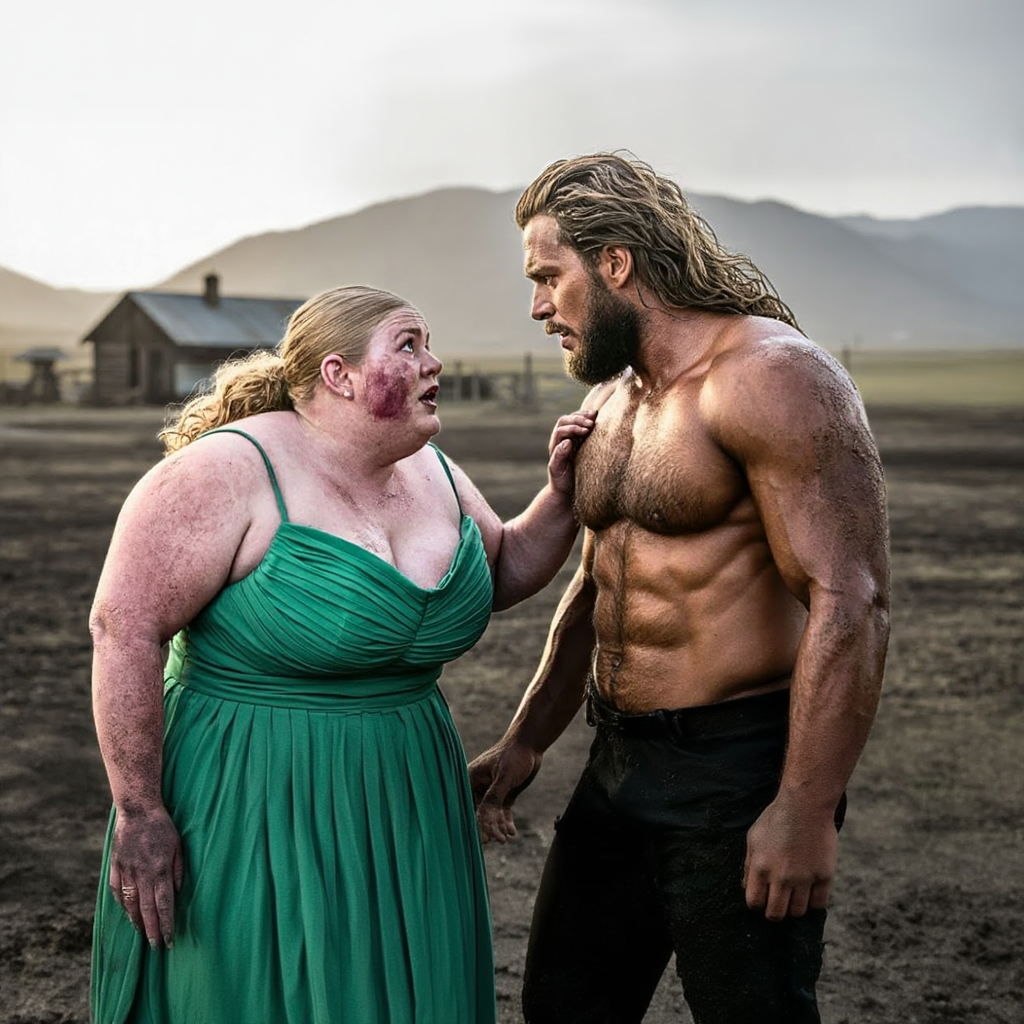
The boys went silent as Eli stepped out. He was tall—over six feet four—with shoulders built from years of splitting logs. His beard was thick and dark, and his hands looked like they could crush stone.
He didn’t say a word to the boys.
He simply walked to the buggy, bent down, and lifted the broken wheel assembly with one hand.
The boys stopped laughing.
Miriam stared at him, wide-eyed.
“Wheel bolt snapped,” Eli said quietly.
His voice was deep but calm.
Miriam nodded nervously. “I—I was trying to fix it before the snow worsens.”
Eli glanced at the sky.
Storm clouds were already rolling down the mountains.
“You won’t make it home before dark,” he said.
The boys ran off down the road, suddenly uninterested in the situation.
Miriam shifted awkwardly. “I’ll manage.”
Eli studied her for a moment.
Then he said something strange.
“You’re not walking in this storm.”
Miriam blinked. “Excuse me?”
“You’ll freeze before you reach the valley.”
She looked down at the road, unsure.
Eli pointed to his truck.
“I’ll take you home.”
Miriam hesitated.
Amish women weren’t supposed to ride in trucks with strange men—especially a giant mountain hermit everyone whispered about.
But the wind howled harder across the fields.
And the snow was falling faster.
Finally, she nodded.
“Thank you… Mr.—?”
“Eli.”
The drive was quiet.
Miriam sat stiffly in the passenger seat, hands folded in her lap.
Eli focused on the icy road climbing down the mountain.
After a while, he asked, “Why were those boys laughing at you?”
Miriam looked out the window.
“They’re children.”
“That’s not an answer.”
She sighed softly.
“I’m… larger than most women in my community.”
Eli glanced at her.
“That’s not a crime.”
She gave a sad smile.
“In my church, women are expected to be… modest, delicate.”
“And you’re not?”
She laughed quietly.
“I suppose I’m not delicate.”
Eli didn’t laugh.
Instead, he said something that made Miriam’s heart skip.
“You look strong.”
She turned toward him, surprised.
No one had ever said that before.
Not like that.
Not without sarcasm.
When they reached her family’s farm, lanterns glowed from the windows of a white wooden house.
Miriam climbed out of the truck.
Snow crunched beneath her boots.
She turned back to Eli.
“Thank you.”
He nodded.
Then, before driving away, he looked at her for a long moment.
And said something so unexpected that Miriam thought she had heard wrong.
“By spring,” Eli said calmly, “you’ll birth me three sons.”
Miriam’s mouth fell open.
“Excuse me?!”
Eli simply started the engine.
“Good night, Miriam.”
Then he drove away.
For three days, Miriam couldn’t stop thinking about it.
Not because it was romantic.
Not because it was flattering.
But because it was so absurd.
Three sons?
By spring?
She had never even been kissed.
And Eli Harper—the strange mountain man—was rumored to be a virgin who barely spoke to anyone.
Yet somehow he had declared she would bear his children.
The nerve of him.
But something else lingered in her mind.
The way he had looked at her.
Not mocking.
Not embarrassed.
Just… certain.
A week later, Eli returned.
He arrived at the Stoltzfus farm carrying a wooden toolbox.
Miriam’s father answered the door.
“Yes?”
“Wheel repair,” Eli said.
Within an hour, the buggy was fixed.
Eli wiped grease from his hands.
Miriam stood nearby, watching him work.
“Thank you,” she said again.
He shrugged.
“Was broken.”
She hesitated.
“About what you said the other day…”
Eli looked at her calmly.
“Yes.”
“You can’t just tell a woman she’ll birth your children.”
“Why not?”
“Because… that’s not how courtship works!”
Eli thought for a moment.
Then nodded.
“Fair point.”
Miriam blinked.
“That’s all you have to say?”
He looked at her seriously.
“I wasn’t joking.”
Her cheeks flushed.
“I figured.”
“I’m thirty-four,” Eli continued. “Never married. Never touched a woman.”
Miriam stared.
Why was he telling her this?
“But when I saw you,” he said, “I knew.”
“Knew what?”
“You’d make strong sons.”
Miriam nearly choked.
“Is that the only reason?”
Eli shook his head.
“No.”
He met her eyes.
“You’re kind. You didn’t yell at those boys. You tried fixing the wagon yourself. And you thanked me twice.”
She didn’t know what to say.
No man had ever spoken about her like this.
Usually they avoided her.
Or whispered behind her back.
Eli just stood there calmly.
Finally, Miriam said, “You realize Amish women don’t just run off with mountain men.”
“I know.”
“And even if they did… three sons by spring is impossible.”
Eli scratched his beard.
“Technically, yes.”
Despite herself, Miriam laughed.
Over the next months, Eli kept visiting.
Sometimes he brought fresh venison.
Sometimes firewood.
Sometimes nothing at all.
He would just sit on the porch with Miriam and talk.
Slowly, she learned more about him.
His parents had died when he was young.
He had grown up alone in the mountains.
He knew how to build cabins, hunt elk, survive blizzards.
But he didn’t understand much about people.
One evening, Miriam asked, “Why did you never marry?”
Eli shrugged.
“No woman ever looked at me like you do.”
“How do I look at you?”
“Like I’m not strange.”
Miriam smiled softly.
“You’re definitely strange.”
Eli considered that.
“Fair.”
Winter slowly melted into spring.
The fields turned green again.
And one afternoon, Eli asked Miriam a serious question.
“Will you come see my cabin?”
She hesitated.
That would mean leaving the Amish community.
Even if only for a visit.
But curiosity tugged at her.
So she agreed.
The cabin sat high on the mountain ridge.
It was beautiful—built from thick pine logs with a stone fireplace and wide windows overlooking the valley.
Miriam gasped when she stepped inside.
“You built this?”
“Yes.”
She walked slowly across the wooden floor.
Everything was sturdy.
Handmade.
Solid.
Like Eli.
Then she noticed something strange.
Three small cradles stood near the fireplace.
Miriam turned toward him.
“You already built cradles?”
Eli nodded.
“For the sons.”
She burst into laughter.
“You’re unbelievable.”
Eli smiled faintly.
“I’m patient.”
That evening, as the sun set across the mountains, they sat on the porch together.
Miriam watched the valley far below.
“You know,” she said quietly, “people in my community think I’ll never marry.”
Eli frowned.
“Why?”
“You know why.”
He shook his head.
“No.”
“Because I’m big.”
Eli looked at her seriously.
“Miriam.”
“Yes?”
“You carried a wagon wheel by yourself.”
“Well… almost.”
“You’ll outwork half the men I know.”
She looked down.
“And you’re warm,” Eli added.
“What does that mean?”
“Winters are cold up here.”
She laughed again.
Then she said something she had never admitted before.
“I used to pray someone would see me… not just my size.”
Eli took her hand.
“I did.”
Silence filled the mountain air.
Finally, Miriam said softly, “Eli… if we marry…”
“Yes?”
“You might not get three sons.”
“That’s okay.”
“You might get daughters.”
He nodded.
“That’s okay too.”
She smiled.
“And they definitely won’t arrive by spring.”
Eli chuckled.
“I figured.”
They married in early summer.
The Amish community was shocked.
Some whispered.
Some doubted.
But over time, they saw something undeniable.
Miriam was happy.
And Eli treated her like the most precious thing in the world.
Two years later, a traveler hiking through the mountains saw something surprising.
Outside Eli Harper’s cabin, three small children were playing in the grass.
Two boys.
And one little girl.
Miriam sat on the porch, laughing as Eli tried to teach the boys how to stack firewood.
The traveler asked Eli, “Those your kids?”
Eli nodded proudly.
“Three of them.”
The traveler grinned.
“Guess you were right about the sons.”
Eli looked toward Miriam.
Then toward the children.
“Not exactly,” he said.
“But close enough.”
And Miriam—once the woman everyone mocked—smiled brighter than the summer sun over the mountains.