
They Mocked Her 80 Acres of “Worthless Land” — Until She Found What Was Hidden Below
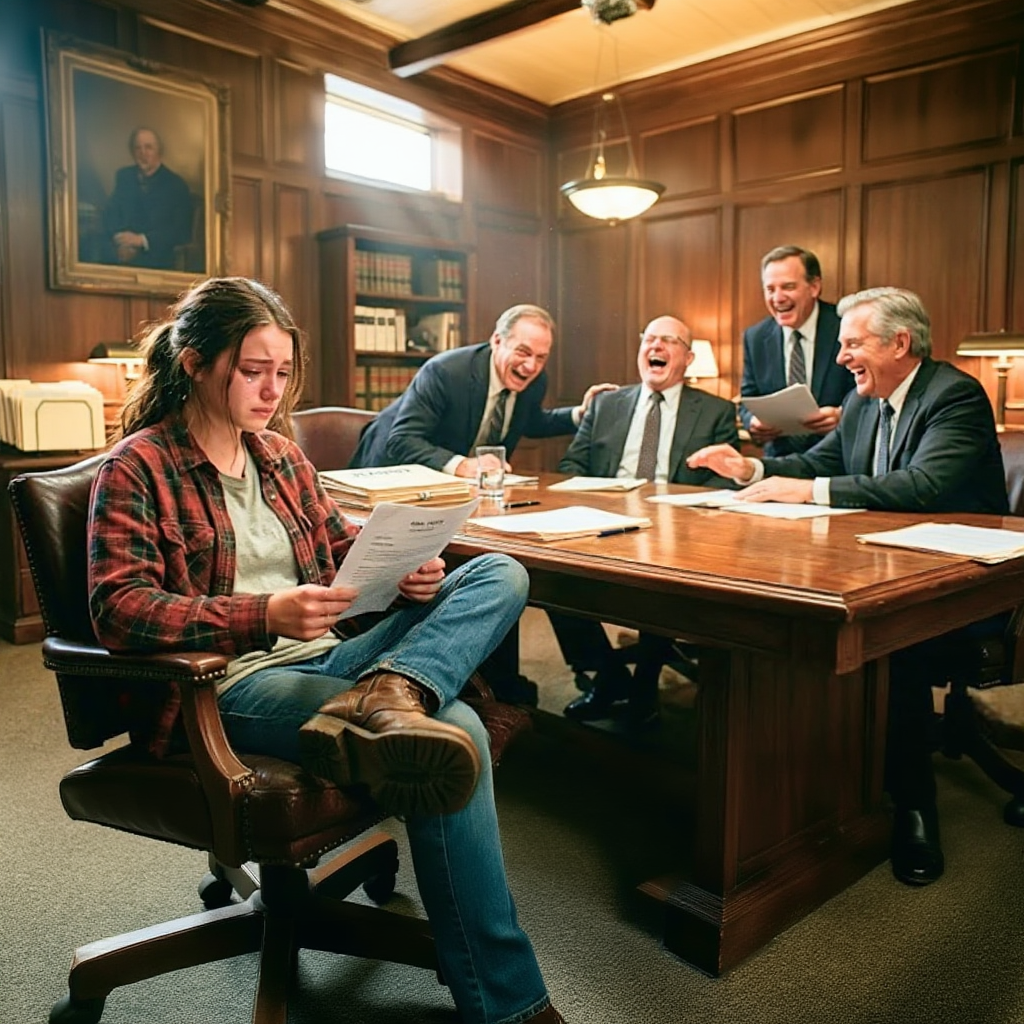
They laughed the day she signed the papers.
Evelyn Carter stood at the warped counter inside the county records office, the deed trembling slightly in her hands. Eighty acres of scrubland, twenty miles outside Cedar Ridge, Colorado. No house. No well. No paved road. Just dry grass, wind-bent juniper trees, and a slope of rocky hills locals called “the Broken Back.”
The clerk had leaned forward, lowering his voice like he was offering a warning.
“You sure about this, ma’am? That land’s been sitting unsold for twelve years.”
“I’m sure,” Evelyn said.
Behind her, two ranch hands whispered loud enough to be heard.
“That place? Nothing grows there.”
“Except snakes and regrets.”
They chuckled. Evelyn signed anyway.
It was all she could afford.
After her husband Daniel died in a highway accident the previous winter, insurance barely covered debts. The bank took their house. Her son Mark moved to Denver for construction work. Her daughter Lily, just twelve, stayed with her. They bounced between a cousin’s spare room and a rented trailer until even that became too expensive.
Then she found the listing: eighty acres, $9,800.
Cheap land meant bad land. Everyone knew that.
But Evelyn had grown up poor. Bad land was still land.
Two weeks later, she and Lily drove out in a borrowed pickup. The tires crunched across gravel until the road faded into dirt, then into ruts, then into nothing.
Wind swept across the open hills. Dry grass rattled like paper.
“This is ours?” Lily asked.
“All of it.”
“It’s… big.”
“And empty,” Evelyn admitted.
No fences. No water. No electricity. The soil was pale and hard, cracked in places. She kicked it with her boot. Dust puffed up and vanished.
That first night they slept in the truck.
By morning, Lily woke with wind-tangled hair and a grin.
“I like it.”
Evelyn smiled. “We’ll make it better.”
The first months were brutal.
Evelyn built a lean-to from salvaged plywood. She hauled water in plastic barrels from a gas station twelve miles away. They cooked on a camp stove. Nights turned cold even in spring.
Neighbors—if they could be called that—passed occasionally. A rancher named Bill drove by once, slowing just enough to shout:
“You planning to farm rocks?”
Another time, three teenagers stopped their truck, laughing.
“Hey, you know this place used to be called Dead Woman’s Ridge?” one yelled.
Lily stiffened. Evelyn waved them off.
They tried planting beans in a small patch. Nothing sprouted.
They tried digging for a shallow well. After four feet, the ground turned to stone.
Money ran thin. Evelyn took cleaning jobs in town, leaving Lily with books and a small radio. Every night she returned exhausted, hands cracked and bleeding.
Still, she refused to quit.
One afternoon in early June, Lily wandered toward the northern slope, where gray rocks scattered across the hillside. She called out.
“Mom! Come look!”
Evelyn climbed up, wiping sweat from her forehead.
“What is it?”
Lily pointed at the ground. “These rocks… they’re shiny.”
Embedded in the dirt were streaks of dull metallic glimmer, like tarnished silver. Evelyn crouched, scraping with a pocketknife. Beneath the surface, a vein of dark stone ran through the hill.
“Probably just iron,” she muttered.
But Lily picked up a loose piece.
“It’s heavy.”
Evelyn took it. Heavier than expected. She turned it over. Tiny flecks sparkled in sunlight.
She shrugged. “Lots of rocks look pretty.”
They tossed it aside.
Weeks passed. The heat grew intense. Grass turned brittle. Evelyn considered selling half the land just to survive.
Then, in July, a storm rolled in.
Rain hammered the hills for hours. Water carved temporary streams down the slopes, washing soil away. The next morning, Evelyn walked the property, checking for damage.
That’s when she saw it.
Where the rain had cut into the hillside, a fresh strip of exposed rock glinted brighter than before. Not dull. Not faint.
Bright.
Metallic.
She knelt, heart quickening.
The vein ran wider than she’d realized—nearly two feet thick in places. She chipped a piece loose with a hammer.
The interior shimmered.
Not like iron. Not like quartz.
Something else.
She wrapped the sample in cloth and drove into Cedar Ridge. The only geology office in town belonged to an older man named Howard Kline, who mostly tested well water and soil.
He looked amused when she handed him the rock.
“You find this on your land?”
“Yes.”
He scratched it with a file. Then he frowned. He ran a magnet over it. Nothing.
He broke off a sliver, dropped acid on it. The surface fizzed slightly. His expression changed.
“Where exactly did you get this?”
“My property. Why?”
He didn’t answer. Instead, he disappeared into the back room.
Fifteen minutes later he returned, eyes wide.
“Mrs. Carter… I can’t be certain without lab testing. But this looks like silver-bearing ore. Possibly high-grade.”
Evelyn blinked. “Silver?”
“It could be. Maybe more. You should send samples to Denver.”
Her hands trembled. “You’re serious?”
“Very.”
Word spread fast in a small town.
By the time she returned to her land, two pickups were parked near her lean-to. The same ranch hands from the records office stood there.
He tipped his hat. “Heard you found some shiny rocks.”
“Just rocks,” she said.
They smiled like wolves.
“You thinking of selling?”
“No.”
“Name a price.”
“No.”
They left, but more people came over the next week. Some friendly. Some not. A man in a suit drove out, offering cash on the spot for mineral rights.
Evelyn refused them all.
She sent samples to a certified lab in Denver. The wait felt endless.
Finally, a thick envelope arrived.
She opened it with shaking fingers.
The report confirmed it: high-grade silver ore, with traces of gold and copper. The vein extended across multiple tested samples. Preliminary estimates suggested a substantial deposit.
Evelyn sat on the truck tailgate, staring at the paper.
Lily read over her shoulder. “Does this mean… we’re rich?”
Evelyn laughed, then cried.
“Maybe,” she whispered. “Maybe.”
Within weeks, surveyors arrived. They mapped the hillside. The vein stretched deeper than expected, possibly running under much of the eighty acres.
The same neighbors who once mocked her now showed up with pies and smiles.
Bill, the rancher, scratched his beard. “Guess I was wrong about rocks.”
Teenagers drove by slower, no longer laughing.
A mining company from Denver made the first serious offer: $1.2 million for full rights.
Evelyn nearly fainted.
But Howard, the geologist, gave her advice.
“Don’t rush. This could be worth far more.”
She waited.
More companies came. Offers climbed. Two million. Three. Five.
Evelyn hired a lawyer. Negotiations stretched for months.
Meanwhile, she and Lily still lived in the lean-to. Still hauled water. Still cooked on the camp stove.
One evening, Lily asked, “Why don’t we move now?”
Evelyn looked across the land.
“Because this place saved us. I want to see it through.”
Finally, she signed a deal: she would lease mining rights instead of selling. The company would pay an upfront bonus, plus royalties on every ounce extracted.
The upfront payment alone: $2.8 million.
The first check arrived in a plain envelope.
Evelyn stared at the number until it blurred.
They bought a modest house in Cedar Ridge. Not huge, but warm. Lily got her own room. Evelyn replaced her old truck.
But she kept the eighty acres.
Mining began that fall. Trucks rolled in. Equipment carved careful paths. Workers uncovered more of the vein.
Estimates grew larger.
One engineer told her quietly, “You might be sitting on one of the biggest finds in this county in fifty years.”
Royalties began flowing months later.
Not millions at once—but steady, growing. Enough that Evelyn paid off debts, funded Lily’s education, and set aside money for Mark to start his own contracting business.
Yet what surprised everyone most was what she did next.
Instead of fencing the land and shutting everyone out, Evelyn donated a portion near the entrance for a community well. The drilling team found groundwater deeper underground, and the well served nearby ranchers who struggled during drought.
Bill was the first to draw water. He shook her hand.
“Guess this ‘worthless land’ turned out useful after all.”
She smiled. “Seems so.”
Years passed. The mine operated steadily. The hills changed, but the company restored areas as they went. Wild grass returned.
Evelyn often walked the ridge where Lily first noticed the shiny rocks. They kept one chunk of ore on their mantel—a reminder.
One evening, Lily, now grown and home from college, stood beside her.
“Funny,” Lily said. “If people hadn’t laughed… would you still have bought it?”
Evelyn thought about it.
“Yes,” she said softly. “Because no one else wanted it.”
She looked across the eighty acres—once mocked, once empty, now alive with quiet purpose.
“They saw worthless land,” she continued. “I just saw a chance.”
Wind moved through the grass, the same as that first day.
But everything had changed.
And beneath the soil—hidden all along—had been the thing that saved them both.
The second winter after mining began was quieter.
The heavy equipment no longer startled Evelyn when it rumbled across the hills. The road into her eighty acres had been graded, and the once-forgotten property now appeared on county maps. A small sign near the entrance read: Carter Ridge Mining Lease.
She hadn’t chosen the name. The company had. Still, seeing her last name carved into metal made her pause every time she drove past.
But success brought something she hadn’t expected.
Pressure.
One January morning, her lawyer called.
“There’s a development group interested in buying the entire property,” he said. “They’re offering… a lot.”
“How much is a lot?”
“Twenty-four million.”
Evelyn nearly dropped the phone.
“For everything?” she asked.
“Yes. Land, remaining mineral rights, access roads—full transfer.”
She walked to the window of her small house. Snow blanketed the hills in the distance.
“Why?” she asked.
“They believe there’s more under the southern ridge. Possibly another deposit.”
Evelyn frowned. The southern ridge was untouched land—rolling, rocky, mostly ignored even by surveyors.
“I’ll think about it,” she said.
That night, she told Lily.
“Twenty-four million?” Lily whispered. “Mom… that’s life-changing.”
“It already has been.”
“But this… you could retire. Travel. Do anything.”
Evelyn stirred her tea slowly. “Money isn’t the question. I’m wondering why they want it so badly.”
Lily leaned forward. “You think there’s more down there?”
“I don’t know.”
But the thought lingered.
Over the next week, Evelyn requested the company’s geological reports. Most focused on the known silver vein, but a few older surveys mentioned “anomalies” beneath the southern slope—irregular density readings, unusual mineral traces.
Nothing conclusive.
Still, Evelyn remembered something.
The first time she walked that southern ridge months earlier, she’d noticed the ground felt hollow in spots—subtle, but there. She had dismissed it as erosion.
Now she wasn’t so sure.
Instead of answering the offer, she drove out to the land.
Snow crunched beneath her boots as she climbed the ridge. The wind was sharp, colder than usual. She reached the crest and looked down. The southern slope dipped into a shallow basin dotted with scrub.
Quiet. Untouched.
She walked slowly, tapping the ground with a metal rod she’d borrowed from the mining crew.
Thud.
Solid.
Thud.
Solid.
Then—
Thunk.
Different.
She stopped.
The sound echoed faintly, like striking wood beneath dirt. She tapped again.
Thunk.
Her heart quickened.
She marked the spot with a stake, then tried another few feet away.
Thunk.
Again.
The hollow sound stretched across a rough line nearly thirty yards long.
That evening, she called Howard.
“You still trust your instincts?” he asked.
“More than ever.”
Two days later, Howard arrived with portable scanning equipment. They ran ground-penetrating radar across the basin.
The screen showed something unexpected.
Not just a mineral deposit.
A void.
Large. Structured. Angular in places.
Howard stared at the data. “This… doesn’t look natural.”
“You mean… a cave?”
“Maybe. But caves don’t usually form shapes like this.”
They scanned again, widening the area. The void extended deeper, branching beneath the ridge.
Howard exhaled slowly. “There’s something man-made down there. Or at least… altered.”
Evelyn felt a chill that had nothing to do with winter.
“Should we dig?”
Howard hesitated. “Carefully. Very carefully.”
She called the mining company. Within days, a small exploratory team arrived. They began shallow excavation at the marked site, removing topsoil cautiously.
At three feet, nothing.
At five feet, compacted clay.
At seven feet, the bucket struck something hard.
Not rock.
Metal.
They cleared the area by hand. Rusted steel emerged—flat, corroded, but unmistakable.
A hatch.
The crew exchanged looks.
“Who would bury a hatch out here?” one worker muttered.
Evelyn knelt beside it. The surface was thick, industrial-grade. No markings visible under rust.
“Open it,” she said.
They sprayed lubricant around the edges. It took two men and a pry bar. With a groan, the hatch lifted.
Cold air rushed upward—stale, dry.
Below: a ladder descending into darkness.
No one spoke.
Howard swallowed. “This wasn’t in any records.”
They lowered a light.
The beam revealed concrete walls.
Not a cave.
A bunker.
Evelyn’s pulse hammered. “How old?”
“Hard to say. Maybe Cold War era? Could be older.”
One worker looked uneasy. “Could be unsafe.”
Evelyn nodded. “We go slow.”
A safety team descended first. Ten minutes passed. Then a voice crackled over radio.
“You should come down.”
Evelyn climbed the ladder carefully. The air smelled dusty but breathable. At the bottom, she stepped onto a concrete floor.
The chamber stretched wider than expected—twenty feet across, reinforced walls, old electrical panels rusting in corners.
Shelving lined one wall.
On the shelves: wooden crates.
Howard stepped beside her. “This is… unbelievable.”
They pried open the nearest crate.
Inside: sealed metal cylinders, wrapped in oil paper.
Another crate held documents—maps, faded but legible. Coordinates. Geological markings.
One worker opened a third crate.
He froze.
Inside lay rows of silver bars.
Stamped. Untouched. Tarnished but intact.
The room went silent.
Howard whispered, “Oh my God.”
Evelyn felt dizzy.
“This… this can’t be real.”
They counted quickly. Dozens of bars. Maybe hundreds across multiple crates.
Not newly mined—these were old, stacked deliberately.
Hidden.
A second room branched off the main chamber. Inside, more crates. Some contained copper ingots. Others—old equipment, surveying tools, even a generator.
On one desk lay a leather-bound ledger.
Evelyn opened it carefully. Pages brittle but readable. Dates from the 1950s. Entries describing “private extraction,” “temporary storage,” “relocation pending.”
Howard read over her shoulder.
“This was a secret operation,” he said. “Someone mined here decades ago… then hid the output.”
“Why hide it?”
“Taxes? Ownership disputes? Government contract? Hard to know.”
Evelyn flipped further. The last entry read:
“Deposit larger than expected. Storage filled. Await transport. Weather delaying.”
No later entries.
Howard looked around. “Maybe they never came back.”
They contacted authorities immediately. County officials arrived. Historians, surveyors, legal teams.
The bunker was officially documented. The silver bars weighed and cataloged. The total stunned everyone.
Nearly two million dollars’ worth—at minimum.
Because the bunker sat entirely on Evelyn’s property, legal ownership leaned in her favor, though paperwork took months.
Meanwhile, news spread like wildfire.
The same people who once mocked her land now spoke in awe.
“She found treasure under her treasure.”
“First silver vein, now hidden vault?”
Reporters drove out. Evelyn declined interviews. She preferred quiet.
One evening, Lily stood beside her near the open hatch.
“Mom… this place… it keeps giving.”
Evelyn nodded slowly.
“Funny thing,” she said. “If I’d sold the land… they’d have found this instead.”
Lily shivered. “You almost did.”
“I know.”
Spring arrived. The bunker was secured, documented, then carefully sealed again. The silver bars were transferred legally months later, their value added to Evelyn’s already-growing royalties.
But the discovery changed something deeper.
The southern ridge, once ignored, now held history. Evelyn decided not to mine it further. Instead, she set aside that section as protected land.
Howard visited one afternoon.
“You’re leaving it untouched?” he asked.
“Yes.”
“Even though there could be more below?”
She smiled. “Some things are worth more left as they are.”
He nodded, understanding.
Years later, people still told the story.
How they mocked her eighty acres.
How she found silver beneath rock.
How she discovered a hidden bunker beneath the southern ridge.
How the “worthless land” kept revealing what others never saw.
Evelyn often returned to the original hillside at sunset. The wind still moved the grass the same way. The land looked almost unchanged from the day she first arrived.
But she knew better.
Beneath the soil lay not just minerals or metal—but proof of something she had believed all along:
Value isn’t always visible.
Sometimes it waits.
Hidden.
Until someone stubborn enough decides to stay.