
Homeless at 20, She Bought a $10 Saddlemaker’s Shop—What She Found Under the Workbench Shocked All
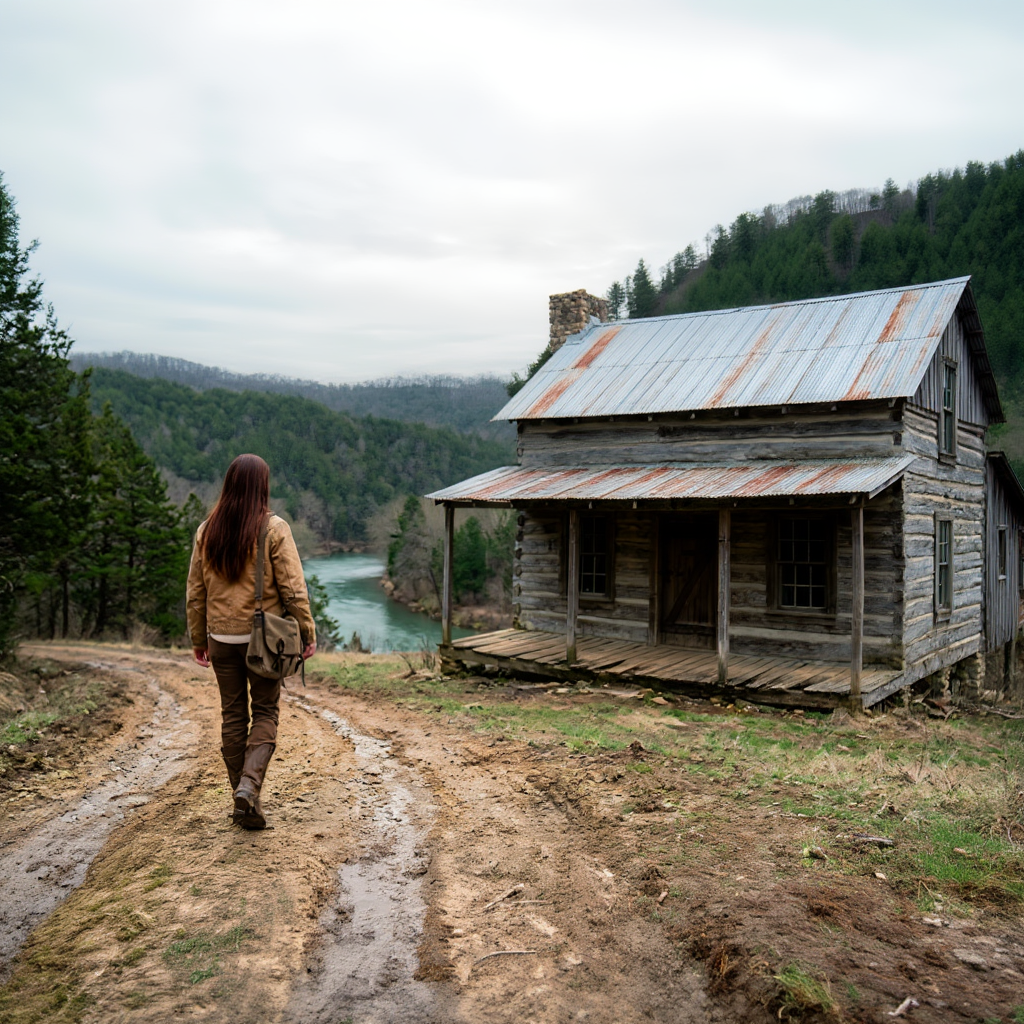
The mud clung to Emily Carter’s boots with every step, thick and stubborn, as if the earth itself wanted to pull her back. She kept walking anyway, one foot in front of the other, her satchel bumping lightly against her hip. The air smelled of wet pine and cold river water, and the overcast sky pressed low over the valley like a quiet warning.
Ahead of her, the old log cabin stood alone.
Weathered logs, darkened by decades of rain. A corrugated metal roof sagging slightly in the middle. A crooked stone chimney leaning as if it had grown tired of standing. The wide porch looked strong enough, though the boards had faded to a grayish silver.
To the left, a teal river curved gently through the valley, winding between dense pine forests. Mist hovered above the water, drifting lazily across the hills. It would have been beautiful if she weren’t so exhausted.
Emily tightened her grip on the satchel.
Twenty years old.
Homeless.
And now… a business owner.
She still couldn’t quite believe the last part.
Three days earlier, she’d been sleeping in the back of a freight shed near the rail yard, her coat pulled tight against the cold. Her last eight dollars had bought her stale bread and coffee. She had been trying not to think about what came next.
Then she saw the notice.
“Contents of former saddlemaker’s shop for sale — $10. Must clear property. No guarantees.”
The paper had been pinned crookedly to the general store wall. Most people ignored it. The building sat miles outside town, and rumor said the old saddlemaker had died years ago, leaving nothing but junk.
Emily didn’t see junk.
She saw a chance.
She borrowed two dollars from the store owner — more out of pity than trust — and signed the paper. Just like that, she owned whatever remained in the abandoned shop.
And now she was here.
She stepped onto the porch. The wood creaked but held. Her hand hovered over the door for a moment before she pushed it open.
The hinges groaned.
Dust filled the air, floating in soft beams of gray daylight. The shop smelled of leather, oil, and time. A long wooden workbench ran along the far wall. Shelves held cracked saddle trees, rusted tools, and rolled strips of dried leather.
Emily stepped inside slowly.
It wasn’t much.
But it wasn’t nothing.
She walked to the window and pushed it open. Fresh air swept in, stirring dust. The river shimmered beyond the trees, and the sound of water softened the silence.
Her shoulders relaxed slightly.
She set her satchel down and explored. A cast-iron stove sat in one corner. A narrow cot in another. Whoever worked here had lived here too.
She ran her hand along the workbench. Deep grooves marked years of cutting leather. A heavy mallet rested near the edge. Awls, needles, and spools of thread lay scattered.
“Guess you and me are partners now,” she murmured.
Her stomach growled loudly.
She unpacked her satchel — a loaf of bread, a tin cup, a blanket, and the last of her coins. Not much. But enough to start.
The first hours passed in quiet cleaning. She swept dust, opened windows, and stacked usable tools. The rhythm steadied her nerves. Work always did.
By late afternoon, she sat on the stool behind the workbench, chewing bread and staring at the room.
“If I can fix one saddle,” she muttered, “I can make a dollar. Maybe two.”
It sounded possible.
Maybe even hopeful.
She shifted her feet — and heard a hollow sound beneath the bench.
Emily paused.
She tapped the floor with her boot again.
Hollow.
She frowned and crouched. The floorboards beneath the workbench looked slightly darker than the rest. One plank sat unevenly, as if it had been lifted before.
Her heart beat faster.
She grabbed a chisel from the bench and pried gently. The board lifted with a soft crack. Beneath it, a small cavity appeared — dark and narrow.
Inside lay a wooden box.
Emily froze.
Her fingers trembled slightly as she reached in and pulled it out. Dust coated the lid. A small brass latch held it closed.
“Probably nothing,” she whispered.
But her pulse quickened anyway.
She opened it.
Inside were folded papers, a leather pouch, and a small metal key.
She picked up the pouch first. It clinked softly. She loosened the drawstring.
Coins spilled into her palm.
Silver.
Real silver.
Her breath caught.
She counted slowly. Ten. Twenty. Thirty… nearly fifty dollars in coins.
Her mind spun. That was more money than she’d ever held at once.
But the papers caught her attention next.
She unfolded the first one. It was a deed — land ownership records. Several parcels listed. The names repeated.
Samuel R. Whitaker.
The old saddlemaker.
She flipped through more documents. Maps. Survey notes. Payment receipts. They referenced grazing land, river access, and timber rights.
Her eyes widened.
This wasn’t just a shop.
This was property.
She stared at the final document. A handwritten note:
“To whoever finds this — I had no family. If you’re reading this, you’ve likely bought the shop cheap. Don’t let the town swindle you. The land behind the ridge is still mine. Keep it, or sell it fair. Either way, don’t trust men who smile too much.”
Emily leaned back slowly.
Land behind the ridge?
She stepped outside immediately. The hills beyond the river stretched wide, dotted with pines. She had assumed it was public land.
Maybe it wasn’t.
She laughed softly, disbelief mixing with relief.
Homeless at twenty.
And now… possibly landowner.
The next morning, she walked the ridge. The climb was muddy and steep, but the view from the top stunned her. The valley spread wide, the river cutting through green forest. Meadows rolled beyond, untouched and quiet.
It was beautiful.
And if the papers were right… it was hers.
Days passed. Emily worked harder than she ever had. She repaired old saddles, cleaned tools, and reopened the shop. Word spread slowly. A rancher stopped by with a torn saddle strap. She fixed it. He paid her two dollars.
Then another came.
Soon, the shop had life again.
One afternoon, a tall rancher leaned against the porch rail. “Heard you bought this place for ten dollars.”
Emily nodded.
He chuckled. “You know there’s folks interested in the land behind you?”
She kept her voice calm. “I know.”
He studied her. “You planning to sell?”
She shook her head. “Not yet.”
He tipped his hat. “Smart girl.”
That night, she counted her coins again — both old and new. She wasn’t rich. Not yet. But she wasn’t helpless anymore either.
Weeks turned into months. The muddy path became familiar beneath her boots. The river’s sound became home. The cabin filled with tools, leather, and warmth.
One evening, she sat at the workbench — the same place she’d found the hidden box. The shop smelled of fresh-cut leather and pine smoke.
She smiled softly.
That ten-dollar gamble had changed everything.
Not just the money.
Not just the land.
But the belief that her life wasn’t already decided.
She stood and stepped outside. The overcast sky glowed faintly as evening settled over the valley. The teal river curved quietly through the pines. The muddy path stretched toward town — but she no longer felt like she was leaving something behind.
She had built something here.
From nothing.
And beneath that old workbench, the hidden past of a lonely saddlemaker had given a homeless girl a future no one saw coming.