
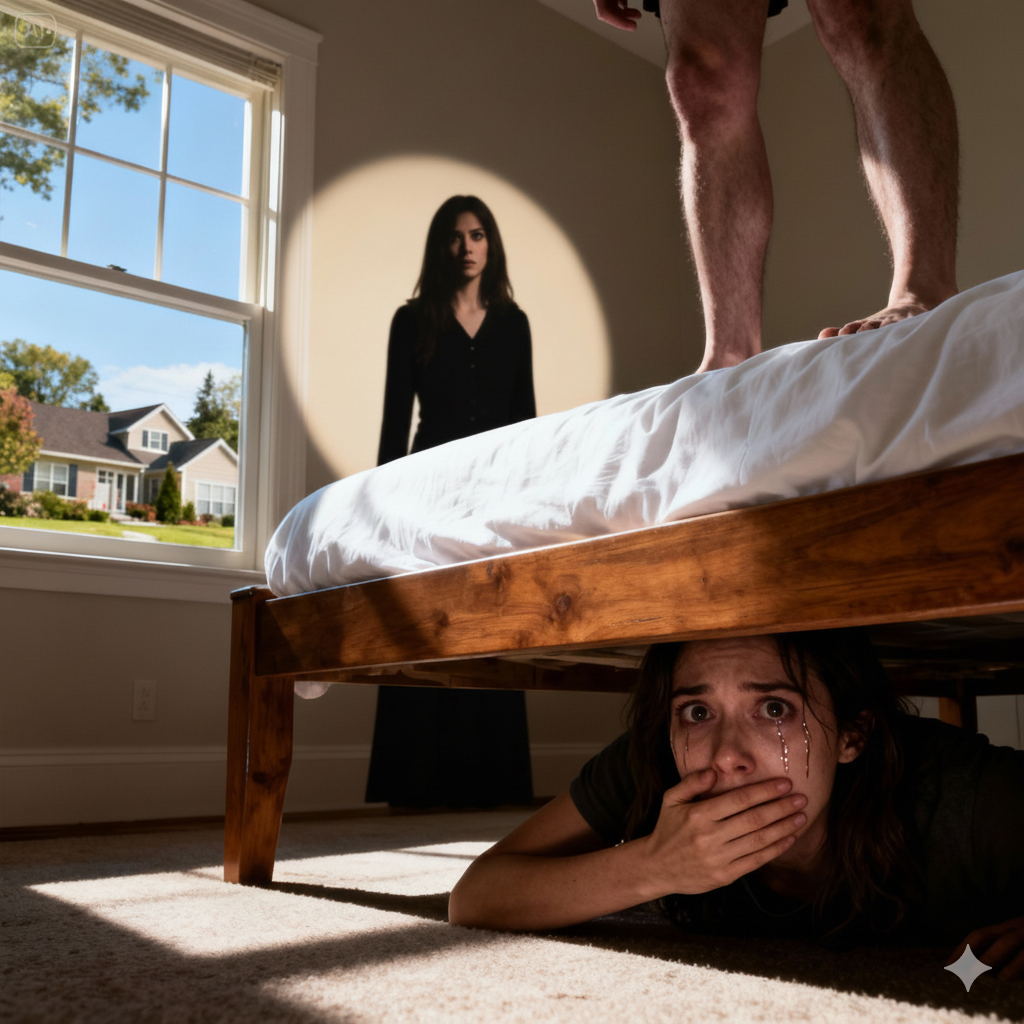
“My neighbor yelled at me when I got home: ‘Your house is so noisy during the day!’ ‘No one should be home,’ I told her. ‘I heard shouting!’ The next day, I pretended to go to work and hid under the bed. Hours later, when I heard the voice of the person who had entered my room, I froze in terror…”
When I walked into my driveway that afternoon, my neighbor, Mrs. Collins, was waiting by the fence. Her face was tense with irritation. “Your house is very noisy during the day,” she snapped. “It’s annoying.”
At first I took it as a joke. “That’s impossible. There shouldn’t be anyone home. I work from eight to six.” She crossed her arms. “Then explain the screaming. I heard screaming. A woman’s voice.”
The smile vanished from my face. I lived alone. My husband, Mark, had died two years earlier, and my job as an insurance analyst kept me out of the house most of the day. I assumed Mrs. Collins had mistaken my house for someone else’s, but the way she looked at me—confident, almost frightened—stayed with me long after I walked in.
I barely slept that night. Every creak in the floorboards made my heart race. I checked every door, every window, even the attic. Nothing seemed disturbed. No signs of forced entry. No explanation.
The next morning, I made a decision that felt both ridiculous and terrifying. I left the house at my usual time, greeted Mrs. Collins as if nothing was amiss, and then returned an hour later. I parked down the street and went inside quietly.
I went straight to the bedroom and slid under the bed, clutching my phone and holding my breath. Dust tickled my nose. Minutes stretched into hours. I could hear the refrigerator whirring, the pipes gurgling, the distant traffic outside. Part of me hoped nothing would happen, that I could crawl out, ashamed of my own paranoia.
Then, just after noon, I heard the front door open.
Footsteps moved through the house with a familiar air: unhurried, confident. Someone opened kitchen cabinets and poured water into a glass. My pulse was pounding so hard I was sure it would give me away.
The footsteps drew nearer. They stopped right outside my bedroom door. The door opened.
And then I heard a woman’s voice say softly, “I know you’re not supposed to be here yet.”
Under the bed, I froze in terror, watching the shadow of his feet as he fully entered my room.
I covered my mouth with my hand to stifle a gasp. The woman moved around my room as if it belonged to her. I could see her bare feet through the gap under the bed, her toenails painted a familiar pale pink. My stomach churned when I realized why. The shoes by the door. The mug on the sink. The faint scent of my shampoo in the air. She was using my things.
I recorded a video with my phone, tilting it toward the floor. My hands were shaking so much the image was jittery. The woman was humming as she sat on my bed. The mattress dipped inches from my face. “I hate waiting,” she muttered to herself. “But this is better than before.” Before what?
She stood up and walked over to my closet. The clothes rustled. I recognized the sound of hangers sliding by: my hangers. Then she laughed, a high-pitched, humorless laugh. “You never notice, do you?” she said, as if speaking directly to me.
My vision blurred. I was a scream away from giving myself away when her phone rang. She answered without hesitation. “Yes,” she said. “I’m here. No, she’s at work. I told you, she never checks.” She paced the room as she spoke, revealing more of herself. She was about my age, a little over thirty, with dark hair pulled back in a low ponytail. Ordinary. Terrifyingly ordinary. “I’ll have left before six,” she continued. “Like always. Always.”
After he left the room, I waited, counting my breaths. When the front door finally closed, I stayed under the bed for another ten minutes, too scared to move. Then I called the police.
The officers arrived quickly. I showed them the video, my voice trembling as I explained everything. They searched the house and found evidence I had overlooked: a spare key hidden behind the exterior electrical box, food wrappers in the trash with dates from days I hadn’t been home, fingerprints on surfaces I rarely touched.
That night, they tracked her down. Her name was Laura Bennett. She had once cleaned houses in the neighborhood. Months earlier, she had copied my spare key when I wasn’t looking. After losing her job and her apartment, she began “borrowing” my house during the day. The screaming Mrs. Collins heard? Laura admitted she’d had a nervous breakdown, yelling at someone on the phone inside my living room.
She was arrested for breaking and entering and theft. When the officers left, my house felt smaller, violated. I sat on the edge of my bed, staring at the space beneath it, knowing I would never see it the same way again.
In the following weeks, I changed everything. The locks. The alarm system. My routines. I installed cameras in every corner of the house and motion-sensor lights outside. My friends told me I was being paranoid, but they hadn’t slept under their own beds, listening to a stranger living their lives.
Mrs. Collins apologized repeatedly. “I should have insisted,” she said. “I should have called someone sooner. I told her she might have saved my life just by talking to her.”
Laura accepted a plea deal. In court, she didn’t look like a monster. She looked tired, ashamed, and painfully human. That, somehow, made it worse. The judge called it a “crime of opportunity,” but to me, it had been a slow, invisible invasion of security.
I went back to work, but some days I found myself gripping my keys too tightly, scanning my house before entering. Healing, I learned, wasn’t dramatic. It was quiet, uncomfortable, and slow.
What tormented me most wasn’t the break-in itself, but how easily it had happened. How many warning signs I’d ignored. How many of us assume our private spaces are untouchable simply because we closed the door once.
Now, I talk about it openly. With neighbors. With coworkers. With anyone who thinks this kind of thing only happens to “other people.” Because it doesn’t. It happens in safe neighborhoods. In ordinary homes. To people who think they’re careful enough.
If you’re reading this, take it as a reminder, not a scare tactic, but to sharpen your awareness. Double-check who has your spare keys. Notice any changes in your home that don’t make much sense. And if someone tells you something feels off, listen; really listen.
I’m sharing my story because silence is what allowed it to continue for so long. And perhaps, by telling it, I can help someone else trust their instincts before it’s too late.
What would you have done if you were in my shoes? Would you have believed the neighbor or ignored it like I almost did? Your thoughts matter. Share them, and if this story made you think, please consider sharing it. You never know who might need to hear it.