
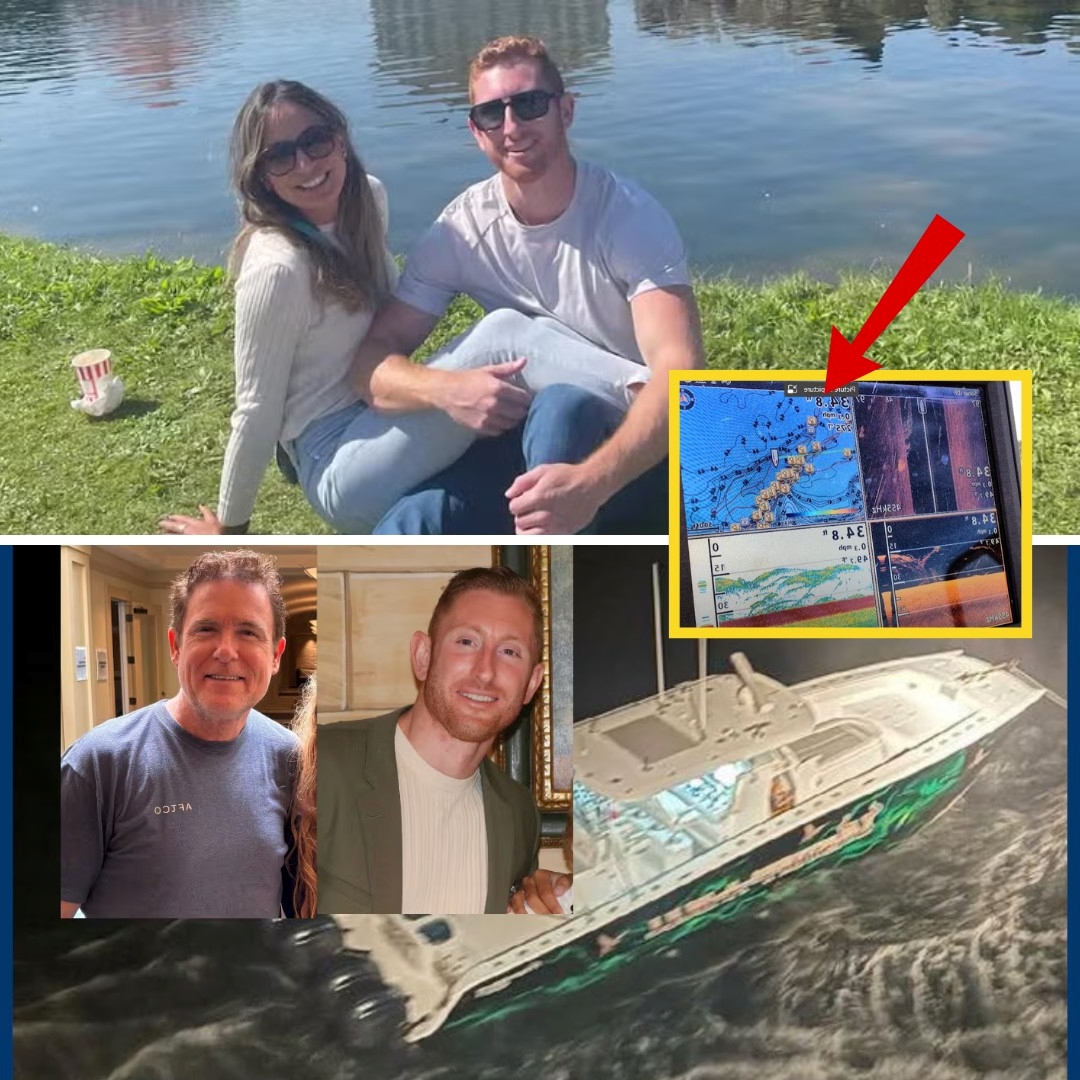
In a chilling development that has intensified the anguish surrounding the disappearance of two Florida attorneys in the Gulf of Mexico, Deborah Billmaier, wife of 33-year-old Brandon Billmaier, has shared details of a mysterious audio recording received on her phone late on December 20, 2025. The brief message, sent from her husband’s cellphone around 11 p.m.—hours after the men were due home and just before she officially reported them missing—consisted primarily of indistinct ocean waves crashing, with faint, garbled sounds that offered no clear words or clues. “It was just waves, endless waves, and some noise I couldn’t make out,” Deborah recounted in emotional interviews, her voice breaking as she described the recording as “haunting and incomprehensible,” deepening the nightmare for families already gripped by fear.

Brandon Billmaier and his uncle, 57-year-old Randall “Randy” Spivey, set out early on December 19 from a private dock in Iona near Fort Myers aboard Spivey’s 42-foot Freeman catamaran, “Unstopp-A-Bull.” The pair, both seasoned boaters and passionate deep-sea fishermen, planned a day targeting bottom fish in waters roughly 70-100 miles offshore. Randy, a prominent Fort Myers personal injury lawyer with decades of experience advocating for accident victims, was known for his meticulous safety protocols on the water. Brandon, a newlywed associate at a Boca Raton firm who idolized his uncle, had followed in his footsteps into law, bringing enthusiasm and compassion to his work. The outing was meant to be a bonding escape, with the men expected back by late afternoon.
As evening descended without contact—despite Brandon’s morning text to Deborah affirming his love and anticipated return—anxiety mounted. By 9 p.m., Deborah alerted authorities, triggering an immediate response from the Lee County Sheriff’s Office and U.S. Coast Guard. Then, around 11 p.m., her phone buzzed with the incoming audio from Brandon’s device. The recording, lasting under a minute, captured the relentless rhythm of waves against the hull, interspersed with wind and muffled distortions that some have speculated could be distant voices or mechanical noises. No distress calls, no explanations—just the ominous soundtrack of the open sea. Deborah played it repeatedly, hoping for hidden meaning, but found only more questions. “It felt like he was trying to reach me, but something went wrong,” she said, the message arriving mere moments before Coast Guard helicopters lifted off for nighttime searches.
The next morning, December 20, a Coast Guard crew located the vessel adrift approximately 70 miles west of Fort Myers: engines idling in gear, upright and undamaged, but devoid of occupants. Two life jackets were absent, suggesting the men may have donned them in haste. Critically, the emergency beacon remained onboard and inactive—a baffling omission for safety-conscious Randy. The discovery shifted the operation into high gear, evolving into one of Southwest Florida’s largest offshore searches, covering thousands of square miles with aircraft, cutters, marine units, and an outpouring of civilian volunteers.
Deborah’s revelation of the audio has fueled speculation and heartbreak alike. Could it have been a pocket dial from a phone in the water, capturing the men’s final surroundings? Or an intentional attempt to signal distress that failed amid chaos? Investigators, now including the FBI in a missing persons probe, have analyzed cellphone data, confirming the message originated from Brandon’s device in the Gulf’s vicinity. The timing aligns with theories of a sudden overboard incident: perhaps one man slipped while handling gear in moderate swells, the other diving to assist, only for the unmanned boat to propel away irretrievably.
Families have navigated waves of hope and despair. Tricia Spivey, Randy’s wife, spoke of her husband’s reliability: “He’s the safest boater I know—30 years on the water without issue.” Friends like Paul Rocuant coordinated volunteer fleets, while Deborah rallied communities via social media, offering rewards and pleading for capable vessels to join grids. “Every hour matters,” she urged, as searches pressed on through weekends. Yet, by sunset December 22, the Coast Guard suspended active efforts, citing exhaustive coverage and slim survival odds after days in open water—exposure, currents, dehydration, and predation looming large in shark-rich depths.
In a joint family statement, gratitude mingled with grief: “Brandon and Randy would never want others risking lives… We love them deeply.” Deborah, portraying Brandon as “a light in this world,” emphasized his joy as a recent husband, their travels to dozens of countries now bittersweet memories. Randy’s legacy as a community pillar—founding his firm to champion the injured—resonates amid irony.
The puzzling audio lingers as a spectral echo, amplifying the tragedy’s mystery. No signs of foul play emerged from the boat—no blood, damage, or struggle—but the Gulf’s vastness conceals secrets. Experts stress boating perils: even experts succumb to unforeseen mishaps without immediate beacons or tethers. Advocates renew calls for auto-inflating jackets, personal locators, and engine kill switches.
As Christmas 2025 dawns somberly in Southwest Florida, vigils and tributes honor two men whose passions—for justice ashore and adventure at sea—led to this void. The indistinct waves in that late-night message symbolize the unknown depths claiming them, leaving families to mourn presumed loss while clinging to faint miracles. In a season of togetherness, the Billmaier and Spivey clans face profound solitude, forever altered by the sea’s cruel whisper.